


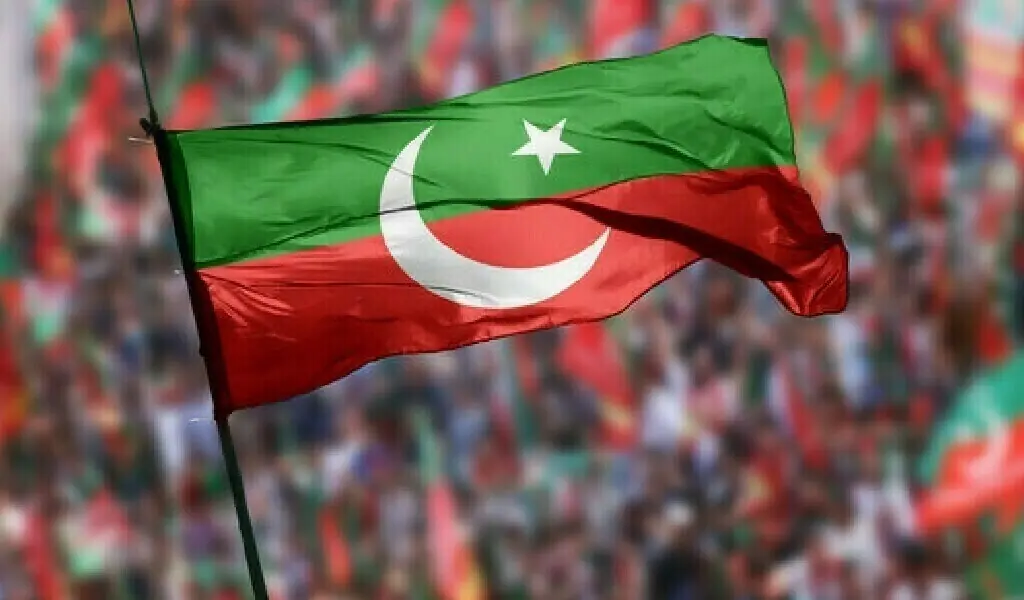

ISLAMABAD: The opposition Pakistan Tehreek-e-Insaf (PTI) on Sunday criticised the Federal Board of Revenue’s (FBR) tax collection target of Rs15.264 trillion for FY2026-27, calling it unrealistic and questioning how the government intended to achieve a 17.6 per cent increase over the revised target of Rs12.983 trillion amid repeated shortfalls in previous years.
The party warned that the federal budget for fiscal year 2026-27 would bring a fresh wave of taxation, arguing it would deepen economic distress for inflation-hit households and push more people below the poverty line.
Speaking at a press conference, senior PTI leaders Taimur Khan Jhagra, MNA Mobeen Arif Jutt, and MNA Rana Atif and MNA Latif Khosa said the proposed fiscal framework would further strain an already fragile economy and reflected what they described as an “IMF-driven, elite-centric” approach with no meaningful relief for ordinary citizens.
Khosa cautioned that rising taxation would widen inequality rather than stabilise public finances. He warned that continued reliance on higher indirect taxes would further burden existing taxpayers and risk pushing millions of lower- and middle-income households into poverty.
Rejecting Prime Minister Shehbaz Sharif’s call for a renewed Charter of Democracy, he said PTI would not follow the precedent of the 2006 agreement between the PPP and PML-N, alleging that its commitments had not been implemented in practice.
He also reiterated allegations of electoral manipulation in the February 8, 2024 general elections, saying PTI had been denied power despite securing a large mandate.
However, former Khyber Pakhtunkhwa finance minister Taimur Khan Jhagra described the rising cost of running the state as “the elephant in the room”, arguing that without curbing public expenditure, fiscal stabilisation would remain impossible.
He said petroleum levy hike of up to Rs100 per litre would have widespread inflationary consequences across the economy.
Jhagra said federal salaries and administrative costs had risen to around Rs100 billion, while combined federal and provincial expenditure had crossed Rs1 trillion. Pension liabilities, he added, were approaching another Rs1 trillion.
He further claimed the country’s poverty rate had risen to 28.9 per cent in FY2024-25 from 21.9pc in 2019, with nearly 70 million people now living below the national poverty line.
Criticising macroeconomic performance since 2022, Jhagra said Pakistan had lagged behind regional economies in growth, while inflation and unemployment had eroded purchasing power and investment.
He also alleged that exports had declined by USD 2 billion under the current government, contrasting it with what he said was an USD 8 billion increase during PTI’s tenure.
Rana Atif and Mobeen Arif Jutt also criticised the budget, saying successive administrations had failed to broaden the tax base or introduce structural reforms, instead relying on repeated taxation measures.
Jutt said the coalition government, now presenting its fifth budget, had offered no coherent strategy for expanding the tax net or delivering relief, arguing that policy choices had deepened public hardship rather than addressing it.
Copyright Business Recorder, 2026




















Comments