


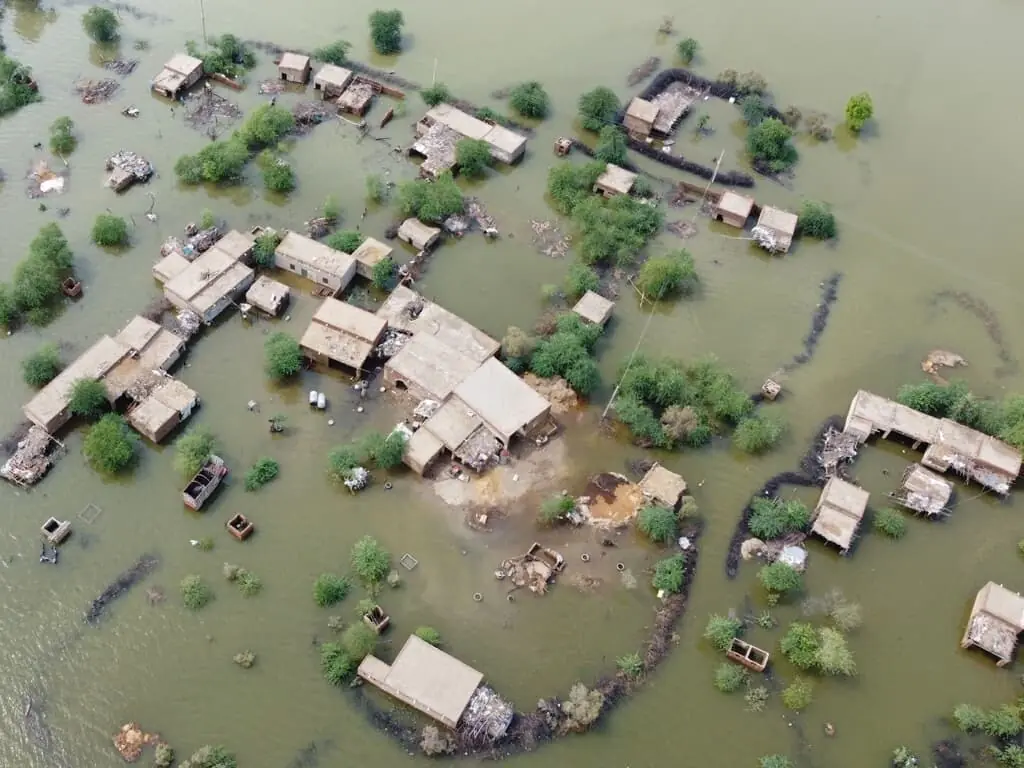

ISLAMABAD: Pakistan remained on the frontline of the global climate crisis in FY2026 as the 2025 floods alone caused damages worth Rs 822 billion, claimed more than 1,039 lives and displaced over four million people, according to the Pakistan Economic Survey 2025-26.
The document noted that 2025 ranked as Pakistan’s second warmest year in the past 65 years, with a national mean temperature of 23.9°C and rainfall three percent below average. Progress under the IMF Resilience and Sustainability Facility was highlighted in the survey, including completion of four key reforms: introduction of carbon levy, adaptation of an electric vehicle policy framework, issuance of climate-related financial risk management guidelines, and operationalisation of green taxonomy and ESG disclosure guidelines.
Climate change has moved from a distant threat to a present reality for Pakistan, creating serious risks for the country’s economy, agriculture, infrastructure and population. It noted that despite contributing less than one percent to global emissions and only 0.4 percent of historic emissions, Pakistan continues to face a disproportionately high burden of climate-related disasters.
According to the survey, shifting monsoon dynamics intensified extreme precipitation, while excessive heat and rainfall triggered multiple floods across the country. Pakistan has faced repeated climate shocks in recent years, including the catastrophic 2022 floods and the widespread 2025 floods that hit all four provinces and Azad Jammu and Kashmir.
The climate change is now a major downside risk to Pakistan’s economic growth, as extreme weather events damage crops, homes, roads, public infrastructure, livelihoods and basic services. The agriculture sector, rural communities, flood-prone districts and low-income households remain among the most vulnerable to climate shocks.
Pakistan has launched the Pakistan Climate Prosperity Plan as a flagship investment-led framework to transform climate challenges into opportunities for sustainable economic growth, resilience and prosperity. The plan is aimed at mobilising climate investment and linking adaptation needs with economic development.
The survey said the Pakistan Climate Prosperity Plan also presents a major climate investment requirement, estimating that the country will need around USD 1.6 trillion by 2050, with annual investment needs of about USD 65 billion. It projected climate-related investments of USD 565.7 billion by 2035, covering priority areas such as energy transition, climate-resilient agriculture, green economic zones, infrastructure, transport and natural capital.
The survey highlighted Pakistan Green Taxonomy, which has been issued and is being implemented. Under this framework, voluntary reporting of climate-related risks, opportunities and taxonomy-aligned activity data will continue until June 2029 before a three-phase mandatory rollout. The taxonomy is expected to help identify green investments, improve climate finance flows and support sustainable business activity.
Copyright Business Recorder, 2026




















Comments