


The petroleum question: putting the levy story in context
Pakistan's petroleum levy has been competently managed, protecting consumers during a 2026 regional crisis and global oil instability through strategic policy choices and institutional reforms, despite public criticism.
- Strategic reduction of the petroleum levy during the 2026 regional crisis.
- Institutional reforms and diplomatic efforts stabilizing fuel prices.
- The petroleum levy's critical role in federal revenue and broader consumer relief.
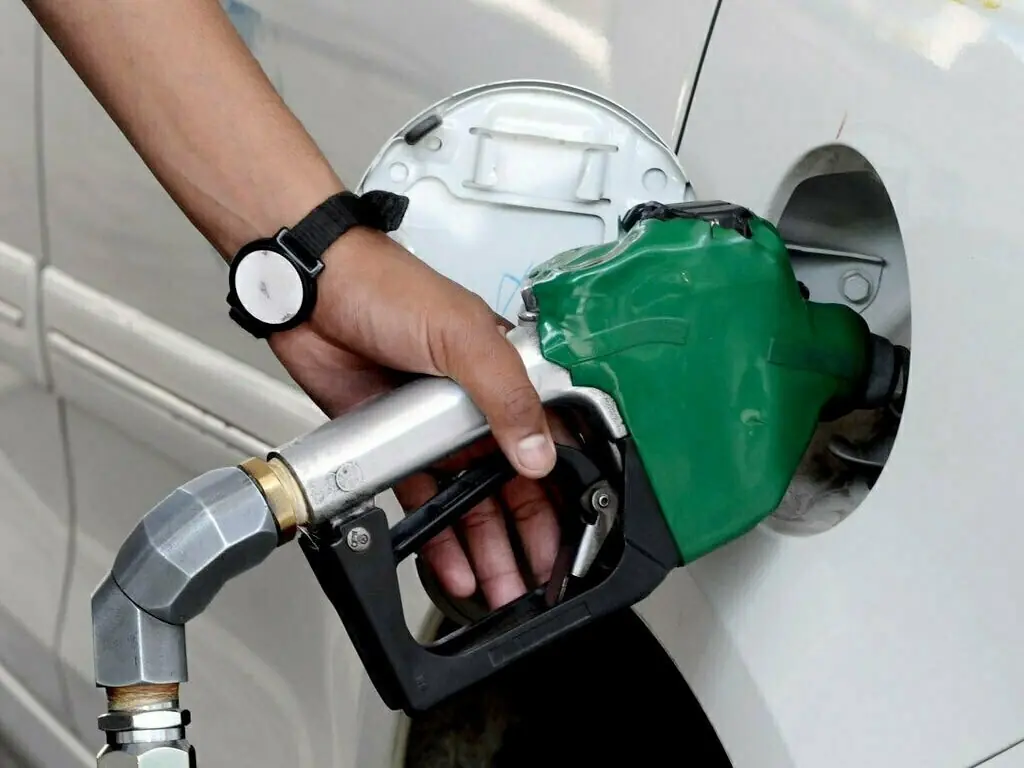

Few line items in any Pakistani budget generate as much heat as the petroleum levy. The numbers are read at the pump, the commentary is delivered before the budget speech is done, and the decision is judged in a vacuum that ignores the wider context.
The Federal Budget 2026-27 will once again find the petroleum question at the centre of public debate, and a fair reading of that question requires going back over the past two years to recover what actually happened.
Start with the most important and least mentioned fact. During the one-month window before and after the regional crisis of 2026, the petroleum levy was reduced to zero. That was a deliberate policy choice taken at the moment global oil markets were in convulsion, with the Strait of Hormuz disruption pushing twenty per cent of global oil supply into uncertainty.
The decision shielded the Pakistani consumer from the full force of an external shock that estimates put at between 590 billion and 3.5 trillion dollars of global economic risk.
With the subsequent stabilisation of the economy and the gradual normalisation of global energy markets, the levy has been marginally increased. The increase is small. The position of the Finance team has been clear that no further increase in the levy is confirmed for the upcoming budget cycle. That is a position worth noting because it goes against the headline assumption many critics have already arrived at.
The counterfactual is the part of the story that rarely makes it onto talk show panels. If the government had not stabilised the economy through the difficult policy choices of the past two years, and if it had not played the constructive diplomatic role that supported the de-escalation of the regional crisis, fuel prices at the Pakistani pump would have been considerably higher than they are today. That is not speculation. It is the arithmetic of an import-dependent economy facing a global energy disruption without the institutional architecture to manage it.
The institutional architecture in question is now visible. The Petroleum Management Committee, originally a routine inter-ministerial body, was elevated into the National Coordination and Management Council during the crisis. The Council brought energy, food, finance, trade and security under a single whole-of-government platform.
National dashboards tracked oil, commodities, foreign exchange and supply chains in real time. Scenario modelling for oil shocks, freight disruption and inflation risks was conducted continuously.
Pakistan maintained four weeks of fuel reserves through the peak of the disruption, with power stability and uninterrupted logistics across the country.
The historical perspective matters too. Petroleum shortages and long queues at retail outlets, the kind that defined fuel pricing crises in earlier years, have been avoided across the past two years. Relative price stability has been sustained through a period in which global oil markets have been anything but stable.
The Petroleum Development Levy, which stood at approximately eighty rupees per litre before the regional crisis, was near eliminated when global prices spiked, and that is the single most direct piece of consumer relief the petroleum sector has provided in recent memory.
The budget arithmetic around petroleum is constrained in ways the public conversation rarely acknowledges. The Federal-Provincial financial dynamics under the NFC Award mean that the FBR revenue retained at the federal level is substantially consumed by debt servicing and defence expenditure. The petroleum levy is one of the few revenue handles that sits cleanly with the federal government and that flexes with macroeconomic conditions. Its calibration has direct implications for fiscal headroom, which in turn affects the government’s ability to fund consumer-facing relief in other areas, including electricity tariffs, agricultural support and the Bijli Sahulat package.
The electricity story sits alongside the petroleum story because the two are linked in the household budget. The cost of electricity has come down by 10.31 rupees per unit between June 2024 and June 2025, and by 9.01 rupees per unit between March 2024 and April 2026. No increase in electricity tariffs has been effected for the common consumer over the past two years. The industrial cross subsidy has been removed at 4.04 rupees per unit. The Bijli Sahulat package and the cut in the EV tariff from 71 rupees to 39 rupees have provided targeted relief.
What the upcoming budget needs to deliver on petroleum is predictability rather than dramatic adjustment. The Finance team has signalled the intent to maintain the current trajectory, with the levy remaining a calibrated instrument rather than a punitive one. The corresponding investment in strategic fuel reserves, building on the lesson of the regional crisis, is being institutionalised so that the country no longer faces the choice between short-term consumer relief and medium-term supply security.
The honest reading of the petroleum levy story is that it has been managed with a degree of restraint and competence that the public conversation rarely credits. Pakistani fuel prices today are lower than they would have been under any reasonable counterfactual that did not assume the macro stabilisation, the diplomatic role in de-escalation, and the institutional response to the global energy shock. Budget 2026-27 is being designed to preserve that record, not to spend it down. That deserves engagement on the substance rather than reaction on the headline.
Copyright Business Recorder, 2026
The writer is an Islamabad-based public policy commentator, focusing on energy markets, fuel pricing and fiscal reform in Pakistan




















Comments