


France, allies eye national measures to pressure Israel over West Bank, diplomats say
- Sanctions announcement expected within days, diplomats say
France is leading a multi-country effort to impose national sanctions, including asset freezes and travel bans, on individuals linked to West Bank violence, amid blocked EU-level action and escalating tensions.
- Coordinated national sanctions targeting individuals in the Israeli occupied West Bank.
- Reasons for pursuing national sanctions despite EU-level disagreements.
- France's upcoming meeting to discuss the Israeli-Palestinian conflict.
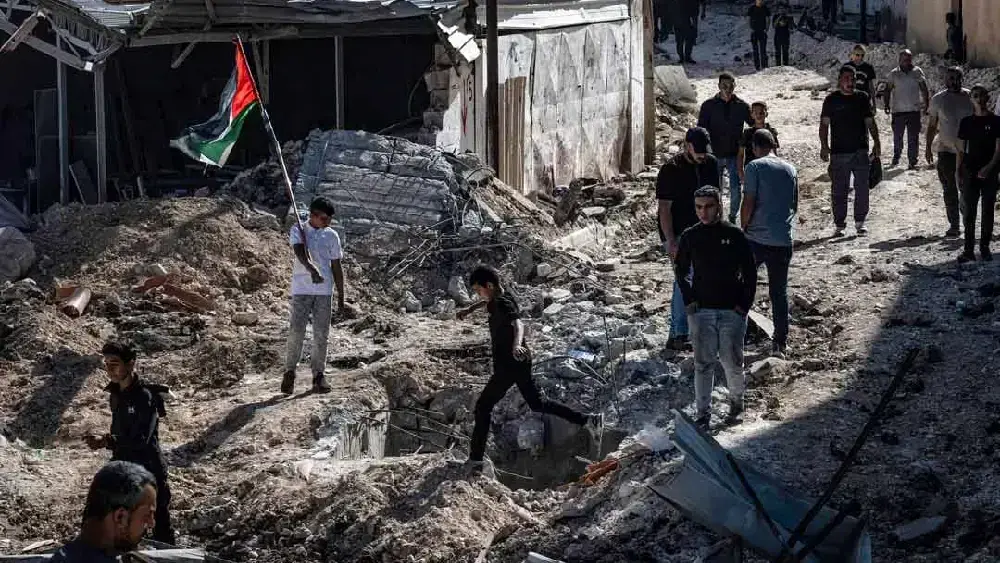
PARIS: France is working with several countries to step up pressure on Israel by pressing ahead with coordinated national sanctions targeting individuals linked to violence in the occupied West Bank, three European diplomats said on Saturday.
The measures, which would include asset freezes and travel bans, have yet to be finalised and countries may adopt different lists of individuals, the diplomats said.
The move comes amid escalating violence by Israeli settlers in the occupied West Bank and underscores anger in many Western countries toward Prime Minister Benjamin Netanyahu’s government, which has expanded settlements. Diplomats say that expansion is aimed at undermining prospects for a Palestinian state.
No EU unanimity for tougher measures on Israel
The diplomats said that with efforts blocked at the European Union to advance tougher measures against Israel, several countries had concluded that coordinated national sanctions were the best option for now.
READ MORE: EU agrees long-stalled sanctions on Israeli settlers
“There is no unanimity at the EU level, so we have moved to discussions at the national level,” one diplomat said.
Two of the diplomats said the announcement would be in the coming days.
Another diplomat said Britain and Norway were among the countries France was coordinating with, although it remained unclear who else could join.
Most countries avoid publicly discussing national sanctions for fear that potential targets could shift assets in advance.
Israeli Foreign Minister Gideon Saar said after some new EU sanctions on May 11 that the bloc had “chosen, in an arbitrary and political manner, to impose sanctions on Israeli citizens and entities because of their political views and without any basis.”
Seven Western nations, including France, Britain, Australia and Canada, accused the Israeli government on May 22 of aggravating tensions in the occupied West Bank.
A key concern is Israel’s plan to build a settlement east of Jerusalem, known as the E1 project, which would bisect the occupied West Bank and cut it off from East Jerusalem, fragmenting territory Palestinians seek for an independent state.
“In the face of settlement expansion and violence in the occupied West Bank, we have already taken measures. More could follow,” a French diplomatic source said, declining to elaborate.
Britain’s Foreign Office declined to comment. The Norwegian foreign ministry did not immediately reply to a request for comment.
France hosts meeting to keep issue on the table
The push to increase pressure on Israel at the national level comes just days before France hosts a meeting on June 12 in Paris, bringing together Israeli and Palestinian civil society groups and about a dozen foreign ministers.
The meeting will mark one year since the adoption of the New York Declaration, a non-binding United Nations resolution endorsed by the General Assembly that set out a roadmap towards a Palestinian state and led to about a dozen countries, including France, recognising a Palestinian state in September.
French officials have said they want to keep the issue on the international agenda as wars in Iran and Lebanon draw attention away from the Israeli-Palestinian conflict, while talks over Gaza’s future remain deadlocked despite a fragile ceasefire.















Comments