



It is a tale of two trajectories.
It was 2001. The United States declared the War on Terror.
It was 2001. China joined the World Trade Organization (WTO).
It is two events and two directions.
It is guns versus goods.
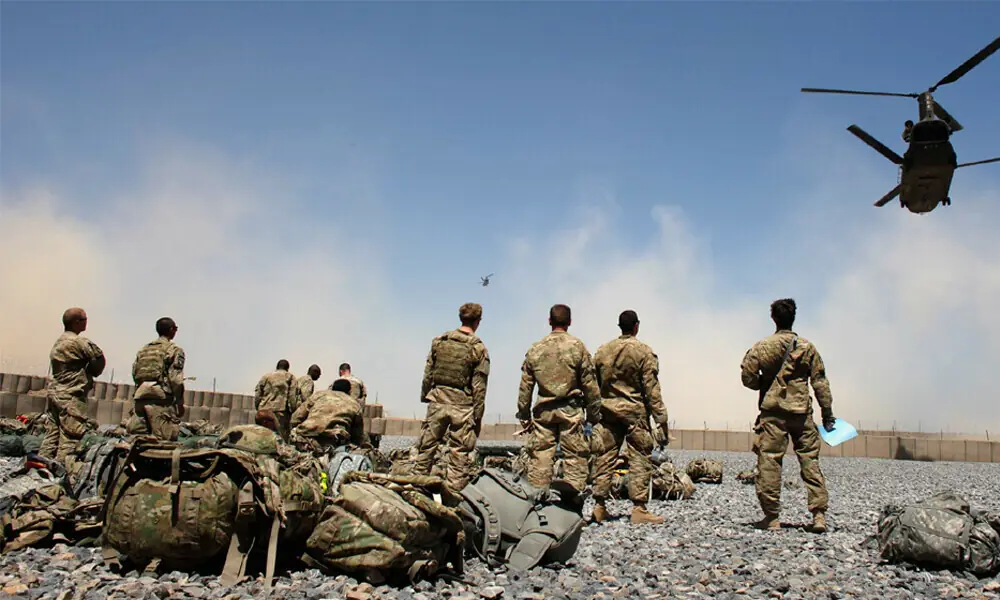
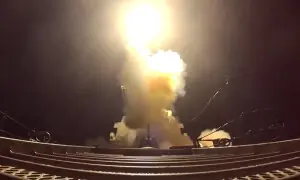
Over the next two decades, the United States committed vast resources to military campaigns across Afghanistan, Iraq, Syria, and beyond. An estimate from Brown University’s Costs of War Project shows that the cumulative cost of post-9/11 wars exceeds $8 trillion. American presence has long been centered around military bases, deployments, and conflict zones.
China meanwhile picked a different ledger. Over the same period, China has steadily expanded its presence across markets worldwide, becoming the largest trading partner for well over 100 countries. Since Beijing’s entry into the WTO in 2001, China’s share of world merchandise exports rose from merely 4 percent to over 15 percent. In the meantime, the US’ share declined from approximately 12 percent, settling below 9 percent.
It is warfare versus welfare.
The contrast sharpens in scale and pace. In 2001, the US economy stood at about $10.6 trillion; today it is near $30 trillion. In the meantime, China’s GDP has grown around fifteen fold surging from just $1.3 trillion to nearly $20 trillion.
In purchasing power terms, it even exceeds the United States. Yet the comparison of aggregate growth only partly reflects the deeper shift in individual earnings. Income per person in China rose from around $1,050 to nearly $14,000, condensing decades of development into a single generation.
It is a loss of lives versus a rise in lives.
Over 940,000 people, including more than 432,000 civilians, were killed as a consequence of the post-9/11 war violence. In contrast, China lifted around 800 million people out of extreme poverty over the past decades. This is an achievement unparalleled in modern economic history.
It is domination versus development.
While the United States poured trillions into post-9/11 wars, its domestic infrastructure continued to remain unimproved. A C-grade from the American Society of Civil Engineers indicates the poor state.
Meanwhile, China stunned the world with its domestic infrastructure development in terms of scale and sophistication. Alongside, through the Belt and Road Initiative, it has financed and built roads, ports, and power networks across Asia, Africa and beyond; thereby, China extended its economic and diplomatic reach in regions where American influence once remained unchallenged.
The current US-Israel war against Iran started in February. The trilateral conflict rapidly spiralled, engulfing the entire Gulf region. The consequences are brutal: a large number of casualties, damaged infrastructure and stressed economies.
The economic linkage between Pakistan and the Gulf is significant. In fact, Pakistan’s exposure to the Gulf region is higher than that of its peers, such as Bangladesh, India, Malaysia, Indonesia, Türkiye, Thailand, and the Philippines. 12 percent of Pakistan’s exports and 31 percent of its imports are Gulf-specific.
Among exports, most are perishable goods, more susceptible to procedural delays. Imports are predominantly energy, which is critical for economic functioning. Given this, what is unfolding in the Gulf brings economic tremors of grave consequences.
In addition to trade relations, Gulf region contributes to Pakistan around 90 percent of its overseas jobs, which yield around 55 percent of remittance inflows. These are not dead statistics. A large number of households depend on these inflows for their everyday expenses, including school fees and medical bills. These can be vulnerable as the crisis continues.
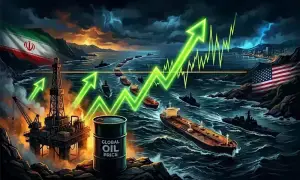
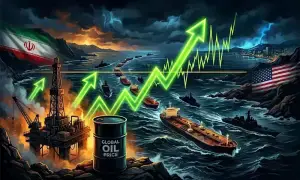
Clearly, the consequences of the Gulf crisis are not regional. The Strait of Hormuz, being a major waterway for global trade, accommodates around 20 million barrels of oil per day. This amounts to about one-fifth of the global oil trade. Any disruption there has ripple effects across the global economy. Brent crude hovered around $70 before the crisis, and surged sharply day after day. Thus the conflict results in oil price surge, leading to a sharp rise in household inflation and raising concerns about macroeconomic stability among policymakers.
As of now, the Strait of Hormuz is effectively closed to commercial traffic, given the dangerous dual-blockade standoff.
And so, one looks back and speaks to Christopher Columbus.
Dear Admiral of the Ocean Sea, if you could whisper in their ears. The voyage that opened the Atlantic world was one of openness and curiosity. Not of blockage and containment.
From the land you encountered, a nation emerged. It expanded the frontiers of science, built institutions of economy and society, and connected the globe through ideas, innovation and enterprise. That legacy still commands admiration.
But there is a pattern harder to ignore. More force, more confrontation and less restraint. While exploration, invention, and openness have remained hallmarks of the spirit of the United States, Yet it has recently been drifting more toward disruptions, sanctions, and blockades.
The lesson of history is clear: resources spent on conflict are opportunities lost for economic development.
The question is about direction. Whether nations choose to invest in development or exhaust themselves in conflicts. In effect, it is choice of Warfare or welfare. In other words, it is a choice between build and burn.
Copyright Business Recorder, 2026
The writer is a Chief of Research at the Pakistan Institute of Development Economics (PIDE). He can be reached at [email protected]









Comments