


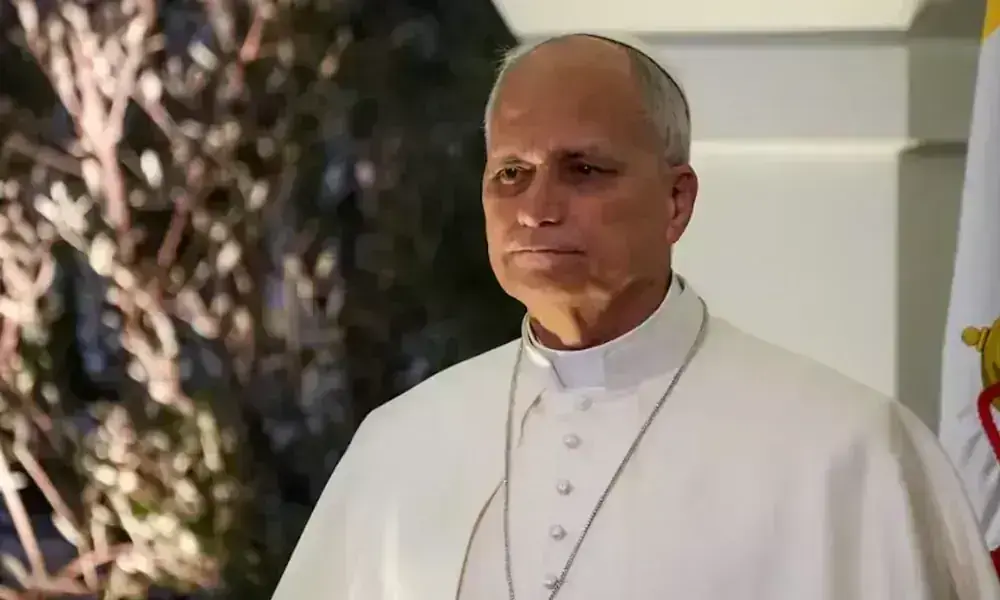
EDITORIAL: Pope Leo XIV’s first encyclical “Magnificent Humanity” arrives as a timely moral reckoning with the unchecked rise of Artificial Intelligence (AI), calling for the technology to be “disarmed” before its concentration in the hands of a powerful few reshapes humanity beyond recognition.
With the document being termed a manifesto for AI, the pope’s warning that “a race for ever more powerful algorithms and larger datasets, driven by the desire to secure geopolitical or commercial dominance” is already well underway, but most governments and tech giants have so far lacked both the will and the framework to answer it with anything more binding than good intentions. That the leader of over a billion Catholic Christians has chosen AI regulation as the defining cause of his papacy speaks volumes about how rapidly, within barely four years of ChatGPT’s launch, the technology has moved from Silicon Valley novelty to a force consequential enough, and dangerous enough, to demand a papal response.
What has compelled the pope to act is an accumulating body of real-world evidence about AI’s increasingly destabilising impact. It is already reshaping labour markets at a pace that outstrips any workforce’s ability to adapt, with Goldman Sachs estimating as far back as 2023 that up to 300 million jobs globally could be automated away in the coming decade.
Moreover, AI is turbocharging disinformation and enabling the mass production of deepfakes that corrode trust in democratic institutions. Most distressingly, it has concentrated economic power with breath-taking speed in the hands of a few corporations that now control the data, computing infrastructure and the algorithms that increasingly mediate how billions of people work, learn, make decisions and form opinions. And equally worryingly, it is now finding its way onto the battlefield, with autonomous weapons systems capable of making lethal decisions without human intervention, raising the spectre of warfare conducted at machine speed while potentially remaining unencumbered by any meaningful accountability. It is clear, then, that if left ungoverned, AI threatens lives, livelihoods, democratic institutions, privacy and the very idea of truth.
All these dangers are exacerbated by the glaring absence of binding legal guardrails around AI’s development and deployment.
As recently as last week, the Trump administration shelved an executive order that would have mandated safety reviews of new AI models. That retreat exposed just how little appetite exists among the most powerful governments for meaningful oversight of AI. Such a disposition was already on full display when both the US and the UK refused to sign a declaration at the 2025 Paris AI Action Summit committing to ethical and responsible AI development, a pointed signal that two of the most consequential AI powers have little intention of reining in the technology’s insidious impacts or of pushing back against the unchecked powers of the firms driving it. This approach has prioritised AI’s commercial and strategic dominance over a more human-centred approach to its development.
It would be a mistake to cast the encyclical as a rejection of AI and its incredible transformative potential. It is important to note that the pope did not call for rejecting technology, “but preventing it from dominating humanity” and making it “human-friendly”, universally accessible and subject to open debate rather than the closed deliberations of a powerful few. That the manifesto was presented with Anthropic’s co-founder in the room is itself telling as that underscores that apprehensions regarding AI’s trajectory are shared by some of the very people building it.
The question the pope has put before the world, then, is not whether AI should exist, but who it should serve. The answer, his encyclical rightly insists, must be humanity, and not the other way around.
Copyright Business Recorder, 2026




















Comments