


Pakistan points out unilateral moves threaten water treaties
Pakistan's Climate Change Minister warned that unilateral actions on transboundary water threaten downstream countries, urging stronger global protections, compliance, and dispute resolution mechanisms for shared resources.
- Unilateral actions on transboundary water and risks for downstream nations.
- The Indus Waters Treaty as a tested international framework.
- Proposals for binding international covenants and dispute resolution.
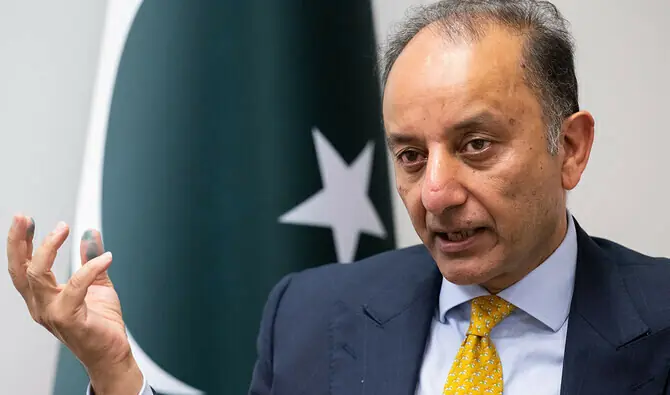

DUSHANBE: Federal Minister for Climate Change and Environmental Coordination Dr. Musadik Malik on Tuesday warned that unilateral actions on transboundary water arrangements could weaken international treaty systems and create long-term risks for downstream countries, as he called for stronger global protections for shared water resources.
Delivering Pakistan’s national ministerial statement at the 4th High-Level International Conference on the International Decade for Action in Dushanbe, Tajikistan, the minister argued that climate stress and weakening multilateral mechanisms were creating new vulnerabilities for countries dependent on shared river systems.
READ ALSO: Musadik for capacity building to face climate change
Turning to transboundary water governance, Malik argued that existing frameworks had been built on assumptions of cooperation and good faith but were increasingly being tested under changing political realities.
Citing the Indus Waters Treaty as an example, he said the agreement had remained stable for decades and survived periods of conflict, but warned against approaches that allow political considerations to override established legal frameworks.
“We had a treaty in our neighbourhood. Pakistan had a treaty, Indus Water Treaty, which stayed stable for 65 years. It survived war after war after war between two nuclear powers,” he said.
The minister argued that climate change should lead to greater transparency, stronger compliance, more data sharing and improved early warning systems rather than becoming grounds for unilateral reinterpretation of agreements.
Malik also referred to a recent court of arbitration ruling relating to hydroelectric design parameters under existing arrangements, saying the decision clarified substantive limits on upstream water control capabilities while exposing broader weaknesses in global enforcement mechanisms.
He warned that if treaty-based protections weaken, downstream countries across different river basins could face growing uncertainty over water access and security.
“The one treaty case that I submitted to you is not the collapse of the treaty; it is the revelation,” he said, adding that precedents set today could shape the future of international water governance.
Calling for action ahead of the 2026 UN Water Conference, Pakistan proposed binding international covenants for transboundary water governance, compulsory third-party dispute resolution mechanisms between upstream and downstream states, and political, diplomatic and economic consequences for violations.
The minister said enforceable governance systems already exist for trade, nuclear regulation and carbon markets, but comparable international mechanisms for water remain limited.
Dr. Malik said water scarcity, glacier retreat and recurring climate shocks were no longer environmental concerns alone but had become issues of food security, economic stability and intergenerational equity.
Referring to Pakistan’s experience, he said the country contributes less than one percent of global greenhouse gas emissions but continues to face severe climate impacts, including floods, drought cycles and pressure on agricultural livelihoods.
The minister illustrated the human impact through the example of a Pakistani farming family that had repeatedly fallen back into poverty after years of alternating floods and droughts, saying climate disruptions were reversing decades of economic progress.
Concluding his address, Dr. Malik urged governments to establish institutions capable of protecting vulnerable populations affected by water insecurity.
He said communities facing water shortages, disease and climate-driven livelihood losses were seeking practical protections rather than additional statements of intent.




















Comments