


Lithium batteries: Solar’s Second Act
Pakistan's solar market is shifting from rapid growth to consolidation. With revised net metering, the focus is now on energy storage, as battery imports surge to enhance self-consumption and grid independence.
- Massive cumulative solar panel imports.
- Solar market's transition from hypergrowth to consolidation.
- Impact of revised net metering on solar economics.
- Surging lithium-ion battery imports for energy storage.
Pakistan’s solar story is no longer about explosive takeoff. That phase is over. What comes next may prove even more consequential.
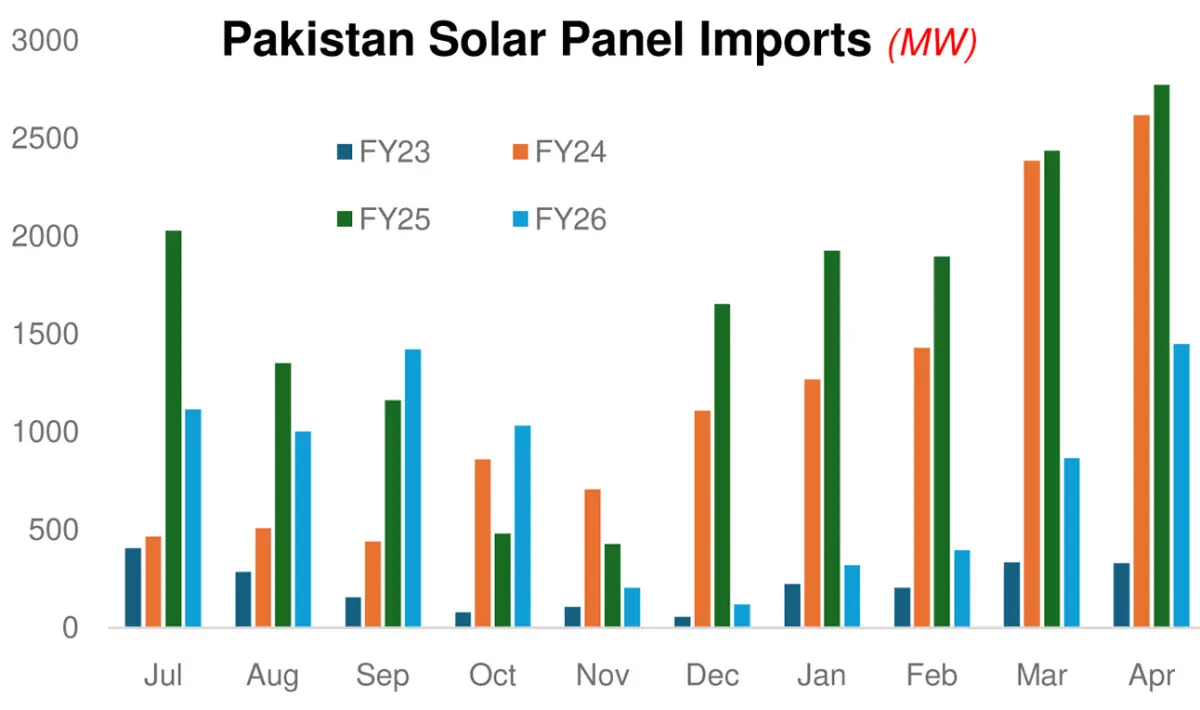
By the end of 10MFY26, Pakistan’s cumulative solar panel imports had reached 54,711MW, quietly surpassing the country’s entire grid-based installed power capacity from just a year ago. The sheer scale is staggering for a market that, until recently, was still being treated as a fringe energy alternative.
The frenzy, however, has cooled.
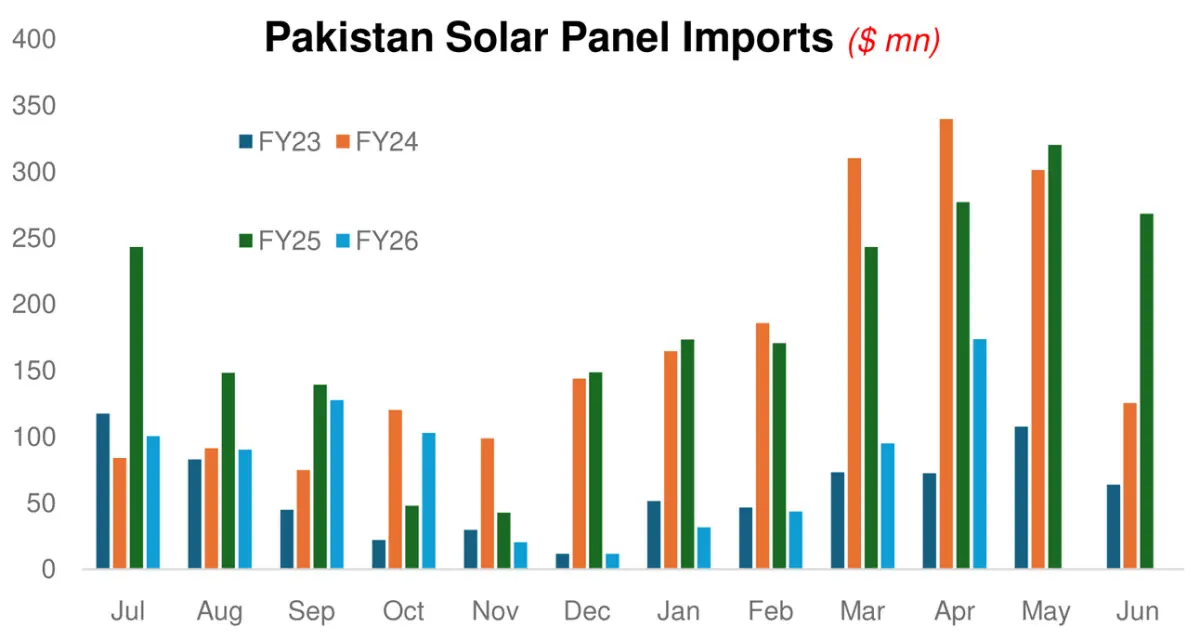
Solar panel imports during 10MFY26 stood close to 7,600MW, nearly half the 14,500MW imported during the same period last year. On the surface, that may look like a sharp slowdown. In reality, it resembles the natural transition from hypergrowth to consolidation.
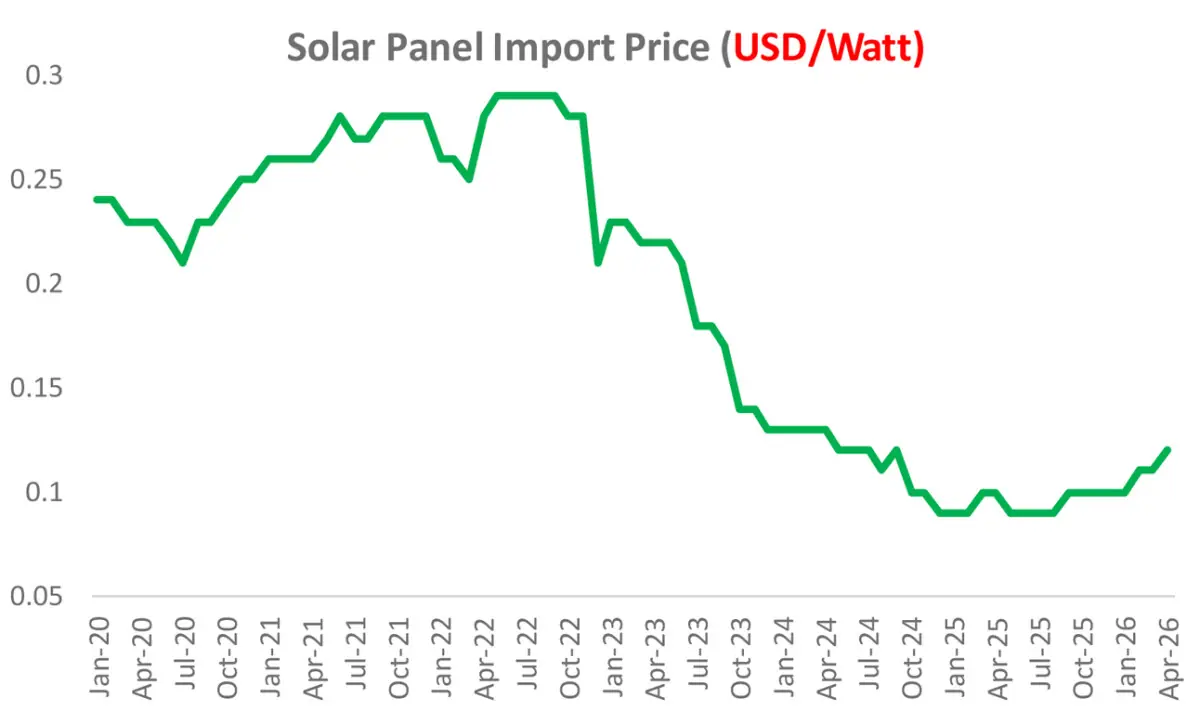
The base is now massive. Rooftops across urban Pakistan have already been saturated by early adopters, industrial users, commercial consumers, and households desperate to escape ever-rising grid tariffs. The exponential curve was never going to sustain indefinitely. But the direction of travel remains unchanged.
Solar is no longer a trend. It is infrastructure.Much attention has recently centred around the revised net metering regime, which materially alters project economics for new users. Payback periods that once hovered under two years for many consumers are now stretching toward five to six years in several cases.
The policy shift undoubtedly dents the attractiveness of new on-grid installations.
Yet the assumption that net metering alone drove Pakistan’s solar boom misses the larger story.
The real engine behind adoption was always behind-the-meter economics. Consumers were reacting to expensive and unreliable grid electricity, not merely chasing lucrative buyback rates. A significant portion of installations never depended heavily on exporting excess power back to the grid in the first place. Energy security, bill reduction, and operational continuity mattered far more.
That underlying logic has not disappeared.
If anything, the market now appears to be entering its next evolutionary phase: storage.
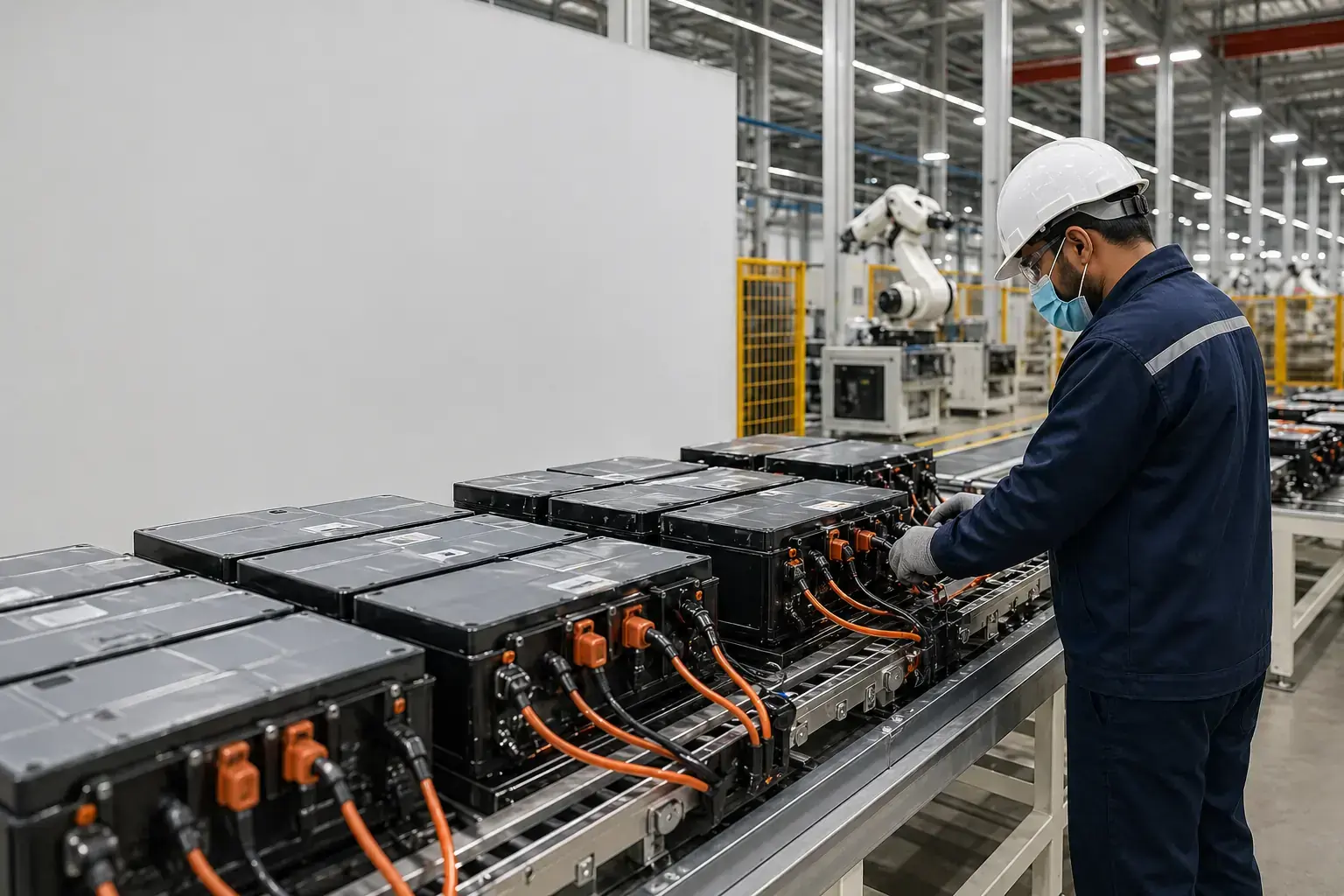
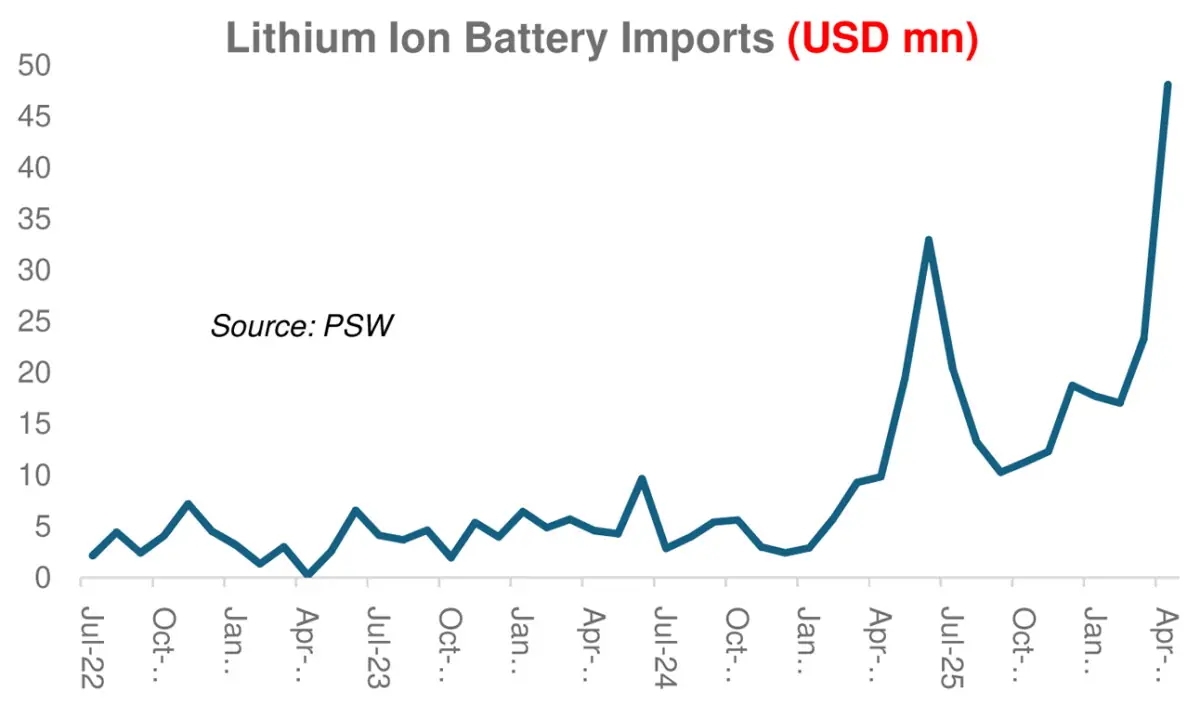
The lithium-ion battery import trend is beginning to reveal where consumer behaviour is heading. April 2026 recorded the highest-ever monthly battery imports at nearly $48 million. On paper, the numbers may still appear modest relative to the scale of solar panel imports. But the trajectory is difficult to ignore.
Battery imports in FY26 are on track to approach $250 million, nearly six times the level seen in FY23.
That is not noise.Consumers increasingly understand that the economics of solar are changing. If excess daytime generation cannot be exported at highly attractive rates, the next best alternative is obvious: store it.
For households and businesses alike, battery systems offer greater self-consumption, reduced dependence on the grid during peak tariff hours, backup during outages, and a pathway toward deeper energy autonomy.
In many ways, batteries solve the very problem that revised net metering economics created.
The transition may also fundamentally reshape the nature of Pakistan’s distributed energy landscape. The first wave of solar adoption was largely about generation capacity. The next wave could revolve around optimization, storage, and intelligent energy management.
The battery curve is still small enough to escape mainstream attention. But so was solar once.
And just as solar imports once appeared too small to matter before snowballing into a structural shift, batteries now seem poised to become the next mini revolution quietly unfolding underneath Pakistan’s energy transition.


















Comments