


Push for boosting provincial resources
Provinces are urged to increase agriculture income tax (AIT) collections, an IMF benchmark, which remain low due to the powerful farm lobby, risking federal intervention and broader tax increases.
- Powerful farm lobby's impact on tax collection.
- Provinces' significant reliance on federal transfers.
- Federal government's threat of broader tax increases.
- Taxing rich landlords at the same rate as salaried class.
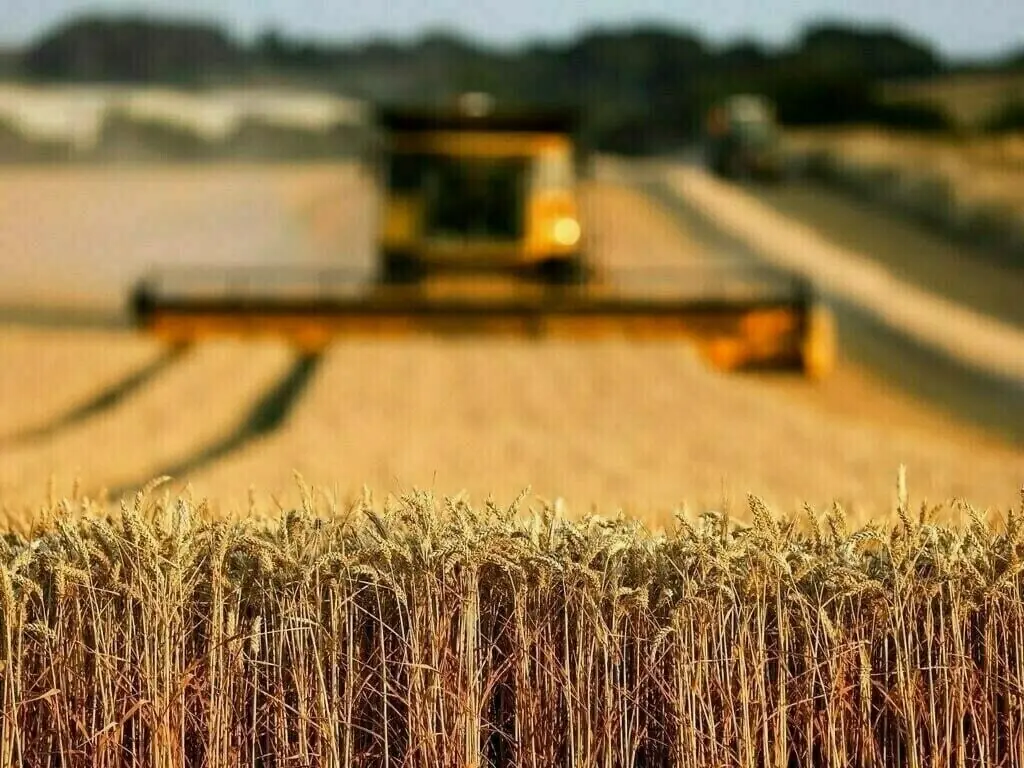
EDITORIAL: The federal government has urged the provincial governments to increase own-resources and emphasised the need to raise agriculture income tax (AIT) collections which remained abysmally low in the current year in spite of the passage of legislation in the provincial finance bills 2025 – in conformity with the International Monetary Fund (IMF) time-bound benchmark.
The consensus is that this failure is entirely attributable to the very powerful farm lobby represented in both the federal and provincial assemblies.
The farm tax is a provincial subject as per the constitution, a clause which has never been amended even though successive governments have successfully passed 27 amendments that require two-third majority in parliament. This is attributable to the farm lobby’s overwhelming influence in the federal as well as provincial assemblies. It is relevant to note that the passage of the twenty-seventh amendment despite considerable opposition to some of its clauses – including those expressed by the IMF in its Governance and Corruption Diagnostic Report that was uploaded as a second review prior condition, identifying systemic weaknesses across core state functions as a massive macroeconomic constraint costing approximately 6 to 6.5 percent of GDP – passed through the assembly.
The precise amount collected under AIT was not revealed in the consolidated fiscal operations of the federal and provincial government (July-March 2026) leading the critics to conclude that the amount was simply too low to show; however, the consolidated data July-March 2026 shows that Balochistan relied the heaviest on federal transfers – to the tune of 85 percent, followed by Punjab at 84 percent, Khyber Pakhtunkhwa (KPK) at 80 percent and Sindh at 66 percent. And apart from sales tax on services, excise duties, stamp duties and motor vehicle tax, other taxes (which are not identified and no doubt include collections under AIT) amounted in Punjab to only 8 percent of own resources (and inexplicably this declined in actual terms from the July-December 2026 collection of 32,798 million rupees to 28,581 million rupees July-March 2026 – a decline not evident in the other three provinces), Sindh 32 percent, KPK 36 percent and Balochistan 27 percent.
The federal government reportedly told the provinces that if they fail to raise collections from AIT, a direct ability to pay tax, it may be forced to increase other taxes that would hit the consumers throughout the country, especially in view of the fact that the federal government’s reliance on indirect collections, whose incidence on the poor is greater than on the rich, is high. This should be concerning as it directly impacts on the provincial government constituents.
At present, poverty levels based on Food Energy Intake method indicate that the expenditure required to meet a minimum daily threshold of 2350 calories per adult, is 43.5 percent as per independent researchers and 42 to 45 percent as per the World Bank.
It is critical for the provinces to ensure that next year’s budgets envisage a tax on the income of the rich landlords, at least at the rate payable by the salaried class. Failure to do so may lead to the decision being taken out of the provincial purview.
Copyright Business Recorder, 2026




















Comments