


Oil prices slump 4.28% after Trump says US-Iran negotiations in 'final stages'
- Brent crude futures fell $4.76, or 4.28%, to $106.52 a barrel
Oil prices eased slightly after President Trump suggested a quick end to the Iran conflict, but market uncertainty persists due to conflicting statements and ongoing Middle East supply disruptions.
- Investor wariness regarding US-Iran peace talks.
- Impact of Strait of Hormuz closure on global oil supply.
- Predictions for Brent crude prices amid ongoing supply risks.
NEW YORK: Oil prices fell 4% on Wednesday after U.S. President Donald Trump said that negotiations with Iran were in the final stages, though investors remain wary about the outcome of peace talks as disruption to Middle Eastern supply continues.
Brent crude futures fell $4.76, or 4.28%, to $106.52 a barrel by 11:29 a.m. EDT (1529 GMT) and U.S. West Texas Intermediate futures were down $4.22, or 4.05%, at $99.93. Both contracts were heading for their biggest daily drops in percentage and absolute terms in two weeks.
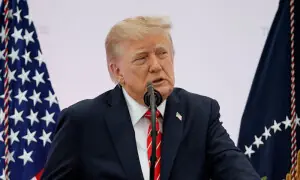
U.S. President Donald Trump said on Wednesday that negotiations with Iran were in the final stages. However, he warned of further attacks unless Iran agrees to a deal.
“We’re in the final stages of Iran. We’ll see what happens. Either have a deal or we’re going to do some things that are a little bit nasty, but hopefully that won’t happen,” Trump told reporters on Wednesday.
However, some market participants and analysts remain wary about the outcome of negotiations and global supply tightness that will likely persist even if the U.S. and Iran reach a deal.
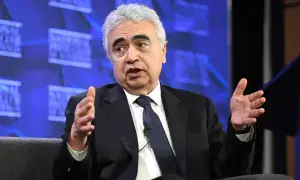
Oil stocks declining ‘very fast’, IEA chief warns
Analysts at Citi said on Tuesday that they expect Brent crude to rise to $120 a barrel in the near term, stating that oil markets are underpricing the risk of prolonged supply disruption, and Wood Mackenzie estimated that it could approach $200 if the Strait of Hormuz stays largely shut until the end of the year.
Similarly, PVM analysts said global oil stocks could reach critically low levels. “Yet, as observed lately, market players are comparatively nonchalant (or complacent) about what the conflict might bring,” PVM said.
The premium on Brent contracts for delivery next month over contracts for delivery in six months an indicator of traders’ views of current supply tightness - is around $20 a barrel, way below last month’s highs above $35.
Russian Deputy Prime Minister Alexander Novak said on Wednesday that some countries were lifting sanctions on Russian oil because global markets cannot function without it, the state TASS news agency reported.
Three supertankers were crossing the Strait of Hormuz on Wednesday, carrying oil bound for Asian markets, after waiting in the Gulf for more than two months with 6 million barrels of Middle East crude on board. The number of vessels crossing the strait remains well below the 130 or so ships that crossed daily before the war.
UAE ADNOC Chief Executive Sultan Al Jaber said on Wednesday it will take at least four months to get back to 80% of pre-conflict flows.
To make up the supply shortfall, countries are relying on commercial and strategic inventories.
U.S. crude stockpiles fell last week as demand remained elevated, the Energy Information Administration said on Wednesday. Crude inventories fell by 7.9 million barrels to 445 million barrels in the week ended May 15, the EIA said, compared with analysts’ expectations in a Reuters poll for a 2.9 million-barrel draw.





















Comments