


Export facilitation, tax reforms, digitization: FPCCI assured of relief measures
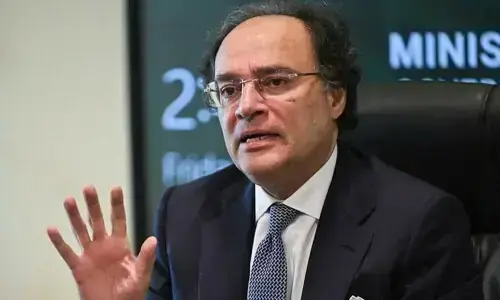
ISLAMABAD: Finance Minister Muhammad Aurangzeb Monday assured the Federation of Pakistan Chambers of Commerce and Industry (FPCCI) of relief measures focused on export facilitation, tax reforms, digitization, and automation aimed at easing compliance and improving services for taxpayers and businesses.
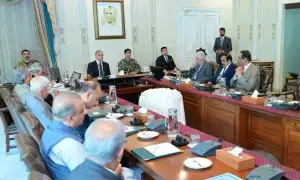
Federal Minister for Finance and Revenue, Senator Muhammad Aurangzeb, held a meeting at the Finance Division with a delegation of the Federation of Pakistan Chambers of Commerce and Industry (FPCCI) led by Atif Ikram Sheikh, President FPCCI.
The discussion focused on a wide range of proposals and taxation-related recommendations in the context of the upcoming Budget 2026–27, including matters relating to sales tax, customs duties, export facilitation schemes, industrial inputs, and regulatory procedures.
During the meeting, the Finance Minister appreciated FPCCI’s role as a representative body of the business community and underscored the importance of continued engagement with industry stakeholders to ensure that economic and fiscal policies remain practical, growth-oriented, and supportive of business, investment, and industrial activity.
The Finance Minister shared the Government’s broader economic priorities focused on sustaining macroeconomic stability, improving the investment climate, supporting export-led growth, encouraging industrial expansion, and enhancing competitiveness across key sectors of the economy. He highlighted ongoing efforts aimed at strengthening economic documentation, modernizing tax administration, promoting digitization and automation, and streamlining regulatory procedures to facilitate taxpayers and businesses.
The Finance Minister noted that the government remained committed to promoting a predictable, transparent, and technology-driven taxation framework while ensuring effective revenue mobilization and broadening of the tax base.
The FPCCI delegation presented sector-specific proposals and recommendations relating to industrial raw materials, machinery imports, export competitiveness, faster refund processing, simplification of tax procedures, and reduction in compliance costs. Participants also shared views relating to exporters, manufacturers, traders, and industrial sectors, including textiles, steel, edible oil, plastics, chemicals, and cotton ginning.
Broader matters relating to trade facilitation, market competitiveness, documentation, customs administration, and regulatory coordination also came under discussion. Participants highlighted the importance of improving transparency, strengthening enforcement capacity, and ensuring a level playing field for legitimate businesses operating within the documented economy.
The Finance Minister reiterated the government’s focus on technology-driven reforms in tax administration and revenue collection systems.
He highlighted ongoing initiatives relating to automation, digital invoicing, data integration, and process simplification aimed at improving transparency, minimizing unnecessary human intervention, enhancing compliance, and facilitating genuine businesses. He further emphasized that digital transformation and data-based governance remained central to the Government’s broader reform agenda.
Participants further exchanged views on export facilitation mechanisms, industrial productivity, and measures aimed at improving Pakistan’s competitiveness in regional and international markets. Discussions also covered support for value-added sectors, timely implementation of export-related schemes, improved access to raw materials and production inputs, and measures aimed at encouraging long-term industrial growth and export diversification.
The meeting also included a discussion on the importance of policy continuity, institutional coordination, and regular engagement between the Government and private sector stakeholders in the context of ongoing economic and fiscal reforms. Participants exchanged views on implementation-related matters, operational efficiency, and measures aimed at facilitating business and industrial activity across different sectors of the economy.
Copyright Business Recorder, 2026















Comments