


Diplomacy towards Chinese investment: ‘Islamabad pursuing B2B model to convert USD13bn project pipeline into JVs’
Pakistan's CPEC Phase-II is shifting from infrastructure to an investment-led, B2B model, focusing on joint ventures, exports, and industrial capacity in agriculture, mining, and ICT.
- Upcoming sector-specific business conferences with Chinese companies.
- CPEC Phase-II's focus on agriculture, mining, ICT, and industrial cooperation.
- Pakistan's refined investment approach and follow-up mechanisms.
- Challenges for foreign investors like policy consistency and taxation.
- Examples of successful Chinese joint ventures and industrial projects.
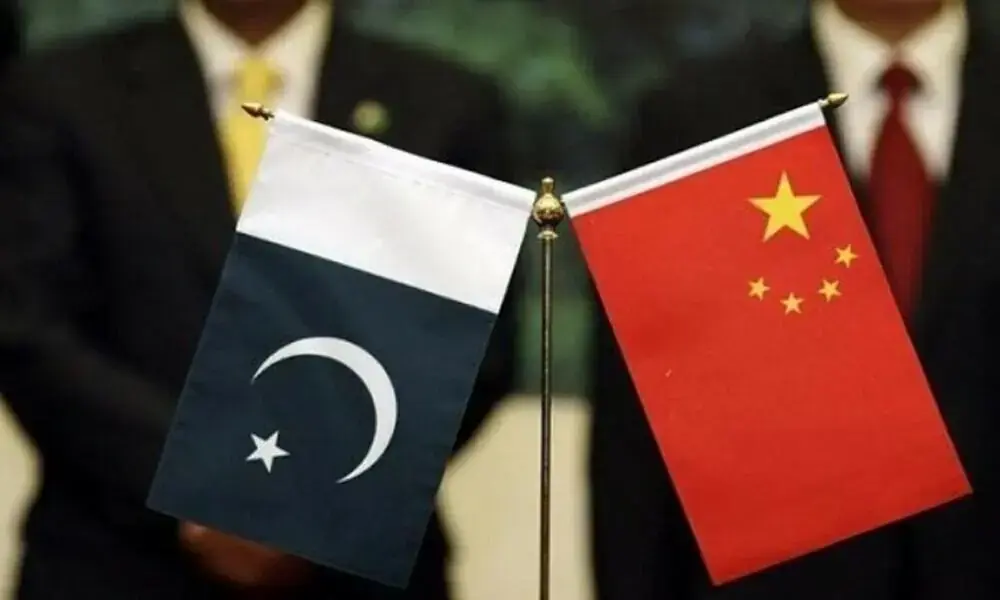

ISLAMABAD: Pakistan’s China-facing investment diplomacy under CPEC Phase-II has moved beyond infrastructure into an investment-led phase, with Islamabad pursuing a structured B2B model to convert a USD13 billion project pipeline generated over the past two years into joint ventures, exports and industrial capacity.
Pakistan’s Ambassador to China Khalil Hashmi told Business Recorder that Islamabad is now preparing a fresh series of sector-specific business conferences with Chinese companies, including an ICT and telecom conference in Hangzhou on May 24, followed by pharmaceuticals, biotechnology and healthcare in Karachi in mid-July, semiconductors and chipset design in Islamabad in August, and surgical instruments, medical equipment and sports goods in Sialkot in September.
He said the upcoming conferences are part of a deliberate effort to take CPEC Phase-II into agriculture, mining and minerals, ICT and broader industrial cooperation, with a stronger focus on value addition, export-oriented manufacturing and conversion of MoUs into bankable projects.
READ MORE: ‘300 MoUs and over 3 dozens JVs worth USD13bn inked with China in 2 years’
“CPEC-1 was about infrastructure and transport. These were basic constituents and essential prerequisites for meaningful economic growth,” Hashmi said, adding that infrastructure would remain a work in progress for a developing country like Pakistan, but the new emphasis was on industrialisation, value addition and business-led cooperation.
He said CPEC Phase-II was being built around four priority areas: agriculture, mining and minerals, ICT, and industrial cooperation.
In agriculture, Hashmi said the focus was not limited to farming, but extended to food processing, machinery, seeds, fertilisers, pesticides, dairy, fruits, vegetables, seafood, meat, cold chain, logistics, packaging, maize starch, potato starch, and wheat and rice-based value-added products.
On minerals, he said Pakistan’s priority was to move beyond raw material exports and focus on deep processing, refining and value addition.
“Some of it may remain raw material where it is commercially viable, but primarily our focus is deep processing, value addition, making products and then exporting and using them locally,” he said.
Hashmi said ICT had also become a major component of Pakistan’s new economic engagement with China.
He said Hangzhou had been selected for the upcoming conference because it is one of China’s leading technology hubs, associated with major technology companies and emerging innovation ecosystems.
The Hangzhou conference will focus on e-commerce, fintech, cyber security, artificial intelligence, gaming, animation, telecom, fibre optic manufacturing, 5G, laptops, mobile phones and handheld devices, he said.
He added that Pakistan wanted to gradually move from assembly towards manufacturing in areas such as laptops, cell phones and handheld devices, though such a transition would take time.
The ambassador said Pakistan had already held sector-focused engagements in agriculture and minerals, while a recent conference in Lahore on home appliances, electrical equipment and battery energy storage systems brought 70 Chinese companies and 106 participants, resulting in 53 MoUs exceeding USD500 million.
He said the government had refined its investment approach over the past two years by preparing sector-specific investment pitch books for Chinese companies. These documents, he said, explain market size, investment opportunities, facilitation measures, incentives, expected returns, utility rates, taxes, exemptions, land availability and Pakistan’s comparative position against regional competitors.
“This is not a free discussion. This is serious work,” Hashmi said, adding that Chinese companies are now asked in advance what they are prepared to offer, while Pakistani companies are asked to clearly identify what they need.
He said the process includes pre-conference screening, orientation sessions, webinars and one-on-one meetings so that companies reach the conference venue with a clear understanding of possible partnerships.
According to Hashmi, this approach has improved the quality of MoUs and increased their chances of conversion into actual contracts, joint ventures and investment.
He said Pakistan had also developed a three-tier follow-up mechanism to track progress after agreements are signed. The first level involves the Board of Investment, SIFC and line ministries, while the second level includes review by the adviser to the prime minister on industries. The third level involves periodic review by the prime minister.
Hashmi said the government now monitors progress through a dashboard, identifying where projects are moving smoothly and where regulatory, taxation, utility or facilitation issues are creating delays. “When we say the conversion rate is around 30 percent, we have the numbers. These are not casual claims,” he said. The ambassador said Pakistan was now taking Chinese delegations to relevant industrial clusters and factories to build confidence in the country’s manufacturing base.
“We are now going to the clusters,” he said, referring to the planned conferences in Karachi, Islamabad and Sialkot.
He said Pakistan was also working on a detailed study of Chinese industrial relocation. Pakistani missions and commercial sections in China, he said, had been tasked to identify sectors, sub-sectors and companies that may be open to relocation, where these companies are currently located, which countries they are considering, and how they align with Pakistan’s priority sectors.
Hashmi said relocation required serious research and could not be treated as a slogan. Once the study is completed, he said, Pakistan would prepare a roadmap with clear milestones and targets.
Discussing challenges, Hashmi acknowledged that policy consistency, taxation, tariffs, duties, utility costs and security perception remained important concerns for foreign investors, including Chinese companies.
He said investors compare Pakistan with Vietnam, Bangladesh, Indonesia, Malaysia, and other regional destinations on the basis of land, utilities, labour cost, taxes, duties, security perception and expected rate of return.
“An investor is not coming because of personal relations. He will compare the numbers,” Hashmi said.
He said Pakistan needed to rationalise tariffs and reduce excessive dependence on indirect taxation if it wanted to become more competitive. He added that the country needed to create stronger incentives for investors, as China and several other Asian economies had done during their industrial expansion.
Hashmi said there was strong awareness at the senior government level that long-term foreign investment required policy predictability.
“Policy consistency is fundamental. There are no two opinions about it,” he said, adding that work was under way in different ministries to address business concerns, though reforms would take time because of fiscal and structural limitations.
He said Pakistan was operating under certain limitations, including its broader macroeconomic and reform framework, but stressed that whatever space was available should be used to prioritise investment, exports and industrial competitiveness.
The ambassador also cited examples of Chinese projects that had moved beyond announcements.
He said one Chinese textile group was developing a $150 million textile industrial park between Lahore and Kasur. Construction had started and the first phase was expected to begin production by next April. Each phase, he said, could generate around 5,000 jobs and produce high-end value-added textile exports.
He also mentioned YTO Express, which had moved from a joint venture agreement with Habib Rafiq Limited to a joint venture company and was now building warehouses to support logistics, including agro-products and fresh exports.
Another example, he said, was Beijing-based IBI Group, an industrial e-commerce platform that had opened an office in Pakistan, started hiring local staff and committed to mobilising around USD1.5 billion annually in investment and a similar amount in trade promotion.
Hashmi said such platforms could help Pakistani small and medium enterprises access Chinese industrial buyers directly and reduce dependence on intermediaries.
He said IBI had millions of registered companies in China across different industrial sectors, which could provide Pakistani firms direct access to buyers and suppliers through cross-border e-commerce.
On global supply-chain diversification, Hashmi said Pakistan had moved swiftly at the diplomatic and geopolitical level, but its ability to benefit economically would depend on readiness.
“These opportunities are usually fleeting. They do not remain forever,” he said.
He said Pakistan-China relations remained steady and deep despite regional tensions, but warned that Islamabad should not assume that strategic ties alone would guarantee economic outcomes. “Strategic trust is based on what we say, what we do and how much we deliver,” Hashmi said, adding that Pakistan would have to continue working seriously to convert Chinese confidence into investment, production and exports.
Copyright Business Recorder, 2026


























Comments