


Warning labels, hard choices
Pakistan's food industry challenges proposed front-of-pack warning labels, citing concerns about uneven enforcement, potential shift to unregulated products, and economic burdens on the formal sector, advocating for a phased, evidence-based approach.
- Industry concerns regarding proposed food warning labels.
- Risks of policy leading to informal sector market shift.
- Impact of regulation on compliant firms and consumer choices.
- Singapore's voluntary healthier choice symbol model.
- Designing a credible, fair, and enforceable labelling regime.
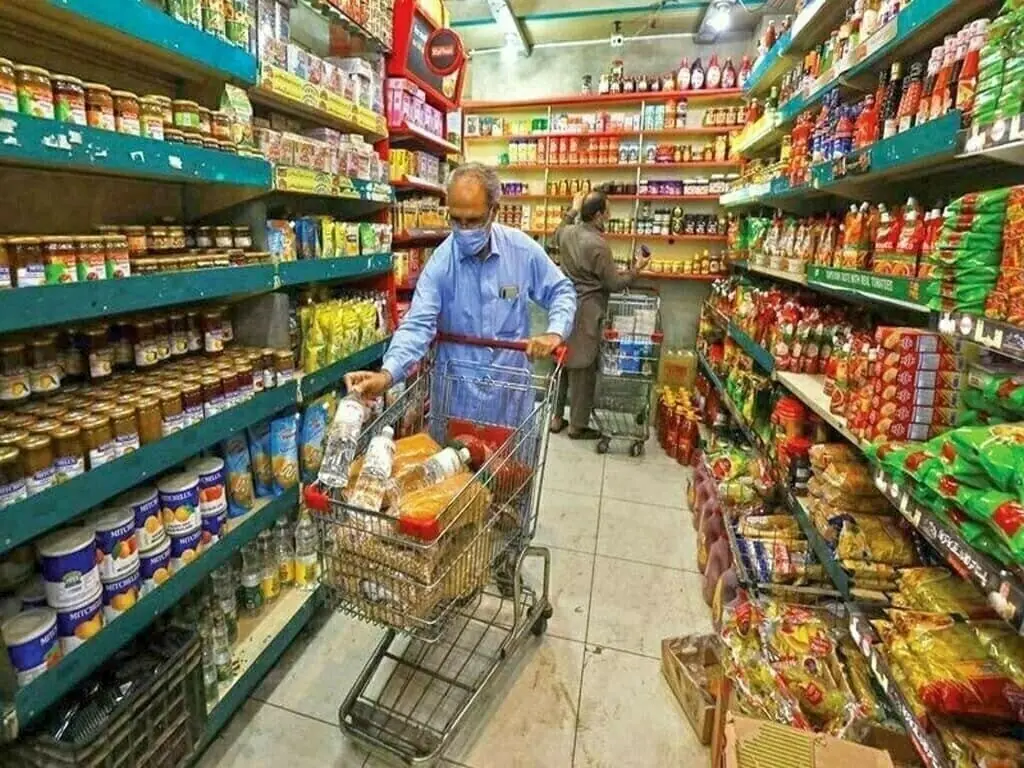
Pakistan’s packaged food industry is pushing back against the proposed adoption of nutrient profile models and front-of-pack warning labels. Their concern is not with the public health objective, which is both valid and important but with the design and sequencing of the policy.
Few would argue against clearer information for consumers or healthier food choices. Pakistan’s rising burden of obesity, diabetes, hypertension and other diet-related diseases makes food labelling a public-health issue, not just an industry concern. The state has a legitimate role in helping consumers identify products high in sugar, salt or fat. Front-of-pack labels are intended to cut through technical nutrition panels that many consumers either do not read or cannot easily interpret. If designed well, they can improve consumer awareness and push manufacturers to reformulate over time.
That said, the policy question is not as simple as putting a warning label on a pack. Pakistan’s food market extends well beyond branded packaged goods. Loose, unpackaged, counterfeit, smuggled and informally produced items make up a substantial share of daily consumption. If warning labels are applied mainly to formal packaged food while the rest of the market remains outside effective enforcement, the likely result may not be healthier consumption. It may simply be substitution towards cheaper and less regulated products.
This is where the industry’s concern deserves attention. Formal packaged food companies already operate under a heavy regulatory structure. They must comply with federal and provincial food laws, labelling requirements, quality standards and, in the case of exporters, the rules of destination markets. They are also under pressure from rising input costs, higher taxes, inflation, energy-price volatility and weak consumer purchasing power. A regulation that increases costs for compliant firms but does not improve enforcement across the broader market risks punishing the firms that are easiest to monitor: the documented, tax-paying ones.
PAFI has raised precisely this concern. The association says it supports the public health goal but objects to the proposed framework’s design and sequencing. It represents a sector with annual turnover of more than Rs1,000 billion, tax contribution of over Rs200 billion, more than 100,000 jobs, and foreign-exchange earnings through exports. Its membership includes leading national and multinational food and beverage companies.
But the existence of informal and unregulated food markets cannot be used as a reason to delay all regulation of the formal sector. The formal packaged food industry is visible, scalable and capable of compliance. That makes it a natural starting point for policy. The regulator’s challenge, however, is to ensure that the first phase does not become the only phase. If enforcement stops at documented firms, the policy will be easier to implement but weaker in impact.
Consumers do not stop eating because a label appears on a pack. Many simply adjust to price. For lower-income households, affordability often matters more than nutrition messaging. If labelled products become more expensive, more heavily regulated, or less attractive because of warning symbols, demand could shift to products where quality, safety and ingredients are harder to monitor. That would be a poor outcome for both public health and formalisation.
A better approach would be evidence-based, phased and consultative. It should distinguish between product categories, serving sizes, reformulation potential and local dietary patterns. It should give companies enough time to adjust formulations, packaging, procurement and supply chains. It should also ensure that enforcement gradually extends across the market, including informal and unbranded players who currently sit outside effective monitoring.
International experience offers cleaner models. Singapore’s voluntary Healthier Choice Symbol, run by the Health Promotion Board, identifies healthier products within each food category rather than simply warning against unhealthy ones. The market share of products carrying the symbol rose from 18 percent in 2016 to 28 percent in 2020.Today, more than 4,000 products across 100-plus food categories display it, and Singapore credits the system with encouraging companies to reformulate.This framework offers a useful lesson for Pakistan: work with industry, follow evidence, and guide consumer choice instead of relying only on penalties for producers.
Pakistani manufacturers have already moved onto reformulation in several categories, with reductions in sugar, sodium and fat content across various product lines reflecting both global parent-company commitments and shifting domestic consumer demand. A structured incentive framework would accelerate that work; a punitive labelling regime risks slowing it.
The better debate, therefore, is not whether public health should prevail over industry concerns. It should. The real question is how to design a labelling regime that is credible, enforceable, and fair. Regulators are right to push for clearer consumer information and healthier choices. Industry is right to ask for consultation, transition time and local evidence. Pakistan needs a framework that does both: protects public health while avoiding another uneven compliance burden on the documented sector.
For Pakistan, the lesson is broader. Regulation has to be judged on four elements: intent, design, enforceability and economic consequences. Front-of-pack warning labels may look like a straightforward public-health tool. But in a fragile economy, where the formal sector already carries a heavy compliance load and the informal market remains large, even a simple rule can carry complex costs.

















Comments