


SBP says financial system remained steady, resilient in CY25
- Central bank says the financial sector expanded by 15.1 percent during the year
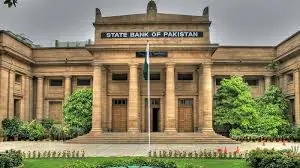

The State Bank of Pakistan (SBP) on Tuesday said the country’s financial system maintained steady performance and resilience during calendar year 2025, supported by improving macroeconomic conditions, stronger capital buffers and easing inflation.
In its annual Financial Stability Review 2025, the central bank said the financial sector expanded by 15.1 percent during the year, while financial depth, measured by the assets-to-GDP ratio, increased to 67.1 percent. It said risks to financial stability subsided during the year under review.
The SBP said domestic macroeconomic conditions improved in CY25 as inflation eased into the central bank’s target range, economic activity gained momentum and foreign exchange reserves posted noticeable improvement, mainly due to a contained current account deficit and strategic purchases by the SBP in the interbank market.
READ MORE: Pakistan’s key macroeconomic indicators ‘improved faster than anticipated’, says SBP governor
It said reviews under the Extended Fund Facility and the Resilience and Sustainability Facility were successfully completed during the year.
According to the review, money, foreign exchange and equity markets functioned smoothly without major disruption, though average volatility in domestic markets rose, mainly due to the equity market, which posted substantial gains despite trade-tariff uncertainty and geopolitical tensions. The foreign exchange market, however, remained calm.
The banking sector continued to show steady performance, with banks’ balance sheets expanding by 17.8 percent, led by investments in government securities.
Advances declined on a year-on-year basis in December 2025, largely due to a high base from the previous year’s ADR-linked tax policy, though adjusted advances still showed healthy growth in line with improving macro-financial conditions.
The SBP said deposit mobilization revived during the year, reducing banks’ reliance on borrowings. Asset quality also improved, with the non-performing loans-to-gross loans ratio falling to 6.1 percent in December 2025 from 6.3 percent a year earlier.
It said provisioning coverage improved further to 107.7 percent, while a large part of the credit portfolio consisted of rated borrowers with stable credit profiles. After-tax earnings increased, though profitability indicators moderated due to volume-driven gains.
The sector’s solvency position remained strong, with the capital adequacy ratio rising to 20.8 percent by end-December 2025, well above regulatory requirements. Islamic banking institutions posted their highest-ever expansion in branch network and maintained growth momentum, while their capital buffers remained strong.
Microfinance banks remained under stress on an aggregate basis, but losses declined significantly in CY25 as recapitalization and restructuring efforts began to take effect.
The review said the non-bank financial sector showed mixed performance, with DFIs contracting and NBFIs growing at a decent pace, while the insurance sector maintained strong performance during the year.
It added that the debt-servicing capacity of the non-financial corporate sector improved as finance costs fell with easing monetary policy, though revenue pressures and weaker earnings persisted. The creditworthiness and repayment capacity of large banking borrowers also remained sound.
The SBP said financial market infrastructures remained stable and operationally resilient during the year, while digital transactions continued to drive the volume of financial activity.
It said several policy initiatives were launched to strengthen the system, including PRISM+, QR code-based payments through RAAST and the transition to a T+1 settlement mechanism by NCCPL.
Looking ahead, the SBP said uncertainty over the Middle East conflict could pose challenges to financial stability, but strong financial cushions and established supervisory and crisis-management frameworks provided comfort for the banking sector.
It said recent stress tests indicated that the banking sector, including large systemically important banks, could withstand severe shocks over a three-year horizon.
The central bank said it would continue working with stakeholders to ensure price and financial stability and support sustainable economic growth.




















Comments