


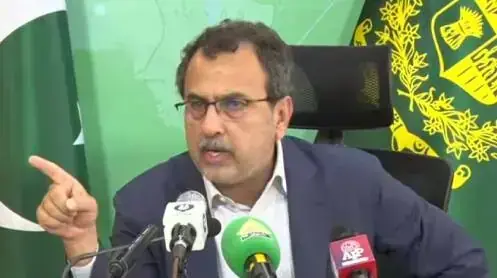

ISLAMABAD: Federal Minister for Power Division, Awais Ahmed Khan Leghari on Friday announced that scheduled electricity load management across the country has been brought to an end following the arrival of liquefied natural gas (LNG) supplies.
Addressing a press briefing, the minister said the country received LNG shipments a day earlier, enabling authorities to restore normal electricity supply.
He explained that intermittent load shedding in recent weeks was primarily due to a shortage of gas, rather than any system failure or lack of generation capacity.
Leghari recalled that around 13 to 14 days ago, consumers experienced up to five hours of load shedding on April 13 and 14.
READ MORE: Discos from SPPs and CPPs: Leghari takes notice of electricity procurement
However, there was no load management between April 17 and 19, while outages from April 19 to 29 were reduced to between two and two-and-a-half hours.
He added that the government had already clarified its position during a press conference held about two weeks earlier, stressing that the power shortfall was linked to fuel constraints.
According to the minister, disruptions in gas supply — partly due to international factors, including tensions related to the Iran–U.S. situation—had affected electricity generation.
He said generating electricity through diesel or furnace oil to completely eliminate load shedding would have significantly increased costs, placing an additional burden on consumers. “We had to strike a balance between supply and affordability,” he added.
Highlighting improvements in hydropower generation, the minister said output had increased to around 6,000 megawatts, compared to nearly 1,000 megawatts earlier. He noted that water releases from dams are managed by the Indus River System Authority based on provincial requirements.
Rejecting claims that Pakistan’s electricity generation capacity stands at 46,000 megawatts, he clarified that the actual available capacity is around 32,000 megawatts and varies throughout the year.
The minister credited the government’s timely measures for stabilising the situation and expressed the hope that load shedding would not return. “We had to temporarily run furnace oil-based plants and procure expensive gas, as LNG from Qatar was not available,” he said.
Leghari expressed confidence that, barring unforeseen technical faults in transmission lines, consumers would not face further power outages. He also reaffirmed the government’s commitment to protecting consumers from high electricity costs while ensuring uninterrupted supply.
Copyright Business Recorder, 2026




















Comments