


Australian dollar dips as core inflation misses high expectations
- The Aussie eased 0.2% to $0.7164, once again stalling at resistance around $0.7200 overnight
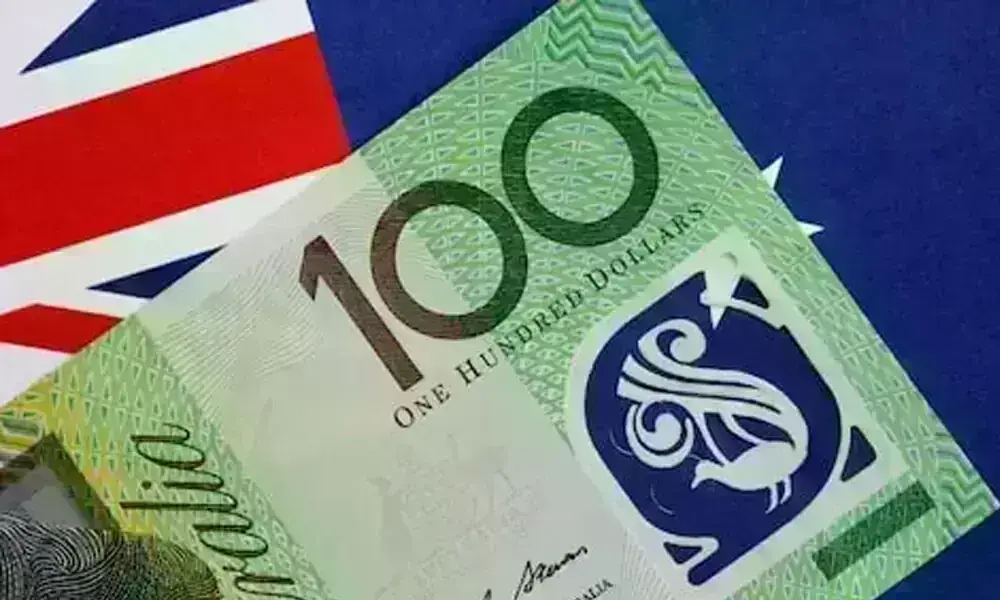

SYDNEY: The Australian dollar dipped on Wednesday after data showed core inflation rose a little less than expected in the first quarter, although the ongoing impact of surging energy costs still has traders anticipating further interest-rate hikes.
The Aussie eased 0.2% to $0.7164, once again stalling at resistance around $0.7200 overnight.
A break above the recent four-year high of $0.72215 would signal bullish momentum toward $0.7280, while chart support is seen at $0.7110.
The move was a knee-jerk reaction to Australia’s key trimmed-mean measure of core inflation, which rose 0.8% in the first quarter, slightly below market expectations of 0.9% or higher.
The annual pace still nudged up to 3.5%, and further away from the Reserve Bank of Australia’s target band of 2%-3%, while consumer price inflation for March accelerated to 4.6%.
The price pulse from energy, food and materials is set to be even larger this quarter, piling pressure on the RBA to raise rates for a third time when it meets on May 5.
Markets imply a 75% chance of a quarter-point hike to 4.35% next week.
A move to 4.60% is fully priced by September, which would take rates to the highest point since late 2010.
“Higher oil prices add to the cost of everything and we forecast underlying inflation to peak at around 4% in Q2,” said Harry McAuley, an economist at Oxford Economics Australia.
“Oil price shocks simultaneously boost prices and crunch demand; a combination that puts the RBA between a rock and a hard place in achieving its dual mandate of price stability and full employment,” he added.
“That tension will likely keep rates on hold at 4.35% for an extended period.”
Investors are also looking for tightening from the Reserve Bank of New Zealand, though they pared the chance of an early hike after its head on Wednesday noted core inflation had remained stable within its target band of 1% to 3%.
Markets imply around a 45% chance it will hike by a quarter point to 2.5% at its next meeting on May 27, but an increase is fully priced in for July.
The kiwi dollar was down 0.2% at $0.5866, after repeatedly failing to clear resistance around $0.5929 in recent days.
Chart support lies around $0.5840.




















Comments