


Most IMF conditions met by Pakistan: Aurangzeb
- Board’s approval to unlock critical external inflows, says finance minister
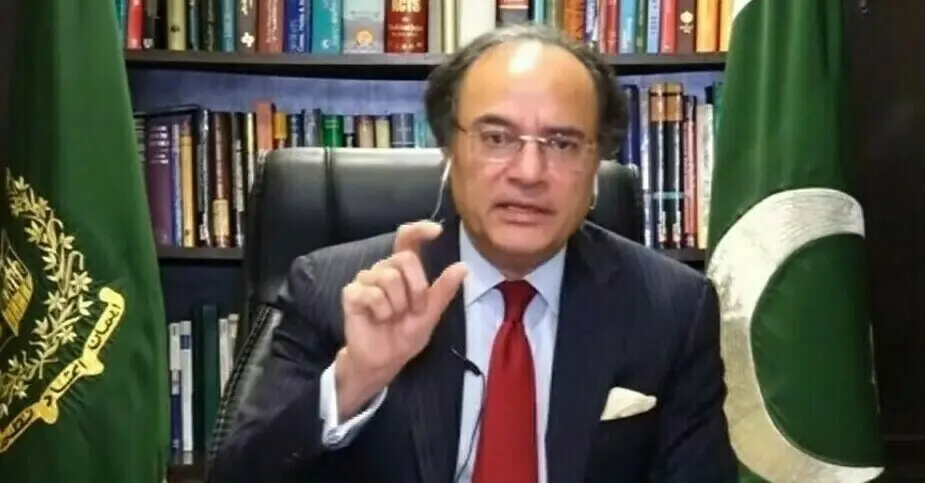
ISLAMABAD: Finance Minister Muhammad Aurangzeb said on Tuesday that Pakistan has fulfilled most of the conditions set by the International Monetary Fund (IMF), hoping the IMF executive board will approve the next USD1.2 billion tranche on May 8, as the country targets around 4 percent GDP growth amid improving macroeconomic stability.
Speaking at the high-level EU-Pakistan Business Forum, Aurangzeb outlined that Pakistan is developing scenario modelling to assess the effects of oil shocks, freight disruptions, and inflation risks linked to the Gulf conflict.
He acknowledged that the country’s energy infrastructure has been severely impacted, leading to higher inflationary pressures as projected by the State Bank of Pakistan (SBP).
READ MORE: Key indicators broadly on track, IMF told
The minister said the government plans to shift from relying on bilateral dollar inflows to raising funds through international bonds and commercial loans in the coming months.
Speaking to reporters after the event, Aurangzeb noted that the staff-level agreement reached with the IMF on March 27 had largely been honoured, paving the way for approval of the third review under the Extended Fund Facility (EFF) and the second review under the Resilience and Sustainability Facility (RSF).
He said that the board’s approval would unlock critical external inflows and stabilise Pakistan’s balance of payments, adding a IMF mission is expected in mid-May to discuss next year’s budget proposals.
Aurangzeb stated that Pakistan has posted both a primary and overall fiscal surplus, with economic growth expected to reach around 4 percent this fiscal year.
Debt servicing costs are projected to come in below budgeted levels, creating additional fiscal space, he added.
On external accounts, he highlighted marked improvements, projecting foreign exchange reserves to reach USD18 billion by June.
He said that the government has met key quantitative targets and made progress on structural benchmarks, reinforcing the case for programme continuation. The minister confirmed a strategic shift in borrowing, moving towards commercial financing to reflect renewed international confidence.
He announced plans to raise funds through instruments such as Panda bonds, Eurobonds, and Sukuk.
He said that a USD250 million Panda bond is expected to launch in May, backed by guarantees from multilateral lenders, including the Asian Development Bank and the Asian Infrastructure Investment Bank, with discussions with Chinese authorities in the final stages.
On the Petroleum Levy, Aurangzeb stated: “What else can the government do when fuel prices increased after the Gulf war.”
He added that reserves would reach USD18 billion by June despite large repayments, including USD3.5 billion to one bilateral partner and USD1.4 billion in Eurobonds.
He also announced that a contributory pension scheme for the Armed Forces will be implemented from the 2026-27 budget.
“We have managed the first impact of the Gulf conflict and are now assessing second- and third-order effects across sectors. The National Coordination & Management Council has been established to coordinate a whole-of-government approach,” he said.
On debt management, Aurangzeb said the Debt Management Office has been restructured to improve oversight and efficiency, with interest payments on public debt expected to remain below budgeted levels.
Highlighting macroeconomic indicators, he noted remittances averaging USD3.8 billion per month, robust inflows under Roshan Digital Accounts (USD180-200 million monthly), and rising IT exports contributing to overall growth.
Copyright Business Recorder, 2026

















Comments