


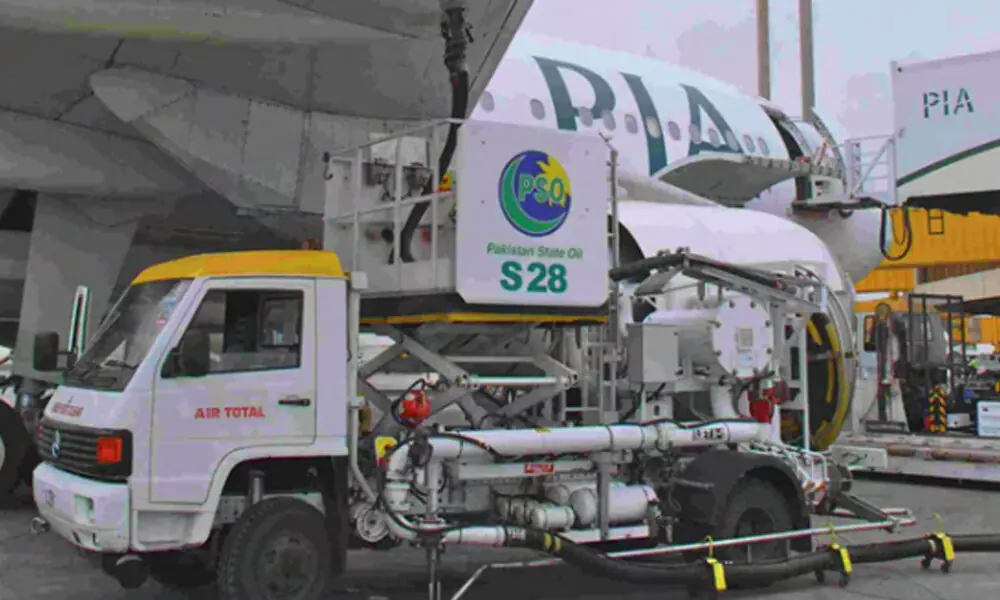

ISLAMABAD: Major Pakistani airports are maintaining jet fuel reserves of 10 to 12 days, providing the aviation sector with a vital buffer against external market volatility.
Despite ongoing maritime disruptions in the Strait of Hormuz that have resulted in no jet fuel cargoes currently in transit or enroute Pakistan State Oil (PSO) is working lockstep with local refineries to optimize internal allocations and satisfy regular demand
While talking to Business Recorder, the spokesperson stated that PSO ensures the continuity of airport operations through a strategic integration of imported cargoes and jet fuel upliftment from local refineries.
READ MORE: Hike in jet fuel prices: Operating costs of airlines increase significantly
While regional security issues and logistical constraints have restricted traditional import channels, complicating both the scheduling and sourcing of new shipments, the organization remains proactive in its supply chain management.
Shortages have led to [NOTAM] (Notice to Airmen) notifications urging airlines to minimize fuel uplift from Pakistani airports, particularly in March and April 2026.
Due to disruption in supply chain of Jet A-1 fuel, as a precautionary measure, airlines are advised to carry maximum fuel from abroad and minimize uplift of Jet A-1 fuel from Pakistan.
On April 8, the head of a body representing global airlines said that even if Iran reopened the Strait of Hormuz it would take months for jet fuel supply to recover given disruptions to Middle East refining capacity.
For April, the government reduced jet fuel prices by Rs23 per litre, bringing the new rate down to Rs471.01 per litre after last month’s record surge of Rs494.71 per litre that significantly strained airline operations and pushed ticket prices to unusually high levels.
The adjustment reflects easing geopolitical tensions in the Middle East, along with changes in international oil prices and exchange rate movements.
Since the start of the war, aviation fuel costs have risen cumulatively by Rs288 per litre. The sharp escalation in fuel prices translated directly into higher operating costs for airlines, forcing carriers to raise fares across both domestic and international routes to maintain margins.
Pakistan State Oil holds a dominant 99 percent market share in the jet fuel in Pakistan, serving approximately 15 major airports and utilizing about 70 refuelling vehicles. With a 99 percent market share maintained in the jet fuel segment, selling 326,000 tonnes in first half (July-December) of fiscal year 2025-26.
Experts said countries in Asia are likely to be affected first, followed by Europe, as both regions depend heavily on oil supplies and refineries in the Gulf. They added that some flights have already been cancelled due to fuel shortages, raising concerns about broader disruptions in global aviation operations.
Copyright Business Recorder, 2026




















Comments