


Only five ships pass through Strait of Hormuz in 24 hours
- Shipping traffic passing through the crucial waterway at the entrance to the Gulf during an uneasy ceasefire
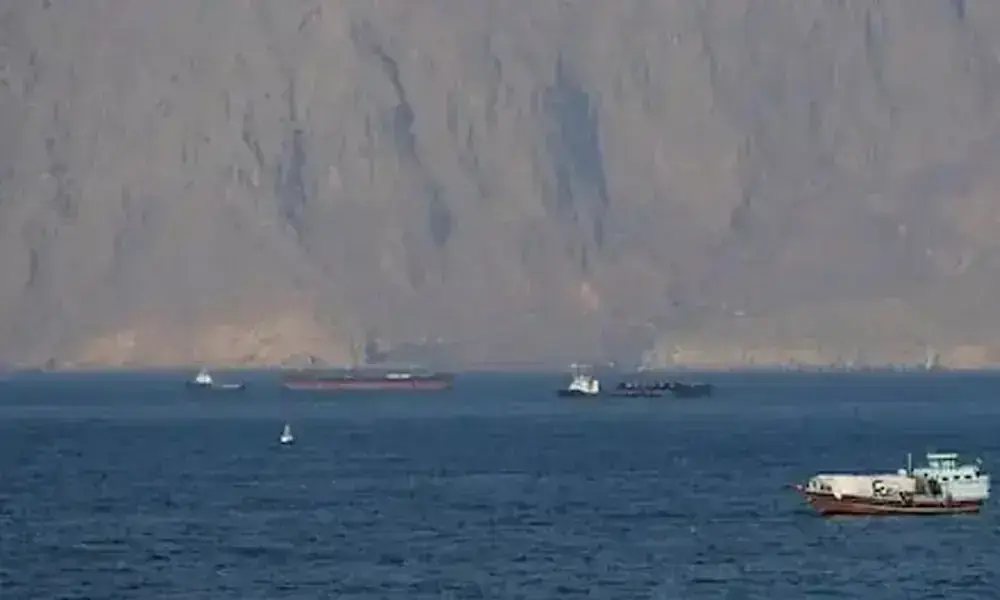

LONDON: Only five ships, including one Iranian oil products tanker, have passed through the Strait of Hormuz in the past 24 hours, Friday shipping data showed, after Iran seized two container ships this week and the U.S. continues to blockade Iranian ports.
Shipping traffic passing through the crucial waterway at the entrance to the Gulf during an uneasy ceasefire between Washington and Tehran represents a fraction of the average 140 daily passages before the Iran war began on February 28.
“For most shipping companies, they will need a stable ceasefire and assurances from both sides of the conflict that the Strait of Hormuz is safe to transit,” said Jakob Larsen, chief safety and security officer at shipping association BIMCO.
“In the meantime, shipping will be restricted to using routes close to Iran and Oman. Due to their confined nature, these routes cannot safely accommodate the normal volumes of shipping through the Strait of Hormuz,” Larsen added.
The Iranian-flagged oil products tanker Niki, which is subject to U.S. sanctions, was among the few vessels that sailed out of the strait with no destination listed, Kpler analysis and tracking data on the Marine Traffic platform showed on Friday.
It was unclear what would happen if it continued to sail further east towards the blockade line imposed by the U.S. Navy.
Nearly two months after the U.S. and Israel launched strikes on Iran, there is little sign of peace talks resuming. Container shipping group Hapag-Lloyd said on Friday that one of its ships has crossed the strait but did not provide any information on the circumstances or timing.
The Comoros-flagged supertanker Helga arrived at an offshore oil loading terminal in Iraq’s southern Basra port on Friday, the second vessel to reach Iraq since the strait’s closure.
Iran’s use of a swarm of small, fast boats to seize two container ships near the strait on Wednesday has heightened concerns among many shipping and oil companies.
Trump looks for way out on war, but Iran may not oblige
“The latest seizures make clear, even an ‘open’ Strait of Hormuz is not a safe Strait of Hormuz for seafarers, ships and cargo,” Peter Sand, chief analyst with ocean and air freight intelligence platform Xeneta, said in a note.
Between April 22 and early April 23, seven vessels transited the strait, six of which were involved in Iran-related trade, analysis from Lloyd’s List Intelligence showed.
The closure of the strait has disrupted a fifth of the world’s oil and liquefied natural gas (LNG) supplies and triggered a global energy crisis.
Hundreds of ships and 20,000 seafarers remained stranded inside the Gulf with war risk insurers and oil companies watching for any sign that the risks may have eased so they can prepare to sail through.




















Comments