


Possible US-Iran talks: Islamabad stuck in ‘lockdown’
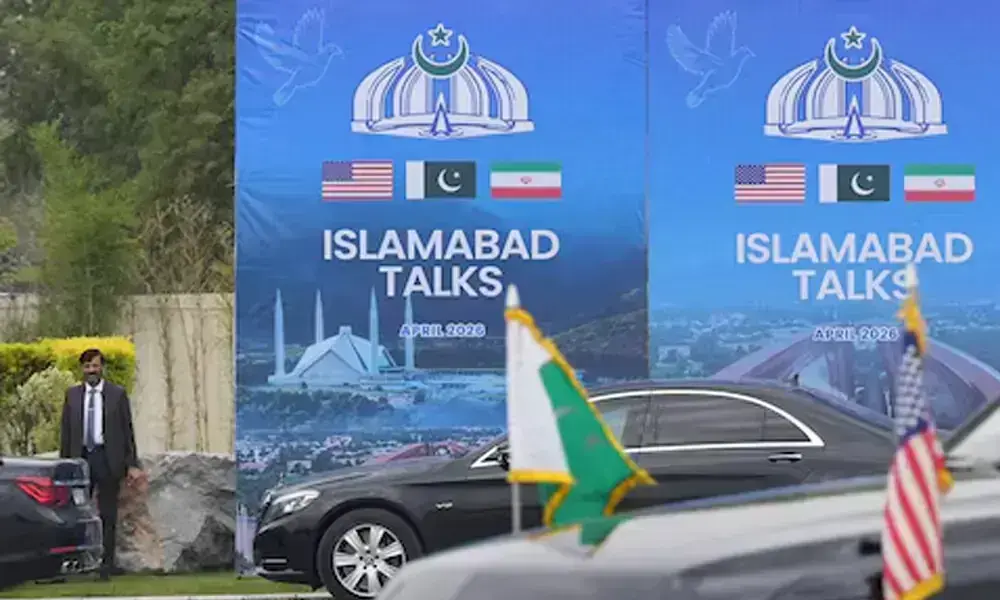

ISLAMABAD: The federal capital remains under strict lockdown as Pakistan presses ahead with efforts to facilitate a second round of tentative US-Iran negotiations, despite Tehran’s refusal to participate.
For nearly a week, government offices have remained closed, the metro system suspended, and luxury hotels such as the Serena and Marriott largely off-limits to the public, reserved exclusively for visiting US and Iranian delegations and security personnel.
Officials said that the five-star luxurious Serena Hotel has become the operational hub for the US technical team, poised to host the tentative talks, which could prove pivotal.
READ MORE: Second round of Iran-US talks likely: High alert prevails across Islamabad, Rawalpindi
“This is the most stringent security operation we have seen in years,” said a local security official, speaking on condition of anonymity.
Armoured vehicles, roadblocks, and surveillance checkpoints now form a tight cordon around key government offices and hotel venues, turning central Islamabad into a veritable fortress.
Sources told Business Recorder that Pakistan remains in continuous contact with both Washington and Tehran, actively seeking to bring the parties to the negotiating table.
“Our hope is to facilitate these talks successfully, but there are clear sticking points,” a senior official admitted, highlighting the delicate balancing act Islamabad faces.
Diplomatic manoeuvres intensified on Wednesday when Iran’s ambassador to Pakistan, Dr Reza Amiri Moghadam, met Prime Minister Shehbaz Sharif.
According to sources, the prime minister urged Tehran to reconsider its position and participate in the talks.
The ambassador, however, reiterated Iran’s red lines, citing conditions such as the lifting of the US naval blockade and the release of an Iranian vessel detained earlier this month.
“He made it clear that Iran will not engage in talks until these conditions are met,” a source within the Iranian embassy confirmed.
Dr Amiri pledged to relay Pakistan’s request to Tehran’s leadership, leaving Islamabad as the intermediary for what could become a crucial diplomatic breakthrough – or a stalemate.
In a further development on Thursday, China’s ambassador to Pakistan, Jiang Zaidong, met Prime Minister Sharif, praising Pakistan’s efforts to ease tensions in the Middle East.
The meeting, held a day after the Iranian envoy’s meeting with the prime minister, is seen by officials as part of broader diplomatic efforts to resolve the US-Iran standoff.
Meanwhile, the US technical team has maintained a visible presence in the city, signalling Washington’s determination to keep the dialogue alive.
“The presence of the US technical team indicates that negotiations are still on the table,” a senior security official said, noting the Americans’ continued commitment despite Tehran’s firm stance.
The US blockade, imposed on 13 April and targeting Iranian ports and shipping in the Strait of Hormuz, has further unsettled the region, restricting Iranian shipping and intensifying already simmering tensions.
Analysts warn the stakes extend far beyond Islamabad, given Iran’s strategic control over the Strait of Hormuz, through which a significant proportion of the world’s oil transits. Any breakthrough – or collapse – in negotiations could reverberate through global energy markets.
The lockdown has provoked frustration among Islamabad residents, with public transport halted, offices closed, and access to previously bustling areas restricted.
Officials emphasised that the extraordinary security measures are necessary to safeguard foreign delegations and preserve the integrity of the talks.
“Pakistan has historically played a role in bridging gaps in complex international disputes,” a government source said. “Our leadership remains in continuous contact with both sides to create a conducive environment for dialogue.”
As the world watches, Islamabad remains under tight security, underscoring the high stakes and uncertainties surrounding the tentative US-Iran negotiations.
Pakistan continues its delicate diplomacy, striving for a breakthrough between entrenched positions, even as Tehran maintains its conditions for engagement.
Copyright Business Recorder, 2026




















Comments