


Ukraine’s reliance on nuclear power increases during war
- An industry source said earlier this year that nuclear generation covered up to 80% of local consumption
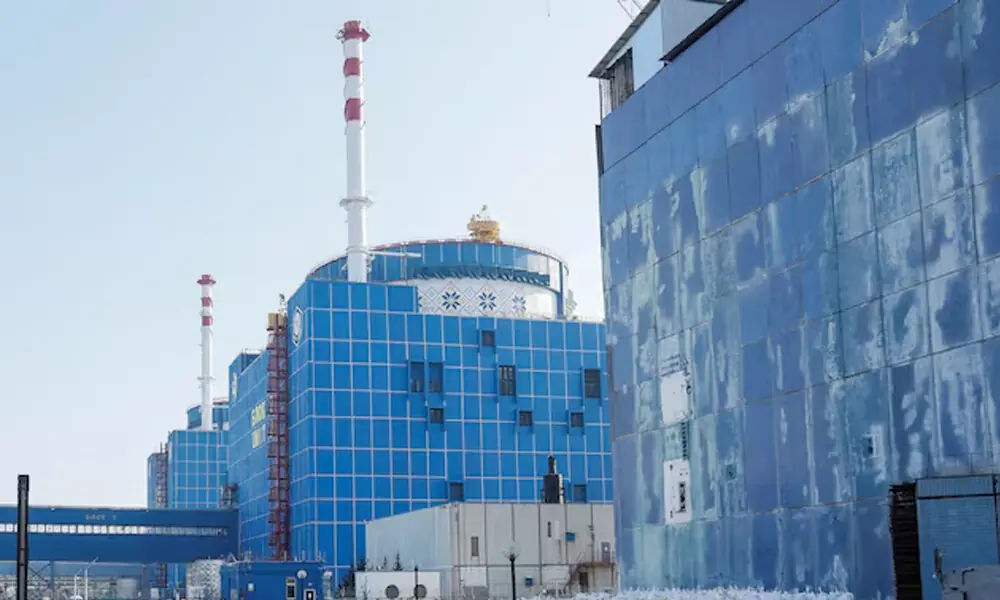

KYIV: Since Russia’s 2022 invasion, nuclear power has become the backbone of Ukraine’s energy system. After repeated airstrikes on thermal generation, it was nuclear stations that began carrying Ukraine’s baseload demand.
At the start of the war, Ukraine operated four nuclear power plants with a combined 15 power units. But the largest of them - the Zaporizhzhia nuclear station, which is the biggest in Europe - was occupied in 2022 and shut down several months later.
State-owned nuclear firm Energoatom says that even before the war, nuclear generation accounted for more than half of Ukraine’s electricity production.
During the war, the company said, its share had risen to about 70% of total generation - not as the result of an expansion of the nuclear sector, but because of the destruction of other generating capacity.
An industry source said earlier this year that nuclear generation covered up to 80% of local consumption.
“Heavy losses in thermal generation due to shelling, fuel shortages and the destruction of infrastructure meant that nuclear power plants became the main stabilizing factor,” Energoatom said in a written comment to Reuters.
Without thermal generation
Before 2022, thermal generation covered a significant share of the balance - up to 35% of demand - before its contribution fell sharply.
Meanwhile, the importance of nuclear energy has increased. The DiXi Group think-tank says nuclear generation is more important to Ukraine today than it was at the start of 2022, despite the loss of control of the main Zaporizhzhia plant that accounts for 43% of Ukraine’s total installed nuclear capacity.
According to data cited by DiXi Group, Russian attacks have damaged all of Ukraine’s major thermal and hydropower plants. In 2024, some 10 gigawatts of generating capacity was damaged or destroyed, over half of total consumption of about 18 gigawatts.
“That is why, under wartime conditions, nuclear generation is carrying the system’s main baseload,” Mykhailo Babiichuk, general manager for security and sustainable development at DiXi Group, told Reuters.
A larger share means greater dependence
The growing share of nuclear generation also means greater dependence on its uninterrupted operation.
“The strategic conclusion is already obvious: the higher the share of nuclear generation in meeting demand, the higher the price of any disruption in the nuclear-grid circuit for the entire state,” Babiichuk said.
The vulnerability lies not only in the nuclear plants themselves, but also in the grid infrastructure through which they transmit electricity.
DiXi Group said Russian attacks have damaged substations critical to nuclear safety and have also affected the ability of two Ukrainian plants - South Ukraine and Khmelnytskyi - to operate at full capacity.
At the same time, the war has also driven important structural changes. Since Russia’s full-scale invasion in 2022, Ukraine has commissioned a spent nuclear fuel storage facility, removing its dependence on Russia.





















Comments