


Pharm-D curriculum revamped: UHS introduces weekly academic audit system for colleges
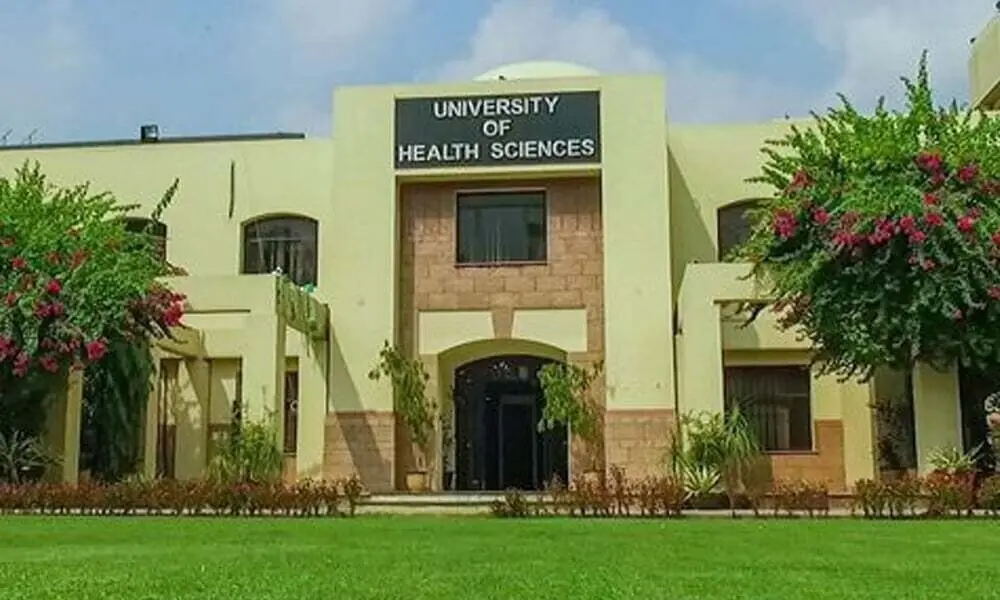

LAHORE: A comprehensive weekly academic quality assurance mechanism for affiliated medical institutions was approved alongside new postgraduate curricula and revisions to the Pharm-D programme.
The approval was accorded in the 42nd meeting of the Academic Council of University of Health Sciences (UHS) held on Friday with vice-chancellor Prof Ahsan Waheed Rathore in the chair.
The meeting, attended by principals of affiliated colleges largely through online participation in line with the government’s austerity policy.
The council formally approved the implementation of a Weekly Academic Quality Assurance and Monitoring System, which aims to ensure uniform delivery of UHS-approved curricula, while closely monitoring teaching activities, clinical training, skills development and mandatory workshops through structured weekly audits.
Under the mechanism, all affiliated institutions will be required to hold weekly quality assurance and coordination meetings chaired by their respective principals, with the Department of Medical Education serving as the coordinating body. Institutions will submit a prescribed proforma, duly signed by the principal and focal person, to UHS within 24 hours of each meeting.
Mandatory compliance areas include adherence to teaching schedules, clinical and skills training, completion of compulsory workshops including Basic Life Support (BLS), Infection Control, Information and Communication Technology, Emergency Triage Assessment and Treatment (ETAT), Essential Newborn Resuscitation (ENR), and Emergency Obstetric and Neonatal Care (EMONC), as well as proper documentation of weekly proceedings.
The university will review submissions on a weekly basis and present compliance reports to the vice chancellor, establishing a continuous monitoring framework aimed at improving academic quality and accountability.
The council also approved curricula of several postgraduate programmes developed by the relevant Specialty Advisory Committees under the supervision of the Department of Medical Education. These include MS programmes in Transplant Urology, Paediatric Ophthalmology and Strabismus, and Paediatric Anaesthesia, along with diploma programmes in gynaecology and obstetrics, medical radiology (diagnostic), anaesthesiology, psychological medicine, and ophthalmic medicine and surgery. The programmes had earlier been endorsed by the Advanced Studies and Research Board and will now be placed before statutory bodies for final approval.
The council also approved revisions to the Pharm-D curriculum, introducing the “Pharm-D PULSE” framework (Patient-centred Understanding through Learning and Supervised Experience) aimed at aligning pharmacy education with evolving healthcare needs.
Under the revised structure, early semesters will focus on hospital exposure through mandatory visits to build foundational understanding of pharmacy services and medication systems. Subsequent phases will include laboratory exposure in pathology and microbiology, training in compounding and dispensing practices, and structured rotations in hospitals and community pharmacies.
Advanced semesters will provide exposure to pharmaceutical industries, including production, quality assurance and quality control operations, while senior students will participate in regular hospital rounds to develop clinical pharmacy skills and contribute to patient-centred care.
The initiative is expected to shift pharmacy education towards a more practice-oriented and outcome-driven model, with greater emphasis on clinical engagement and healthcare integration, a UHS spokesman, said.
Copyright Business Recorder, 2026

























Comments