


There are moments in history when events do not merely disrupt economies, they clarify them. The unfolding crisis in West Asia, like similar situations in the past, is one such moment. It is being interpreted, understandably, as a threat: to energy security, to inflation stability, to external balances, in the immediate future. But to stop at that interpretation is to miss its deeper significance, especially; keeping a broader and wider perspective in view.
This is not just a geopolitical crisis. It is a moment of economic revelation. It exposes, with unusual precision, the structural dependencies Pakistan has long carried and, more importantly, it illuminates the path to transcend them. For years, Pakistan, like many emerging economies, has operated within an implicit assumption that, global systems, though volatile, would remain broadly functional. Energy would flow. Trade routes would remain open. Capital would find its way.
That assumption no longer holds. The rerouting of global shipping adding 10–14 days and over 20 percent in logistics and insurance costs is not a temporary disruption; it is a signal that global trade architecture itself is becoming uncertain, and perhaps this elevated cost structure is there to stay, given the post-war reconstruction funding requirement in the form of additional taxes and charges. Similarly, the possibility of US $20–30 per barrel oil shocks is not simply a price risk, it is a reminder of structural dependence.
What this moment demands is not reaction but recognition. Pakistan’s vulnerabilities are not cyclical. They are systemic and systemic challenges require strategic responses.
Pakistan’s economic model has long been shaped by three external anchors: imported energy, remittance inflows, and external financing. Each of these now faces heightened uncertainty. But therein lies the opportunity. When constraints become visible, reform becomes possible.
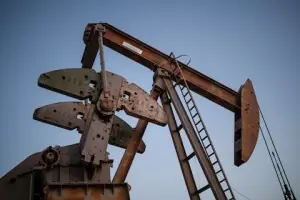
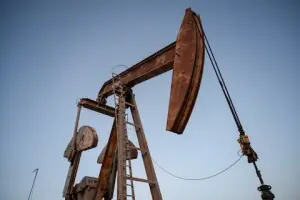
Take energy, for example; with 80–85 percent dependence on imports and relatively limited strategic reserves in the context of fluidity of the crisis confronted, Pakistan has little room for complacency.
Yet, this very exposure creates urgency, urgency that can accelerate a transition towards economically viable indigenous sources, where exceedingly attractive FDI and climate finance is no longer aspirational, it is abundant. The question is no longer whether Pakistan should graduate. It is how fast it chooses to move. If oil rises toward US $80–90 per barrel, on an average for the year, inflation could return to 9–11 percent, reversing recently hard-earned economic stability and its potential gains.
Traditionally, this moment would have been viewed purely as a policy challenge. But circumstances, in moments like these, play another role: they create political space. Difficult reforms such as energy pricing, subsidy rationalization, fiscal discipline, broadening of tax-base, becomes more feasible when external realities make them unavoidable.
This swells the appetite for reforms at the grassroots level and drives the society, by default, towards a charter of sorts, which I always advocate as the “Charter of Society”.
Around the world, the most consequential economic transformations have not occurred in times of comfort, but in moments of constraint. Pakistan now faces such a moment. The choice is whether to use inflation defensively to contain it or strategically to restructure around it. Pakistan’s external sector has long been reactive, responding to shocks rather than shaping outcomes. Yet the current global reordering offers a rare opportunity to redesign it.
A potential US $1–1.5 billion current account pressure, under extreme stress scenarios, is not just a warning; it is a signal that the current model, i.e., import-led consumption financed by external inflows, is reaching its limits. The alternative is clear: build exports that are competitive, not just preferential; channel remittances into investment, not just consumption; attract capital that is patient, not just opportunistic. This is not about adjustment. It is about reorientation.
Economic sovereignty in the 21st century is no longer defined by borders. It is defined by resilience. A country that cannot secure its energy, cannot stabilize its fiscal account and effectively employ its monetary tools, interest rates and currency to stabilize its inflation, cannot control its economic destiny.
Pakistan’s projected ~15% and 25–30 percent gas and diesel shortfall, respectively, under disruption scenarios, as faced presently, is not merely an operational risk, it is a reminder of this chain of dependence. Sovereignty is not achieved overnight. It is built incrementally through diversified energy systems, deeper domestic capital markets, and reduced reliance on volatile external flows.
Each reform may seem technical. Together, they redefine autonomy. In times of uncertainty, financial systems instinctively contract. Risk rises, lending slows, and capital becomes selective. But leadership demands a different response.
Pakistan’s financial system must not become a passive observer of economic stress. It must become an active enabler of adaptation, and learn that from the impeccable foreign policy that Pakistan pursued and demonstrated in these times of crisis.
Resilient economies are not those where finance retreats in crisis but those where finance adapts to it. Ultimately, macroeconomics is an abstraction. Real economies are built in workshops, farms, and small enterprises, at the microeconomic level.
The sectors most exposed today, SMEs (Small & Medium Enterprises), agriculture, informal businesses, are also those with the greatest latent potential. With the right support, they can become engines of growth. Agriculture can move from subsistence to value-added exports. SMEs can scale through digital platforms and formal credit. Informal enterprises can transition into the documented economy.
The goal is not just to protect these sectors. It is to empower them.
Perhaps, the most important lesson from this moment is not about policy, it is about mindset. Economic strategy cannot remain anchored in stability assumptions that no longer exist. It must be built for volatility.
This requires a shift from efficiency to resilience, from short-term optimization to long-term positioning, and from reactive governance to anticipatory moves. Countries that make this shift early will define the next phase of the global economic order after the prevailing West Asian conflict.
Pakistan’s strengths are often understated: a large, young, and adaptive population, a strategic geographic position, an evolving digital financial infrastructure, and a deep diaspora linkage. What has been missing is not capability but coherence. The current crisis provides that coherence. It aligns urgency with possibility. It compels difficult decisions. It accelerates the ongoing much-needed reforms. It creates space for strategic clarity.
In periods of global uncertainty, nations reveal themselves. Some retreat into caution. Others move forward with clarity, as Pakistan’s foreign policy has demonstrated.
Pakistan now stands at that intersection. The West Asia crisis will pass. But the structural questions it has exposed will remain. The real test is not only how Pakistan navigates the immediate shock, which they’re leading for the globe very ably, but how it redefines its trajectory in response to it.
Because in the end, the most consequential moments in economic history are not those when crises occur. They are those when countries decide what to become because of them, as history tells us.
Copyright Business Recorder, 2026
The writer is President and CEO of The Bank of Punjab










Comments
Comments are closed for this article.