


Crude oil and LNG supply are at risk of the worst-possible scenario
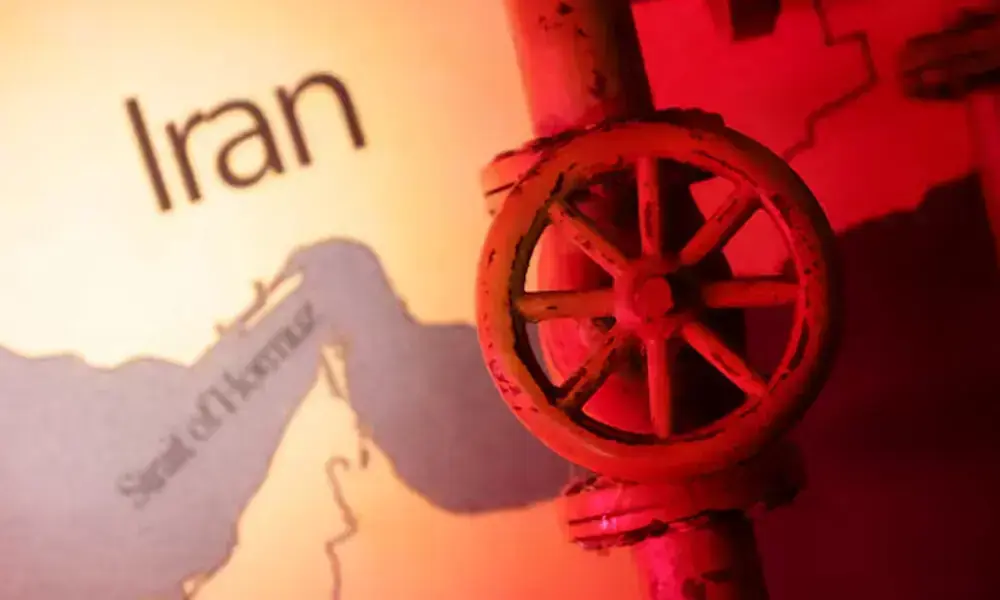
LAUNCESTON (Australia): A month after US and Israeli strikes on Iran, global markets for the supply of crude oil, refined products and liquefied natural gas are already in the second-worst possible scenario.
Everything hinges on the Strait of Hormuz. This chokepoint, which normally carries around 20 percent of global crude, products and LNG, is still effectively closed to most shipping, leaving energy markets dangerously exposed.
Under those conditions, claims by Washington or Israel that they are somehow winning the war against Iran are largely meaningless.
It may well be true that the US and Israeli air campaign has decapitated Iran’s leadership and degraded key military capabilities.
But the reality is that most tankers still cannot transit the Strait of Hormuz safely, while Iran has demonstrated a clear ability to strike energy and other critical infrastructure across the Gulf. That leaves Tehran shaping the narrative - and, more importantly, holding the global economy to ransom at the same time.
What would the worst-case scenario look like?
It would be a sharp escalation in which Iran inflicts widespread damage on Gulf energy infrastructure, using missiles and drones to hit pipelines, refineries, processing plants and export terminals across the region.
The likely trigger for such action would be US ground forces trying to capture and hold Iranian-controlled territory, such as the Kharg Island oil terminal and small islands in the Strait of Hormuz. Deploying ground troops is something that US President Donald Trump is said to be considering and US forces in the region have been building.
But even a militarily successful invasion would be meaningless if it triggers widespread destruction of energy infrastructure, escalating an already serious market crisis into an unprecedented global energy disaster.
The crude oil futures market, as shown by Brent contracts , is still largely pricing for a de-escalation and an eventual return to normal flows through the Strait of Hormuz.
Brent futures opened higher in early Asian trade on Monday, gaining 2.7 percent to trade around USD115.55 a barrel, up from the close of USD112.57 on March 27.
They have now gained 59 percent since the close of USD72.48 a barrel on February 27, the day before the US and Israel attacked Iran.
That may look like a strong rally, but it pales when compared to the physical prices of refined products in Asia, where the biggest impact of the current crisis is being felt.
Singapore traded jet fuel ended at USD222.77 a barrel on March 27, not far below the record USD227.98 hit on March 23 and more than double the USD93.45 from February 27.
Gasoil, the building block for diesel, ended at USD182.76 a barrel on March 27, almost exactly double the USD91.42 on February 27, while gasoline finished at USD130.52, up 65 percent from the day before the conflict started.
These prices reflect that Asian refiners are scrambling for sufficient crude to operate, while fuel importers such as Australia and Indonesia are rushing to secure supplies.
Pain to spread
The stress in Asian refined product markets reflects that the fallout from the war in Iran has hit the region first, which isn’t surprising given Asia is the destination for around 80 percent of the crude and refined fuels shipped through the Strait of Hormuz.
But the pain felt in Asia will quickly spread around the world, as refiners and fuel importers pull scarce cargoes from the Atlantic Basin, forcing prices higher well beyond the region.
The problem is that the world is effectively down around 12 million barrels per day (bpd) of crude and refined products.
This is because around 19 million bpd has been going through the Strait of Hormuz in recent months, a flow that has now slowed to a trickle, with only a handful of vessels passing through so far in March.
Saudi Arabia’s ramping up of exports through ports on the Red Sea and the United Arab Emirates boosting shipments from Fujairah on the Gulf of Oman have mitigated some of the loss of volumes through the vital gateway.
But the shock of losing more than 10 percent of global crude supply cannot be offset by releasing some strategic reserves, at least not over the longer term.
The real risk is that the conflict with Iran drags on, or escalates further, in the weeks ahead.
Imagine a US ground invasion triggering Iranian strikes on the Saudi pipeline to the Red Sea, or on critical facilities at Fujairah.















Comments
Comments are closed for this article.