


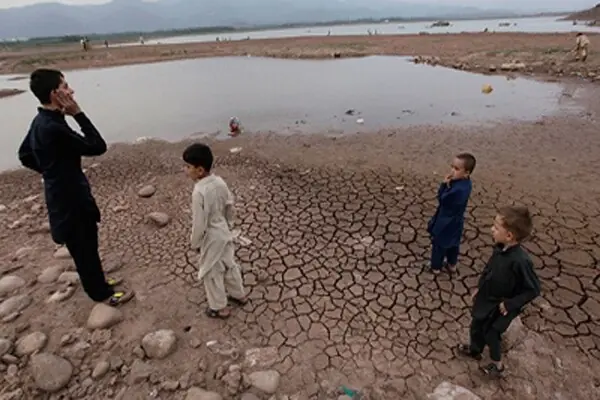
EDITORIAL: Pakistan’s water crisis is no longer a looming risk; it is a structural reality that successive governments have acknowledged but failed to address with the urgency it demands. Prime Minister Shehbaz Sharif’s warning on World Water Day that the country faces worsening water scarcity reflects a problem that has moved beyond seasonal stress into a long-term threat to economic stability and national security.
The drivers of this crisis are well understood. Climate change is altering glacial patterns, disrupting river flows and increasing uncertainty around water availability. At the same time, Pakistan’s storage capacity remains severely limited, leaving the country vulnerable to both shortages and floods. The government’s announcement that work is under way on 18 dams is therefore a necessary step, but one that comes after years of delay in expanding critical infrastructure.
Equally important is the issue of water loss. The prime minister’s reference to reducing losses by 33 percent through improvements in the canal system highlights a longstanding inefficiency in Pakistan’s irrigation network. A significant portion of available water never reaches its intended destination due to seepage, outdated infrastructure and poor management. Addressing this inefficiency offers one of the quickest gains in improving water availability without requiring new sources.
The introduction of telemetry systems to monitor river flows and improve transparency in distribution is another measure that speaks to a deeper challenge. Disputes over water allocation between provinces have persisted for decades, often exacerbated by the absence of reliable, real-time data. A functioning monitoring system could help build trust within the federation, provided it is implemented consistently and insulated from political interference.
Yet these initiatives, while necessary, do not alter the fundamental concern: Pakistan has been slow to transition from recognition to execution. Water policy has existed in various forms for years, but implementation has lagged behind ambition. The current set of reforms must therefore be judged not by their announcement but by their delivery over time.
There is also a broader dimension to the crisis that extends beyond infrastructure. Water use in Pakistan remains inefficient at nearly every level. Agriculture, which consumes the majority of available resources, continues to rely heavily on outdated irrigation methods. Efforts to increase water-use efficiency by 30 percent, as outlined by the government, will require changes in both technology and behaviour. Without these adjustments, improvements in supply will be offset by continued waste.
The prime minister’s emphasis on inclusive water governance, including the role of women in decision-making, introduces an important social element to the discussion. Sustainable management of resources depends on participation across communities, particularly in rural areas where water use is most intensive. Broadening representation can contribute to more effective and locally informed solutions.
The reference to “water aggression” also carries immediate geopolitical weight, particularly in light of President Asif Ali Zardari’s recent warning that India’s reported moves to suspend or undermine the Indus Waters Treaty would constitute a direct threat to Pakistan’s water security. This is no longer a theoretical concern. Pakistan’s reliance on transboundary river systems makes any upstream manipulation, whether through treaty reinterpretation or unilateral action, a matter of national survival. The president’s remarks bring necessary clarity to what has often been framed too cautiously: water is now firmly embedded in regional power politics. Safeguarding national water rights, therefore, is not simply a diplomatic obligation but an urgent strategic priority, especially as external risks compound domestic mismanagement.
The economic implications of continued inaction are significant. Water scarcity affects agricultural output, energy generation and industrial activity. It also increases the cost of living as shortages drive up prices and strain public services. In a country already facing economic pressures, the inability to manage water resources efficiently adds another layer of vulnerability.
What is required now is sustained execution. Projects must move beyond planning stages, timelines must be adhered to and accountability must be enforced at every level of implementation. The cost of delay has already been substantial, measured in both lost opportunity and increased risk.
Pakistan’s water crisis has been discussed for decades. The difference today is that the margin for inaction has narrowed considerably. Addressing the challenge will require not only investment in infrastructure but also a shift in how water is valued and managed across the economy. Without that shift, warnings will continue to be issued while the underlying problem deepens.
Copyright Business Recorder, 2026




















Comments
Comments are closed for this article.