


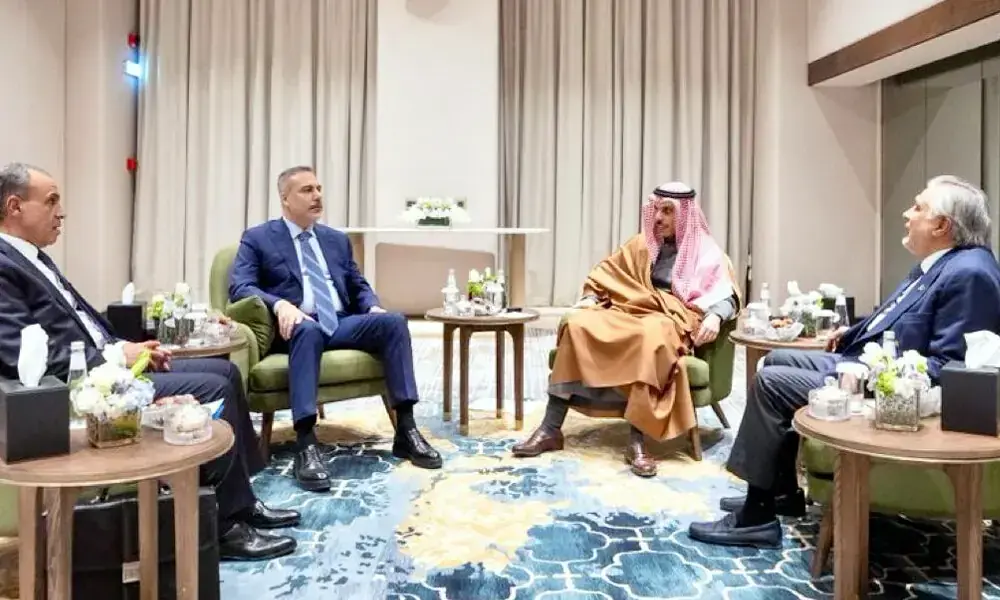
EDITORIAL: The unfolding diplomatic scenario around reported back-channel contacts between Washington and Tehran has laid bare not only shifting regional alignments but also the fragility of carefully constructed geopolitical postures. At the centre of this moment is Pakistan’s emergence as a facilitator — a role that has clearly unsettled New Delhi.
For years, India under Narendra Modi has invested heavily in cultivating strategic proximity to both the United States and Israel. While often presented as pragmatic and interest-driven, this alignment has increasingly acquired an overt ideological hue. Modi’s recent visit to Tel Aviv, marked by effusive symbolism and his controversial “fatherland–motherland” formulation, illustrates the depth of this embrace. Such positioning may yield short-term bilateral dividends, but it inevitably constrains diplomatic flexibility — a cost that is now becoming apparent.
In contrast, Pakistan has pursued a more balanced regional approach. By maintaining working relationships across competing blocs, Islamabad has positioned itself as a credible intermediary at a time when direct engagement between Washington and Tehran remains politically fraught. Whether this role proves decisive or largely symbolic is secondary; what matters is the perception of relevance — and, for now, Pakistan has it. The sharp reaction from India’s External Affairs Minister, S. Jaishankar, betrays more than mere policy disagreement. His resort to undiplomatic and coarse language — invoking an offensive analogy to dismiss Pakistan’s role — reflects a deeper frustration with India’s diminished diplomatic space in the present instance when all eyes are on a prospective de-escalation. Such rhetoric is not only unbecoming of a seasoned diplomat but also indicative of the strain within a foreign policy framework that has prioritised alignment over agility.
Notably, Islamabad’s response to Jaishankar’s provocative remarks, while restrained, was pointed. By observing that “when arguments run thin, invective appears to fill the gap,” and rejecting what it termed “megaphone theatrics,” Pakistan’s Foreign Office underscored a commitment to decorum and measured diplomacy. This emphasis on composure helps project Pakistan as a responsible actor, favouring quiet engagement over public grandstanding — an approach that strengthens credibility in mediation efforts.
Importantly, criticism of India’s stance has not been confined to Pakistan. Within India, voices such as Congress Party’s member of upper house of parliament (Rajya Sabha) Jairam Ramesh’s, have pointed to what they describe as a broader diplomatic setback. His sharp critique, citing “colossal failures in diplomacy, outreach, and narrative management” shows that India’s current predicament is not an isolated misstep but part of a wider pattern — one in which assertive rhetoric and high-visibility alignments have come at the expense of strategic manoeuvrability.
Pakistan’s current moment, whether fleeting or enduring, illustrates how diplomatic space can open for those willing to navigate complexity without rigid alignment. It also serves as a reminder that in geopolitics, centre stage is rarely guaranteed — it is earned, often by those prepared to act with balance, patience, and purpose.
Copyright Business Recorder, 2026




















Comments
Comments are closed for this article.