


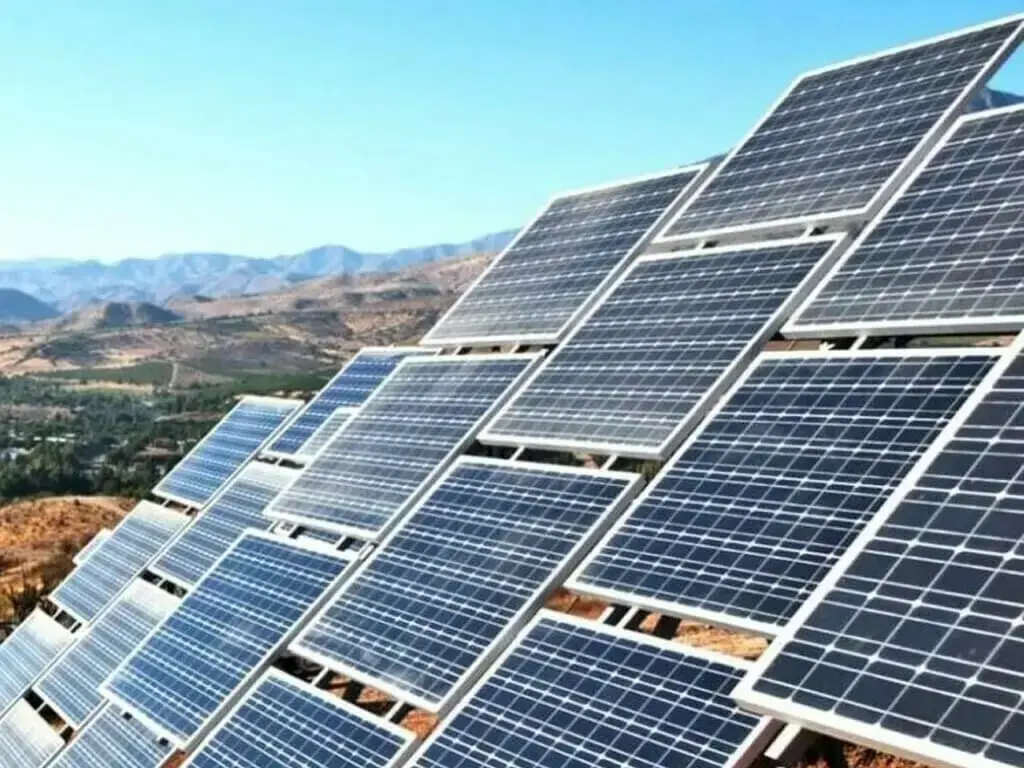

ISLAMABAD: The Pakistan Solar Association (PSA) has proposed a 130 percent Maximum Retail Price (MRP) valuation for solar panels and inverters to make the current taxation system more revenue-supportive, discourage the grey market, and ensure legal coherence.
In a letter to Power Division, the PSA noted the following amendments in the Finance Act, 2026: solar panels are subject to 10 percent General Sales Tax (GST), while solar inverters are taxed at 18 percent.
According to the association this differential and multi-stage taxation structure has resulted in: (i) pricing distortions in the market; (ii) complex compliance requirements; and (iii) increased audit and litigation exposure.
The PSA noted that solar panels and inverters are primarily supplied for installation and final consumption by end-users. These are end-use renewable energy products installed at residential, commercial, and industrial premises.
READ ALSO: Pakistan’s solar PV capacity could save billions of dollars in fossil fuel imports: study
The Association further argued that these products are sold for permanent installation rather than repeated trading, have a determinable retail price, and are largely supplied directly to end consumers. Therefore, their taxation should align with a single-stage, consumer-based model, consistent with the legislative intent of the Third Schedule of the Sales Tax Act, 1990.
The PSA proposed that solar panels and inverters be included in the Third Schedule with an appropriate reduced tax rate. It added that such inclusion would ensure single-stage tax collection at the import or manufacturing stage, reduce cascading taxation, improve documentation through a declared retail price mechanism, and minimize unnecessary audit friction.
The FBR has been apprised that inclusion in the Third Schedule would also ensure enhanced and upfront revenue collection. Under this mechanism, import-stage taxation would be aligned with the declared retail price regime resulting in GST collection based on 130 percent of the declared retail price at the import stage.
This, the PSA argued, would secure higher upfront revenue, improve transparency and documentation, reduce revenue leakage, and strengthen enforcement without increasing downstream compliance burden.
The Association maintained that the current multi-stage and interpretational tax framework increases compliance costs and discourages formal sector growth. Inclusion of solar panels and inverters in the Third Schedule would provide tax certainty and uniformity, reduce litigation and administrative disputes, lower compliance costs for documented businesses, and support the formalization of the renewable energy sector.
According to data shared by the PSA, total solar imports stood at 19,003,334,505 watts during January–December 2025, with an assessed value of $0.09 per watt, amounting to $1.71 billion. In rupee terms (at Rs 283 per dollar), this equals Rs 484.01 billion. Sales tax at 10 percent stands at Rs 48.89 billion, while under the 130 percent MRP valuation, it would increase to Rs 63.55 billion—yielding an additional Rs 14.66 billion for the government.
Similarly, solar inverter imports during the same period totaled $410.14 million, equivalent to Rs 116.07 billion. Sales tax at 18 percent amounts to Rs 21.10 billion, while under the 130 percent MRP valuation, it would rise to Rs 27.43 billion, generating an additional Rs 6.33 billion.
The PSA concluded that the MRP system would ensure tax collection at the import stage, promote transparency, curb grey market activity, and introduce uniform retail pricing. It urged the FBR to adopt the 130 percent MRP valuation for solar panels and inverters under the Third Schedule to secure significant fiscal gains while formalizing one of Pakistan’s fastest-growing industries.
Copyright Business Recorder, 2026




















Comments
Comments are closed for this article.