


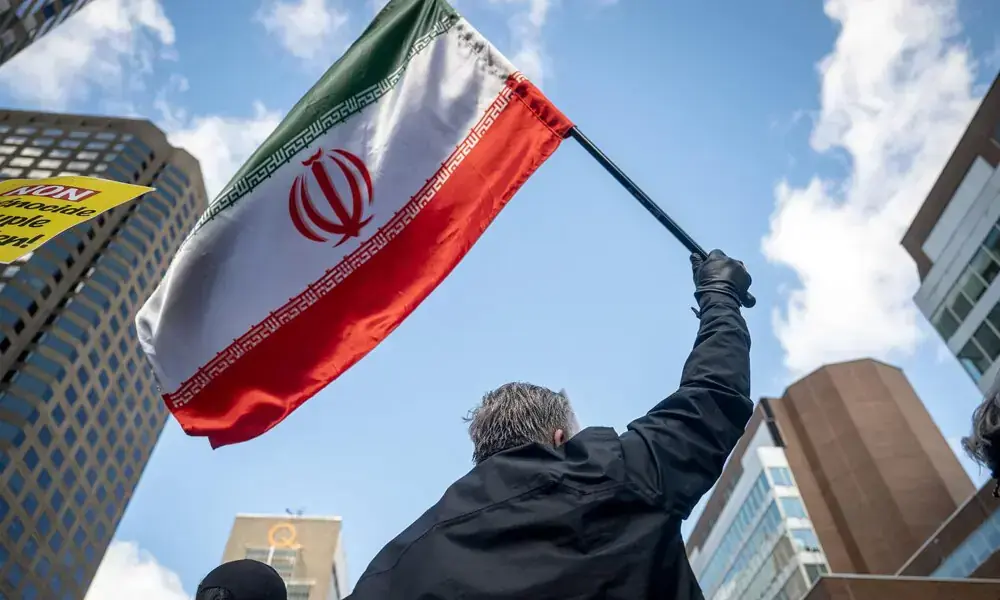

ISLAMABAD: Iran has rejected a US proposal aimed at ending the ongoing war, setting out five conditions for a ceasefire, including international recognition and guarantees of Iranian sovereignty over the Strait of Hormuz, insisting that any halt to hostilities will occur solely on Tehran’s terms and timetable, state-run Press TV reported on Wednesday, citing a senior Iranian political-security official.
According to Press TV, the official stated that Iran would not allow US President Donald Trump to dictate the timing of the war’s conclusion.
“Iran will end the war when it decides to do so and when its own conditions are met,” the official said, emphasising Tehran’s commitment to continue defensive operations and deliver “heavy blows” until its demands are satisfied.
The official noted that Washington had pursued negotiations through various diplomatic channels, presenting proposals Iran considers “excessive” and divorced from the reality of America’s setbacks on the battlefield.
He compared the latest offer to two previous rounds of talks in spring and winter 2025, describing them as deceptive, with military action following shortly after each.
READ ALSO: Iran denies talks with US
The recent US proposal, delivered via a friendly regional intermediary, was rejected as an attempt to heighten tensions, he said.
According to Press TV, Tehran has outlined five principal conditions for ending hostilities: A complete halt to “aggression and assassinations” by the enemy. Establishment of mechanisms ensuring the war is not reimposed on Iran. Guaranteed and clearly defined payment of war damages and reparations. Conclusion of the conflict across all fronts, including all regional resistance groups. International recognition and guarantees of Iran’s sovereign authority over the Strait of Hormuz.
These conditions, according to Press TV, supplement demands presented during the second round of Geneva negotiations, which preceded a fresh wave of US and Israeli military action on February 28. The TV claimed that Iran has reportedly informed intermediaries that a ceasefire will only occur if all conditions are met and that no negotiations will take place beforehand.
“The end of the war will occur when Iran decides it should end, not when Trump envisions its conclusion,” the TV quoted the official as saying.
Reports indicate the US proposal included a 15-point framework, encompassing: removal of all sanctions on Iran; US support for developing Iran’s civilian nuclear programme; freezing the nuclear programme under defined limits; retaining enriched uranium under supervision; addressing missile capabilities; restricting nuclear activity to civilian and defensive purposes; halting development of weapons-grade material; transferring enriched material to the IAEA; decommissioning Natanz, Isfahan, and Fordow nuclear sites; implementing international monitoring; and additional regional security agreements.
In an interview with Iranian news agency IRNA, Iran’s Ambassador to Pakistan, Reza Amiri Moghadam, reiterated Tehran’s preference for dialogue over conflict, contrasting it with the US approach.
“Unlike America, we have always sought dialogue and resolution of differences, but after Washington’s betrayal of diplomacy, Iran bravely defended the country and nation against the aggressors,” he said.
Moghadam recalled that Iran engaged in indirect negotiations with the US twice in the past eight months, only to face what he described as betrayal leading to war, assisted by Israel.
He attributed today’s conflict to US miscalculations and alleged deception by Israeli Prime Minister Benjamin Netanyahu. Addressing reports of mediation by friendly countries, Moghadam clarified that while consultations occur, no direct or indirect negotiations between Iran and the US have taken place.
“Friendly countries may facilitate dialogue, but this does not constitute negotiations between Iran and Washington,” he said, stressing that Tehran’s position is communicated directly through its leadership.
He also highlighted ongoing high-level consultations with Pakistan on regional developments.
“Our foreign ministers are in close contact, and recent calls between the leaders of Iran and Pakistan reflect the deep consensus between our nations for regional peace and stability,” he said.
Copyright Business Recorder, 2026




















Comments
Comments are closed for this article.