


Cheapest wind power: Unjustified curtailment pushes projects toward collapse: FPCCI
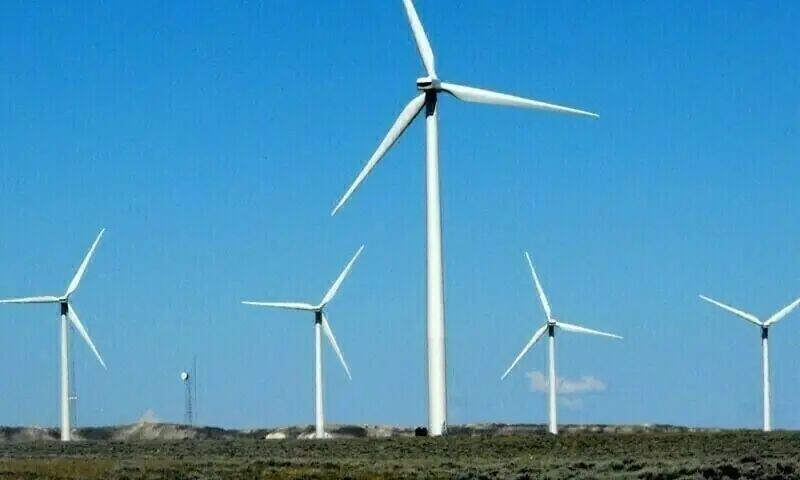

KARACHI: Unjustified Curtailment of Pakistan’s Cheapest Wind Power at Rs. 14 pushes projects toward financial collapse, said Atif Ikram Sheikh, President FPCCI.
A consortium of Pakistan’s leading wind energy producers today issued an urgent rebuttal to recent claims made by the Independent System and Market Operator (ISMO), warning that the systematic and unjustified curtailment of wind power plants— the nation’s most affordable energy source at just Rs. 14 per unit —is driving the renewable energy sector toward a catastrophic financial breaking point.
The consortium explicitly rejects recent media statements from the ISMO suggesting that curtailment is not occurring or is being managed effectively.
Furthermore, the consortium highlights that the current compensation mechanism for lost energy is a mathematical failure that is crippling project cash flows.
By throttling the country’s most cost-effective power source, the ISMO is not only compromising national energy security but also jeopardizing the long-term viability of billions of dollars in sustainable investment.
This is the stance taken by the FPCCI Committee on Renewable Energy in its meeting held on 17th March 2026 and chaired by Fawad Jawed.
Correcting the Record: The Reality of Curtailment
• The NPMV Fallacy: The ISMO’s assertion that the Non-Project Missed Volume (NPMV) adequately compensates producers is completely false. This massive shortfall is fundamentally crippling the liquidity of these projects.
• Misplaced Grid Risk: At the time of investment, wind power plants did not account for grid unavailability (Grid Risk). These projects were established under the legal mandate of mandatory off-take. To now force projects to bear the cost of an inadequate grid is a breach of the foundational trust upon which these multi-billion rupee investments were built.
• Financial Jeopardy: Current curtailment levels have slashed plant utilization to 70% annually. While projects are fighting to remain solvent, if this trajectory persists, it will become impossible for producers to fulfil international debt obligations. This trajectory threatens a systemic collapse of renewable energy financing in Pakistan.
• Broken Task Force Assurances: Wind producers agreed to lower tariffs following explicit assurances from the Energy Task Force that curtailment would be eliminated or significantly reduced. Instead, curtailment has intensified, violating both the Renewable Energy Policy and signed Energy Purchase Agreements (EPAs).
• The “Rooftop Solar” Narrative: The ISMO’s attempts to justify the curtailment of “must-run” wind projects by citing rooftop solar are unacceptable.
The licensing of such projects occurred under ISMO’s purview; it is an abdication of responsibility to blame market conditions that the ISMO and CPPA enabled, particularly when those conditions should have been factored into demand forecasting and license allocations.
• The “Wheeling” Contradiction: While the ISMO promotes new “Wheeling Auctions,” it is failing to dispatch existing, fully-built plants. Launching new competitive models without resolving current grid management failures is a strategic failure that destabilizes the entire market.
Copyright Business Recorder, 2026




















Comments
Comments are closed for this article.