


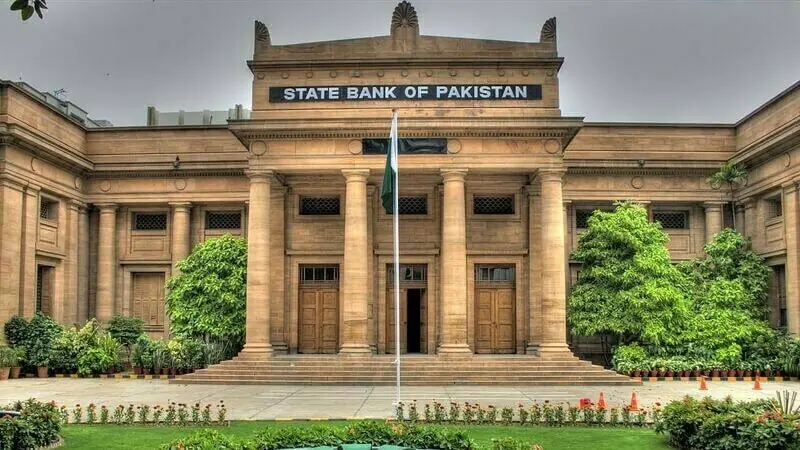

State Bank of Pakistan (SBP) launched the Roshan Digital Account (RDA) in September 2020 as a joint venture with commercial banks. It was presented as a structural innovation: enabling Non-Resident Pakistanis (NRPs) to open bank accounts online, invest in domestic instruments and participate in Pakistan’s financial markets without physical presence. The narrative was compelling—technology meets loyalty; diaspora capital meets national revival.
The headline numbers appear impressive. Since inception, 901,764 accounts have been opened and cumulative inflows have reached US$ 11.92 billion as of January 2026. Officials at the SBP interpret this growth as a sign of sustained overseas confidence and as a contributor to foreign exchange stability.
One should, however, be less interested in headline inflows and more concerned with structural balance sheets: who bears risk, who earns return, and whether the state is deepening productive capital or merely refinancing short-term external vulnerability.
A recent study by Policy Research Institute of Market Economy (PRIME) forces us to move beyond celebratory press releases. According to PRIME, out of the USD 11.92 billion received, USD 1.96 billion has already been repatriated and USD 7.6 billion has been utilized locally, leaving a net repatriable liability of USD 2.3 billion. In simple terms, nearly 80 percent of inflows have either flowed out or been consumed domestically. Only about 20 percent meaningfully strengthens reserves in a lasting way.
This is not trivial accounting adjustment. It redefines the programme. RDA is not an accumulation of durable external savings; it is a rolling foreign-currency liability. When we subtract repatriations and domestic absorption, what remains is a contingent claim on Pakistan’s fragile reserves, already under pressure due to oil shock in the wake of US-Israel war imposed on Iran.
Fiscal and monetary instruments are not evaluated merely on their immediate liquidity effect. They are assessed by how they alter the state’s intertemporal constraint. Does an initiative reduce structural vulnerability, or does it postpone adjustment by layering new obligations onto a weak balance sheet? RDA, as currently structured, resembles the latter.
Out of the net repatriable liability of USD 2.3 billion, USD 1.58 billion is parked in conventional and Islamic Naya Pakistan Certificates (NPCs). Equity investment through the Pakistan Stock Exchange stands at a mere USD 113.9 million. This composition matters. Debt-like instruments dominate; risk-sharing capital is negligible.
When diaspora funds flow primarily into high-yield sovereign instruments, the state is effectively borrowing in foreign currency from its own nationals abroad. The moral appeal of patriotism cannot disguise the economic substance: this is external debt, albeit via retail diaspora channels. The sovereign promises attractive returns; the diaspora retains the right to repatriate principal and profit. The exchange-rate risk sits squarely on the state.
This is why the term “net repatriable liability” used by PRIME is conceptually decisive. Inflow does not equal gain. Liability, not liquidity, defines the long-run burden.
The defenders of RDA argue that even temporary inflows stabilize the market. That is partially true. In periods of acute external stress, such as 2022–23, RDA provided a buffer. It expanded formal remittance channels, digitized account opening and reduced reliance on informal hawala networks. These are institutional gains. However, digitization is not development. Financial inclusion of overseas Pakistanis, while welcome, does not automatically translate into capital formation.
The deeper question is whether RDA reorients the state toward growth-linked financing or perpetuates rent-seeking fiscal behavior. If 80 percent of inflows either exit or are domestically consumed, then the macroeconomic effect resembles short-term portfolio flows. These are reversible and interest-sensitive. The state’s temptation is obvious: offer attractive yields, attract dollars, and defer structural reforms. Yet this model embeds three risks.
First is the exchange-rate risk. NPCs and other RDA-linked instruments are denominated in foreign currency. If the rupee depreciates sharply—as it has over the past decade—the real burden of repayment multiplies in domestic currency terms. The state’s fiscal space contracts: the taxpayer ultimately absorbs the adjustment.
Second is the maturity risk. Short-to-medium-term instruments create rollover pressure. If global conditions tighten or diaspora sentiment shifts, withdrawals can coincide with other external shocks. A liquidity instrument becomes a stress amplifier.
Third is the allocation risk. When diaspora savings gravitate toward sovereign paper rather than productive equity, the capital market remains shallow. The Pakistan Stock Exchange’s share of RDA funds—US$ 113.9 million—is almost symbolic and relative to total inflows. This reveals a trust deficit not only in governance but also in corporate transparency and long-term growth prospects.
The structural imbalance is stark: diaspora dollars fund government consumption or refinancing rather than industrial transformation. The state has chosen an expedient equilibrium. It mobilizes external retail savings without undertaking institutional reforms necessary to attract risk-sharing capital. The political economy of this choice is revealing. Debt instruments are administratively simple and politically rewarding. Equity reforms—corporate governance, judicial efficiency, minority shareholder protection—are politically costly and slow.
RDA thus becomes an instrument of fiscal buffing rather than economic restructuring. To be fair, the programme has institutional merits. It has formalized a channel for overseas Pakistanis, reduced transaction friction and enhanced transparency in remittance flows.
PRIME rightly underscores that RDA has emerged as an additional formal channel complementing over-the-counter remittance collection. In a country historically plagued by undocumented inflows, this matters. We need to distinguish between channel and purpose. A channel that merely intermediates remittances into sovereign liabilities cannot be equated with diaspora-driven development.
Consider comparative experiences. Successful diaspora engagement models—whether in East Asia or parts of Africa—gradually transitioned from bond-heavy instruments to growth-linked vehicles: infrastructure funds, SME equity platforms, technology venture pools etc. The key was alignment of return with productivity, not merely with sovereign yield. Pakistan’s RDA architecture remains yield-centric. High returns on NPCs attract deposits; the state borrows; the cycle repeats.
This yield-centric design also raises normative concerns. By offering preferential returns to NRPs, the state implicitly segments its citizenry. Domestic savers, constrained by rupee instruments and lower real returns, subsidize an external class of investors who enjoy dollar-denominated safety. In constitutional terms, such segmentation must be justified by demonstrable public benefit. If the net reserve impact is only 20 percent of headline inflows, the distributive calculus becomes questionable.
Reliance on diaspora borrowing risks moral hazard. Policymakers may postpone structural fiscal reforms—broadening the tax base, curbing non-development expenditure, rationalizing energy subsidies—because diaspora dollars temporarily ease pressure. RDA then becomes part of a broader political economy of deferral.
The PRIME study’s observation that additional efforts are required to increase both volume and scope of diaspora engagement is accurate but requires further elaboration. Volume without structural redesign deepens liability. Scope must shift from consumption-linked instruments to growth-linked capital.
First, gradual reduction in overreliance on sovereign certificates and expansion of diaspora infrastructure bonds tied to specific, revenue-generating projects—energy transmission, logistics corridors, export-oriented zones—with transparent reporting and ring-fenced cash flows.
Second, tax and regulatory incentives for diaspora equity participation in SMEs, startups and export industries. If equity through the Pakistan Stock Exchange remains negligible, the problem is not diaspora apathy alone; it reflects domestic institutional weakness.
Third, incorporation of partial non-repatriable tranches—voluntary but incentivized—where a portion of funds is locked into long-term development vehicles with shared upside rather than fixed yield.
Fourth, macro transparency. The SBP should publish disaggregated maturity profiles, sectoral utilization and stress-test scenarios for RDA-linked liabilities. Confidence rooted in data is more durable than confidence rooted in rhetoric.
None of this diminishes the symbolic achievement of RDA. It represents administrative modernization. It demonstrates that Pakistani institutions can design digital financial platforms at scale. However, modernization without macro prudence is insufficient.
At its core, the debate over RDA is about the nature of the Pakistani state. Is it a borrowing state, perpetually refinancing external deficits through creative instruments? Alternatively, can it evolve into a production-oriented state that leverages diaspora capital for structural transformation?
Fiscal instruments are not neutral. They embody political choices about risk allocation and intergenerational burden. When diaspora savings are converted predominantly into sovereign liabilities, today’s liquidity may become tomorrow’s fiscal compression.
PRIME’s data strips away the illusion of permanent reserve accretion. With only 20 percent of inflows translating into durable reserve support, RDA cannot be celebrated as a panacea. It is, at best, a supplementary liquidity channel.
The challenge now is qualitative transformation. If RDA remains another instrument for remittance and liquidity, its macro contribution will plateau. If it evolves into a platform for long-term, non-repatriable, growth-linked investments, it could reshape Pakistan’s development finance architecture. The choice is institutional, not technical.
Pakistan’s external fragility cannot be cured by layering liabilities, however digitized. It requires rebuilding productive capacity, strengthening rule of law and restoring investor confidence domestically and abroad. Diaspora capital can be a partner in that journey—but only if it is invited into risk-sharing, not merely into sovereign lending.
In the final analysis, Roshan Digital Account is a mirror. It reflects both our innovation and our structural hesitations. The numbers compel sobriety: US$ 11.92 billion in inflows is impressive; US$ 2.3 billion in net repatriable liability is revealing.
Confidence is not measured by deposits alone. It is measured by willingness to commit capital to long-term growth. Until RDA transitions from liability-driven dollarism to diaspora-backed development, its promise will remain only partially fulfilled.
Copyright Business Recorder, 2026
The writer is a lawyer and author, is an Adjunct Faculty at Lahore University of Management Sciences (LUMS), member Advisory Board and Senior Visiting Fellow of Pakistan Institute of Development Economics (PIDE)
The writer, an Advocate Supreme Court, Adjunct Faculty at Lahore University of Management Sciences (LUMS), member Advisory Board and Visiting Senior Fellow of Pakistan Institute of Development Economics (PIDE), holds LLD in tax laws




















Comments
Comments are closed for this article.