


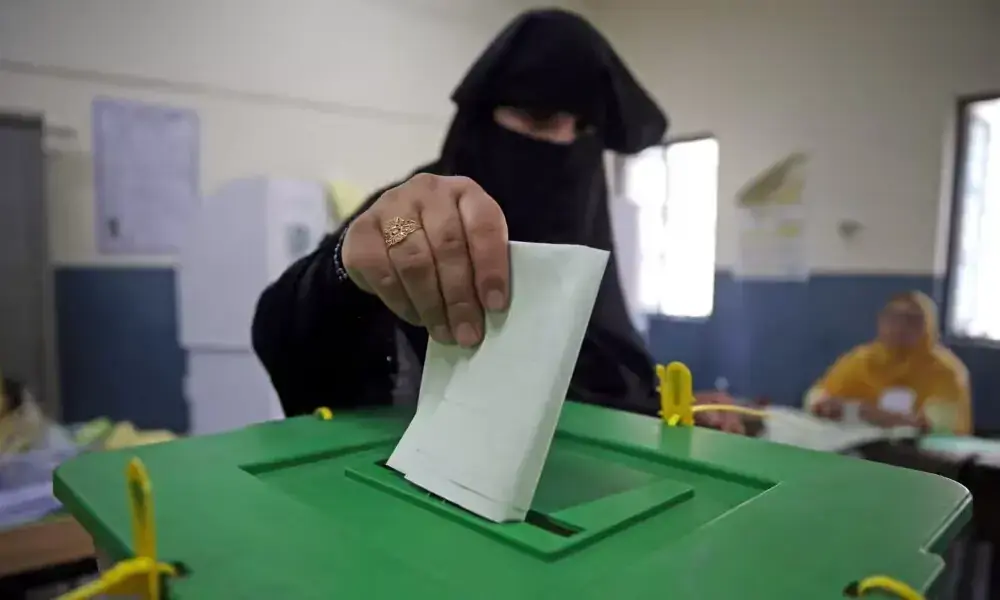
EDITORIAL: The latest research report by Pattan-Coalition lays bare how authorities in the Islamabad Capital Territory continue to defer — and effectively defy — grassroots democracy. The repeated postponement of local government elections in Islamabad, six times in five years, appears less an administrative lapse than a pattern of executive overreach.
Inevitably, this raises troubling questions about the perceived subordination of the Election Commission of Pakistan to the executive. An election management body that is unable to uphold its own schedule risks eroding public trust in the mechanics of representative governance. In a country where electoral credibility has long been contested terrain, such perceptions carry a cost too high to ignore.
Procedural delays and legal manoeuvres cannot substitute for meaningful democratic engagement. The financial waste documented in the report compounds the concern.
According to Pattan-Coalition, 7,866 candidates collectively paid Rs 37.74 million in nomination fees for two elections that were ultimately aborted. Once campaign mobilisation, legal representation and logistical preparations are factored in, the estimated expenditure rises to a staggering Rs 544.30 million. For many candidates — particularly independents and those supported by modest community networks — these sums represent life savings or borrowed money. To cancel elections after such investments is not merely disappointing; it is inexcusable. Yet the gravest loss cannot be calculated in rupees. The real casualty is citizens’ constitutional right to representation.
Local governments constitute the most immediate interface between the state and the public. They oversee sanitation, water supply, local roads and schools, and essential community services — the everyday functions that determine quality of life. When this tier remains unelected or structurally weakened, bureaucratic centralisation inevitably fills the vacuum, as is presently the case in Punjab.
The report’s survey findings also call attention to the trust deficit. Seventy percent of candidates and 61 percent of voters opposed amendments to the Local Government Act, 2015, introduced through an ordinance. A striking 66 percent of candidates, along with nearly half of voters, rejected the abolition of the Metropolitan Corporation, while 50 percent opposed indirect elections for town corporations. These are not marginal objections; they signal broad-based unease with structural changes imposed without adequate consultation.
Equally disquieting is the manner in which these amendments were promulgated — through an ordinance despite the National Assembly being in session, and without meaningful stakeholder engagement. While ordinances are constitutionally permissible, their use on contentious political questions fosters the impression of executive impatience with deliberative processes. Further deepening the legitimacy crisis is the report’s finding that more than one-third of respondents believe elections were postponed out of fear of electoral defeat.
To state the obvious, democracy cannot be sustained by periodic general elections alone. It thrives when citizens have genuine avenues for participation, and when institutions are held accountable for their acts of commission and omission. The Islamabad Capital Territory, as the seat of federal authority, must not become a cautionary tale of how centralisation hollows out democratic representation.
Copyright Business Recorder, 2026



















Comments