


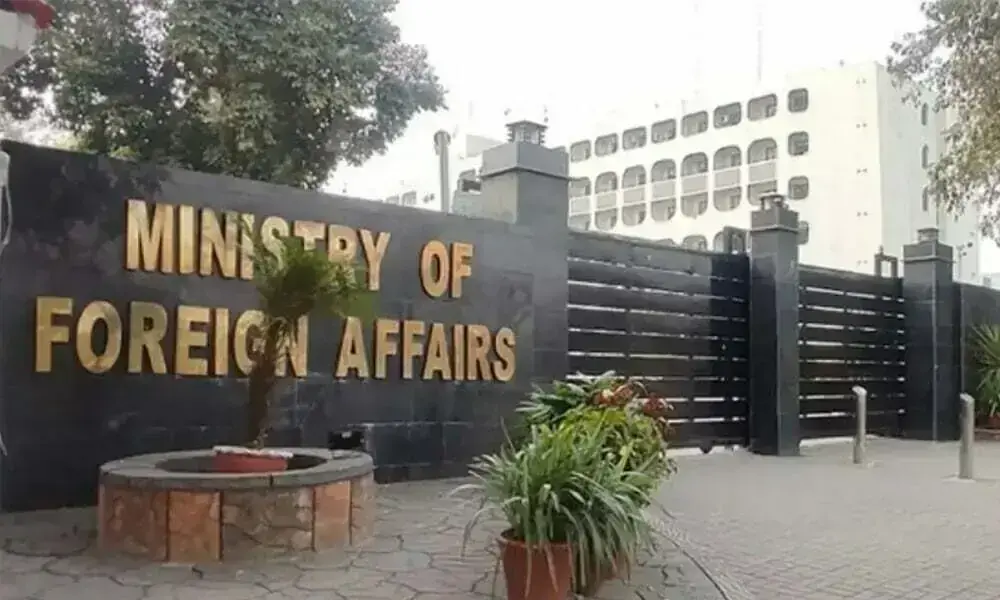
EDITORIAL: Islamabad has made it clear that it is closely monitoring the expanding strategic embrace between Prime Minister Narendra Modi and Israel, particularly in the aftermath of last summer’s conflict with India, which Pakistan assessed as having exposed serious weaknesses in New Delhi’s preparedness for modern, technology-driven to warfare. The Foreign Office has stated that it remains “seized of” the defence ties between India and Israel, including the systems and platforms that have been used against Pakistan. That formulation was deliberate. It signals awareness, not anxiety; vigilance, not surprise.
Modi’s two-day visit to Israel has formalised what has been an accelerating trajectory for over a decade. The two sides announced plans for joint development, joint production and transfer of technology in defence, alongside cooperation in “horizon scanning” to enhance strategic foresight, risk assessment and AI-driven planning tools. India and Israel have also pledged to fight terrorism “shoulder to shoulder”. These are not symbolic gestures. They point to institutionalised security collaboration, embedded at the level of capability building.
For Pakistan, the relevance is immediate. Defence cooperation between India and Israel has historically included surveillance systems, drones and missile technology. The FO’s reference to platforms used against Islamabad reflects that record. In the wake of a conflict that tested both sides’ doctrines and operational resilience, it is unsurprising that New Delhi would seek to consolidate partnerships that promise technological edge.
Yet this visit also underscores a deeper political shift within India’s foreign policy. For decades, New Delhi cultivated a pro-Palestinian posture, rooted in anti-colonial solidarity and non-aligned diplomacy. India was among the earliest non-Muslim countries to recognise the Palestinian struggle. Under Modi, that legacy has receded into background rhetoric. While Indian officials continue to reference support for peace and stability in West Asia, the public warmth of the Israel partnership, amplified by language of brotherhood and shared strategic purpose, reflects a reordering of priorities.
This recalibration has domestic and regional dimensions. The ideological tenor of India’s current leadership has often drawn criticism for majoritarian politics and hardened rhetoric towards Muslim minorities. Israel’s own government has faced sustained international scrutiny over its conduct in the Occupied Palestinian Territory. The convergence of two administrations that emphasise muscular security policies disguised as counterterrorism narratives creates a partnership that extends beyond transactional defence trade. It is grounded in a shared worldview that privileges force projection and technological dominance as instruments of policy.
Pakistan must therefore assess this alignment without resorting to hyperbole. Strategic partnerships are a reality of international politics. India is entitled to pursue them, just as Pakistan cultivates its own relationships. The question is whether enhanced India-Israel cooperation alters the regional balance in ways that increase risk. Joint development and technology transfer can compress the time required to absorb new capabilities. AI-enabled planning tools may improve targeting and situational awareness. These factors influence crisis stability.
The appropriate response lies in preparedness and prudence. The FO has reiterated that Pakistan possesses a robust military capability to defend and deter aggression. That assurance is necessary. Deterrence rests on credibility. At the same time, preparedness must be complemented by diplomatic engagement. Islamabad’s articulation that it is monitoring developments serves both audiences: domestic constituents seeking reassurance, and external partners evaluating Pakistan’s resolve.
India’s recalibration away from its historic emphasis on Palestine also carries reputational consequences in parts of the Muslim world. Whether that shift translates into diplomatic cost remains to be seen. What is evident is that the symbolism of the visit, including public gestures and expansive defence language, marks another step in a trajectory that began years ago and has now matured into open strategic embrace.
Pakistan’s course should remain steady. Vigilance is essential. Escalatory rhetoric is unnecessary. The region has little appetite for renewed confrontation. Monitoring developments, strengthening deterrence, and preparing for contingencies reflect a sober approach. Strategic alignments will continue to evolve. The responsibility of states is to anticipate their implications and respond with clarity and discipline.
Copyright Business Recorder, 2026






















Comments
Comments are closed for this article.