


China, HK stocks fall on Middle East worries; focus on NPC for policy cues
- The blue-chip CSI300 Index fell 1.6%, while the Shanghai Composite Index lost 1.4%
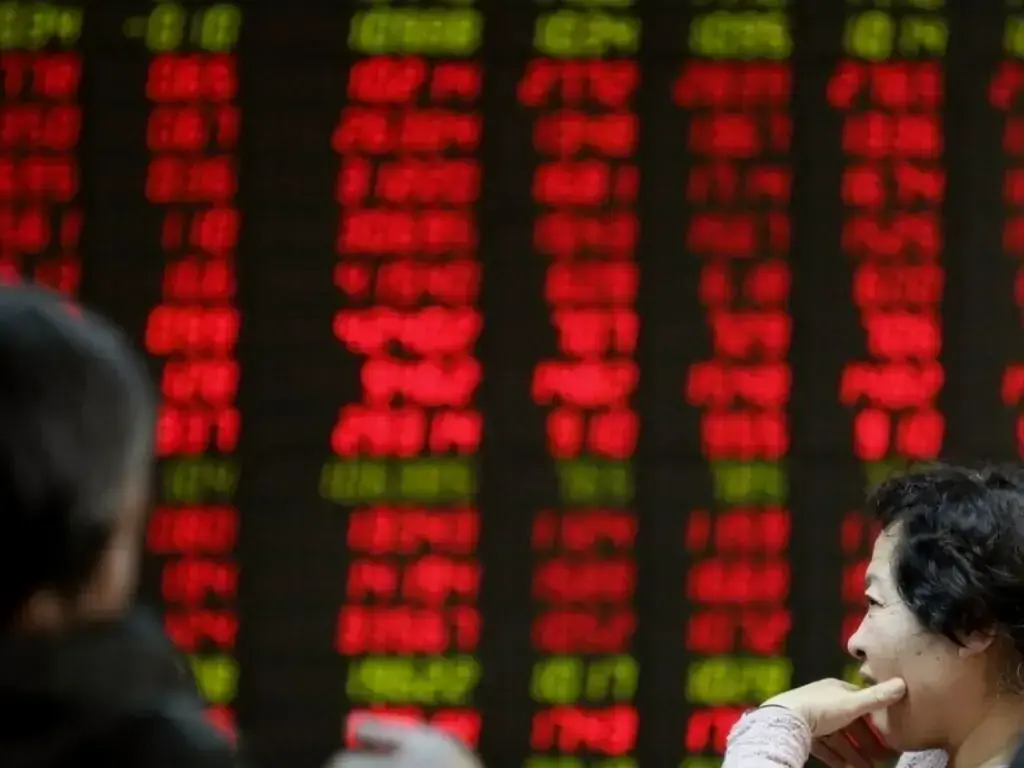

SHANGHAI: China, Hong Kong stocks fell on Wednesday, led by oil and maritime shipping companies, as investors remained risk-off amid the escalating Middle East conflict and turned focus to the annual parliamentary meeting due this week for policy signals.
Worries that a wider conflict could trigger an energy shock, lift inflation and delay rate cuts weighed on sentiment in Asia.
By the lunch break, the blue-chip CSI300 Index fell 1.6%, while the Shanghai Composite Index lost 1.4%.
Hong Kong benchmark Hang Seng shed 2.8% to a six-month low.
Onshore selling was led by oil, maritime transport and port stocks.
The CSI Oil and Gas Industry Index dropped 3.3% after China Petroleum & Chemical, CNOOC and PetroChina issued abnormal-trading notices following more than 20% gains over the past three sessions; the firms said operations are normal and cautioned on geopolitical uncertainty in crude prices.
Nanjing Port and Ningbo Marine each fell nearly 10%.
“Geopolitical risks remain unclear and A-shares are in a catch-up decline. In a high-volume downswing, investors should avoid rushing to bottom-fish and watch developments in the conflicts and annual parliamentary meeting for possible policy signals,” analysts at Huatai Futures said in a note.
The country’s top leadership will publish its annual government work report and budget plans at the opening session of the National People’s Congress (NPC), China’s rubber-stamp parliament, on Thursday, as well as the outline of its 15th Five-Year Plan for 2026–2030, a sweeping blueprint that sets priorities for industrial policy.
“We expect Beijing to lower the 2026 GDP growth target slightly to 4.5%-5.0% from around 5.0% in 2025,” said Ting Lu, chief China economist at Nomura.
He added that Beijing is likely to keep the official fiscal deficit at 4.0% of GDP and lift net financing of off-budget ultra-long central government special bonds to 1.6 trillion yuan ($231.29 billion) and local government special bonds to 4.8 trillion yuan, from 1.3 trillion and 4.4 trillion, respectively, announced in March 2025.
Gains elsewhere helped limit losses.
The CSI Defense Index rebounded about 1% after a sharp selloff in the previous session, and the CSI Rare Earth Index climbed nearly 1%.
In Hong Kong, financials led declines, falling 3.6%, while tech majors slid 2%, extending losses for a third session.
An official survey showed China’s manufacturing activity contracted for a second month in February, underscoring pressure on factory margins as weak domestic demand and investment offset resilient exports.


























Comments
Comments are closed for this article.