


What is the Strait of Hormuz and why is it so important for oil?
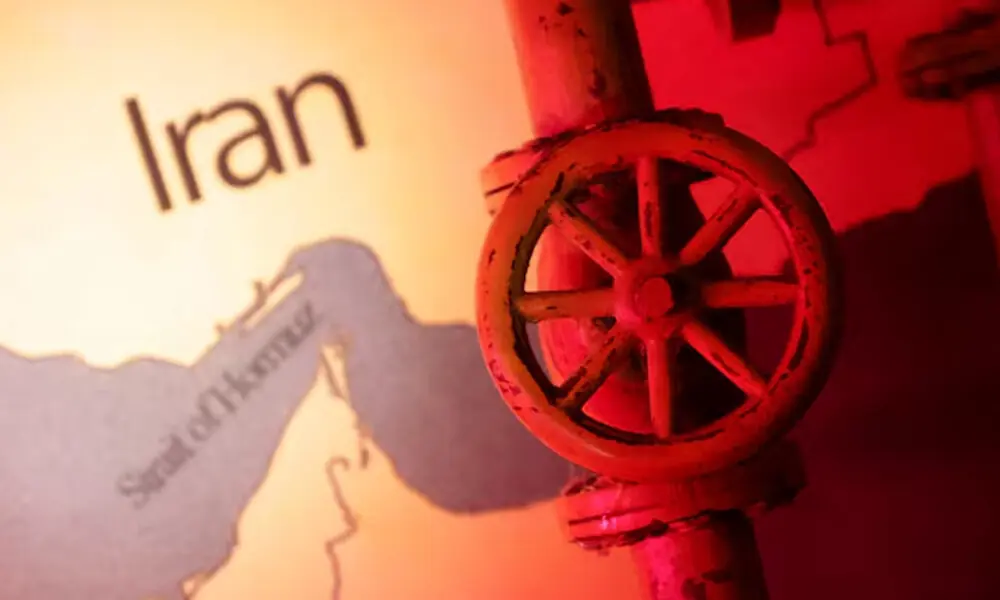

The United States and Israel attacked Iran on Saturday in a development that could lead to a closure of the Strait of Hormuz, a major oil export route, for days.
Below are details about the strait:
What is the strait of Hormuz?
The strait lies between Oman and Iran and links the Gulf north of it with the Gulf of Oman to the south and the Arabian Sea beyond. It is 21 miles (33 km) wide at its narrowest point, with the shipping lane just 2 miles (3 km) wide in either direction.
Why does it matter?
About a fifth of the world’s total oil consumption passes through the strait.
More than 20 million barrels of crude, condensate and fuels passed through the strait daily last year on average, data from analytics firm Vortexa showed.
READ MORE: OPEC+ leans towards resumption in oil output increases from April
OPEC members Saudi Arabia, Iran, the United Arab Emirates, Kuwait and Iraq export most of their crude via the strait, mainly to Asia.
Qatar, among the world’s biggest liquefied natural gas exporters, sends almost all of its LNG through the strait.
OPEC+ top producers Saudi Arabia and the UAE have raised oil exports in recent days as part of contingency plans.
The UAE and Saudi Arabia have sought to find other routes to bypass the strait. About 2.6 million barrels per day (bpd) of unused capacity from existing UAE and Saudi pipelines could be available to bypass Hormuz, the U.S. Energy Information Administration said in June last year.
READ MORE: Saudi Arabia crude exports fall to three month low in December
The U.S. Fifth Fleet, based in Bahrain, is tasked with protecting commercial shipping in the area.
History of tensions
In 1973, Arab producers, led by Saudi Arabia, slapped an oil embargo on Western supporters of Israel in its war with Egypt.
While Western countries were the main buyers of Middle East crude at the time, now Asia is the main buyer of OPEC’s crude, with the U.S. a major producer and exporter.
READ MORE: Oil prices slip about 1.5% on high US crude stocks and US-Iran positivity
During the 1980-1988 Iran-Iraq War, the two sides sought to disrupt each other’s exports in what was called the Tanker War.
In January 2012, Iran threatened to block the strait in retaliation for U.S. and European sanctions. In May 2019, four vessels - including two Saudi oil tankers - were attacked off the UAE coast, outside the Strait of Hormuz.
Three vessels, two in 2023 and one in 2024, were seized by Iran near or in the strait. Some of the seizures followed U.S. seizures of tankers related to Iran.
Last year, Iran considered shutting down the strait after U.S. attacks on its nuclear facilities.




















Comments
Comments are closed for this article.