


Pakistan’s chemical manufacturers seek policy reset amid cost pressures
- Kamal suggested that Pakistan can seek preferential market access for selected domestic products

Pakistan’s chemical sector has warned that rising energy costs, tariff distortions, and persistent regulatory inefficiencies are eroding competitiveness and weakening domestic value addition, urging the government to undertake urgent structural reforms to support industrial growth.
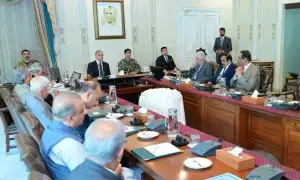
The concerns were raised by representatives of the Pakistan Chemical Manufacturers Association (PCMA) during a meeting with Commerce Minister Jam Kamal Khan, held to review the challenges facing the chemical sector and to discuss structural reforms aimed at strengthening Pakistan’s industrial and export framework, read a statement on Wednesday.
During the meeting, the PCMA delegation presented its concerns regarding the performance of the chemical sector.
PCMA Chairman highlighted that rising energy costs, financing constraints, tariff rationalisation, and regulatory inefficiencies have created pressure on local manufacturers. The delegation pointed out that certain raw materials are imported at low or zero duty without corresponding downstream export growth, which, they argued, weakens domestic value addition.
Chemical-makers for structural reforms, forward-looking policy framework
Industry representatives also stressed the importance of strengthening quality standards and intellectual property enforcement to eliminate substandard and counterfeit products from the market. They noted that improved standards and consistent regulatory oversight would enhance investor confidence and encourage foreign collaboration.
The delegation further emphasised that industrial growth should not be viewed solely through the lens of export figures, but through broader economic indicators such as employment generation, tax base expansion, and domestic market development.
Meanwhile, Jam Kamal emphasised that Pakistan’s economic challenges are not merely policy-related but largely linked to governance and implementation gaps.
He noted that without improving internal systems — including customs processes, regulatory enforcement, standards compliance, and institutional coordination — any incentive or trade concession introduced by the government would fail to deliver its intended results.
He stressed that “house-in-order” reforms are critical to ensuring that trade and industrial policies translate into real growth.
Jam Kamal underscored the need to institutionalise sectoral planning through properly structured secretariats under sectoral councils, with defined ownership, clear mandates, and time-bound deliverables.
He highlighted that sectoral councils must evolve beyond discussion forums and become effective platforms for long-term economic planning, aligned with Pakistan’s broader five-year development framework.
The minister said embedding structured industrial planning within national policy would significantly improve coordination and accountability.
He also reiterated the government’s commitment to diversification of the export base. He observed that while textiles remain a major contributor, sectors such as chemicals, pharmaceuticals, surgical goods, food processing, and value-added manufacturing must be strengthened to ensure economic resilience.
He acknowledged that the prime minister’s broader economic vision places strong emphasis on expanding opportunities for non-traditional export sectors.
On trade negotiations, Jam Kamal stated that Pakistan should strategically engage with countries where significant trade imbalances exist.
He suggested that in cases of large import volumes from certain countries, Pakistan can seek preferential market access for selected domestic products to improve trade balance outcomes. He emphasised that negotiations must be data-driven and sector-specific to yield tangible results.
Addressing export facilitation mechanisms, the minister agreed that impact-based evaluation is necessary to ensure transparency and prevent misuse.
He supported the idea of conducting a detailed assessment of existing schemes to measure export gains, revenue implications, and industry-level benefits before future policy adjustments are made. He noted that genuine exporters must be facilitated, while governance weaknesses must be addressed through stronger enforcement.
Concluding the meeting, Jam Kamal assured the delegation that their recommendations would be carefully reviewed and incorporated into ongoing policy deliberations where appropriate. He reaffirmed the ministry’s commitment to sustained engagement with industry stakeholders to promote a research-based, transparent, and growth-oriented industrial strategy for Pakistan.
















Comments
Comments are closed for this article.