



Islamabad seems to be in a giving mood, if you are an industry. Having offered yet another concessional financing scheme to exporters, the latest comes in the form of a substantial relief in electricity tariffs for industries. Industries, particularly export-oriented, had long been lobbying for reduction in electricity tariffs, especially in the wake of reversal of captive power generation policy. They asked for regionally competitive tariffs, and Islamabad has delivered that, and beyond.
The regulator has yet to stamp the government’s motion, but it should be more of a formality. On a weighted average basis, power tariffs for industrial users are slated to be slashed by 17 percent from existing tariffs to Rs25.29/unit from Rs30.49/unit. The differential has been created in a subsidy neutral event – and is going to irk the IMF either.
The various domestic consumption slabs have now been slapped with fresh or increased fixed charges (more on that later).
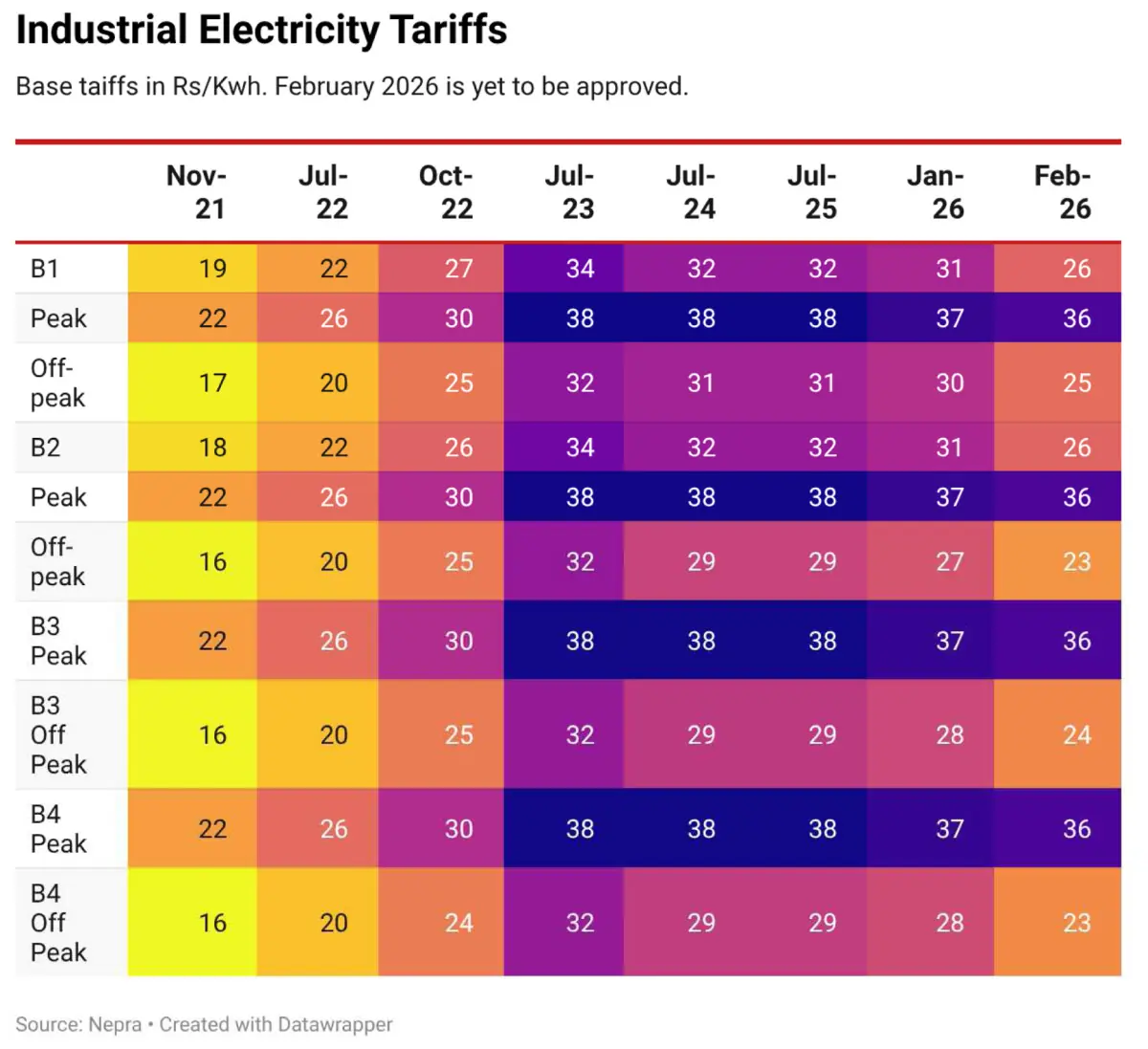
The proponents of cheaper power tariffs for industries have long argued against the cross subsidy element – where industries subsidies domestic consumers. The cross subsidy amount was touching Rs140 billion a year, as per claims by the All Pakistan Textiles Mills Association (APTMA). The relief sought for industries in the recent government motion, amounts to Rs131 billion – essentially eliminating any cross subsidy towards the domestic sector.
READ MORE: Govt working on proposals to reduce industrial power tariff
The industrial power tariffs, for the first time, in recallable memory, will be slightly lower than residential consumers, on a weighted average basis. With the revised fixed rate for domestic consumers, weighted average residential base tariffs come close to Rs27.5/unit.
In dollar terms, pre-tax industrial power base tariff at 9 cents per kiwlowatt hour is what has long been demanded by lobby groups.
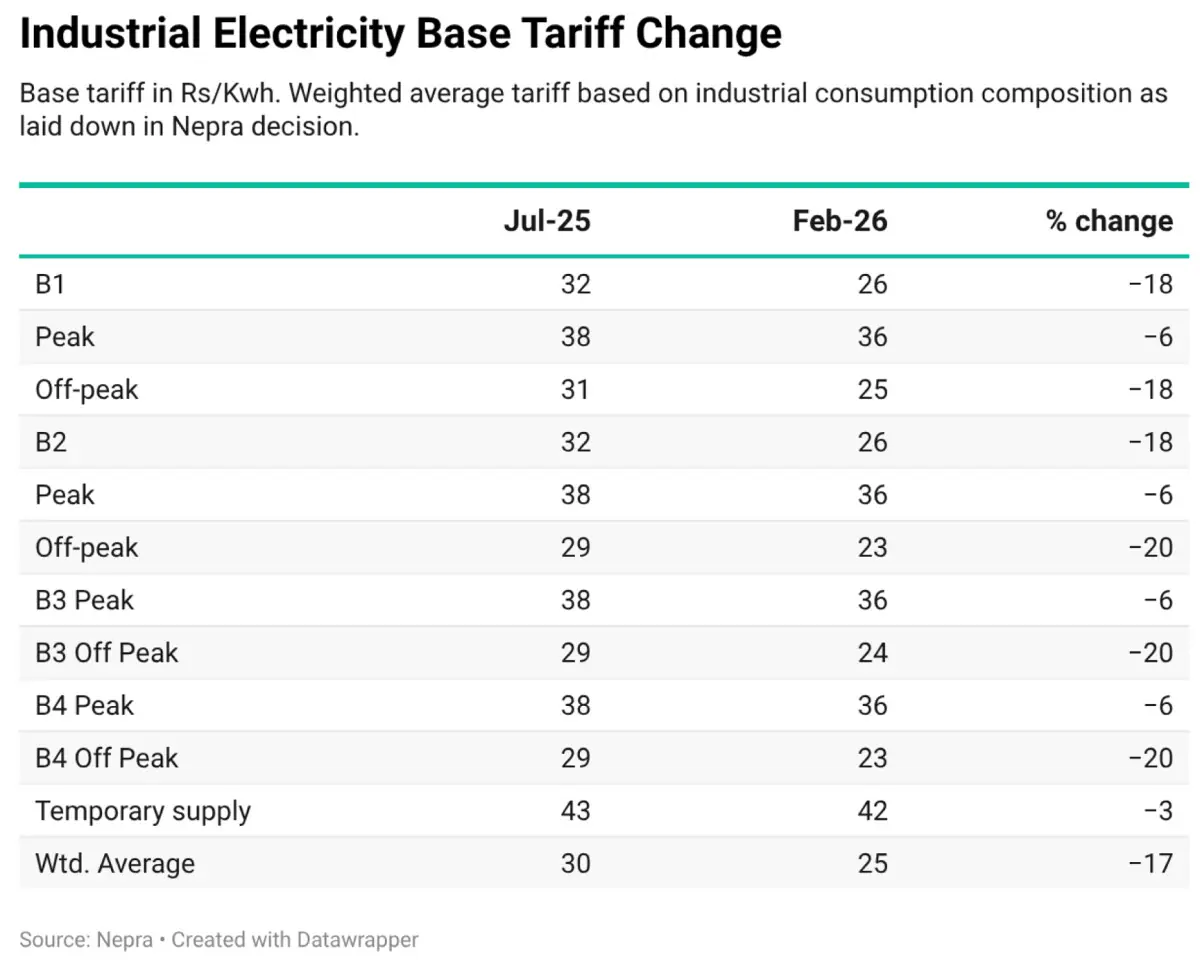
Almost 80 percent of all industrial electricity consumption is now priced at 8 cents and thereabouts – a head start industries have not had for a very long time. There is also an element of incremental consumption incentive, the contours of which might have to be redefined, once the proposal gets the final nod. Even the smaller scale industrial power users stand to gain a substantial relief, as nearly two-third of the 278,000 industrial consumers use only 6 percent of all industrial consumption. The gain on this front is close to 18 percent, at Rs25.5 per unit. The SME sector should benefit a great deal as base tariffs are now set back nearly three years.
The reduced industrial tariffs could also possibly throw spanner in the works for the pace of solar adoption, especially in the wake of proposed prosumer regulations. But that is for another day. For now, the ball is pretty much in the industries’ (and more so, exporters’) court to deliver. They now have access to cheap credit and competitively priced electricity.




















Comments
Comments are closed for this article.