


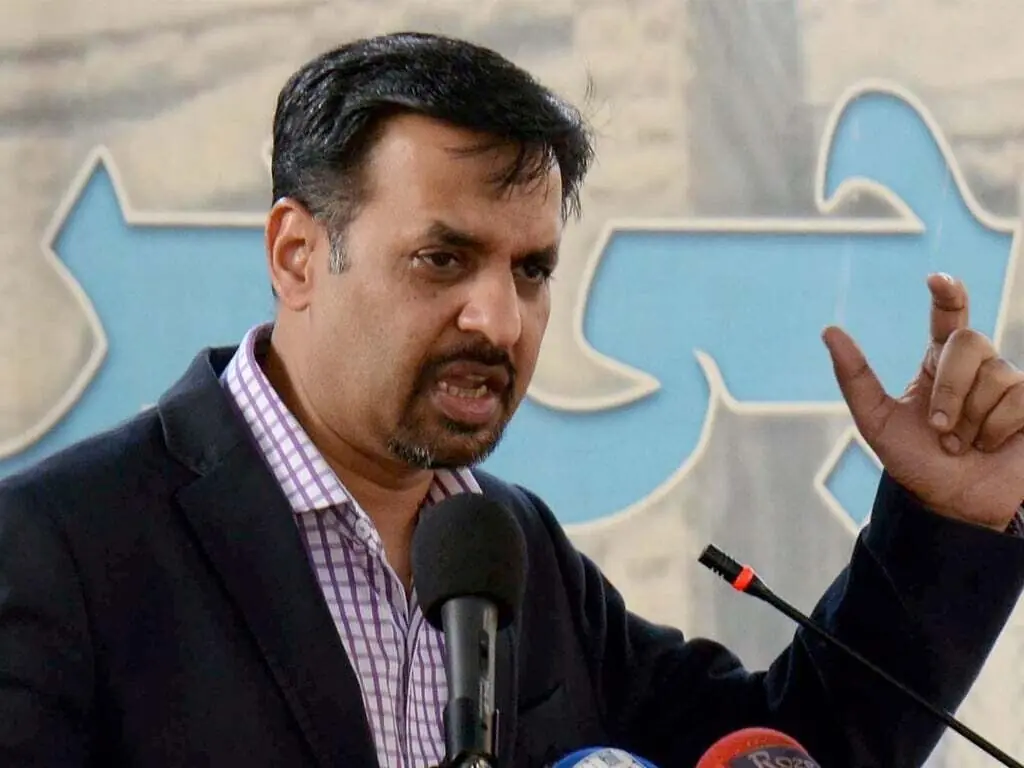

ISLAMABAD: Federal Minister for National Health Services and Regulations Mustafa Kamal said on Monday that Pakistan is committed to developing indigenous vaccine production capacity by 2030.
After inaugurating the fourth meeting of the Organisation of Islamic Cooperation (OIC) Vaccine Manufacturers Group (VMG) at the OIC-COMSTECH Secretariat, Kamal said that the meeting could make a major milestone in advancing vaccine self-reliance and strengthening health security across the Islamic world.
He said that joint vaccine production facility by the OIC member states will not only bring self-sufficiency among OIC countries but will also enable the OIC countries to collectively address the health challenges of nearly 1.9 billion people living in the Islamic world.
He pointed out that while a single company can produce only one vaccine, Pakistan requires a total of 13 vaccines, underscoring the need for reliable international partnerships. In this regard, he said cooperation is being sought from countries including China, Saudi Arabia, and Indonesia. Kamal also noted that Pakistan’s population is increasing by more than six million annually, making self-sufficiency in vaccine production critical to meeting future health needs.
The minister, stressing the need for a joint vaccine alliance among Islamic countries to collectively strengthen manufacturing capacity, revealed that global vaccine donors like Gavi, the Vaccine Alliance, were purchasing various vaccines from India to supply Pakistan. The Minister announced that work on the OIC Vaccine Alliance would commence immediately, focusing on short-, medium- and long-term strategies, enabling member countries to benefit from each other’s expertise and experience.
Highlighting the importance of vaccine manufacturing for Pakistan’s health sector, Mustafa Kamal said local vaccine production remains a major challenge for a country with a population of 240 million. He said that country was spending millions of dollars on the import of vaccination, out of which 51 percent paid by Pakistan and rest paid by International organisations.
He noted that the government has set a target to end vaccine imports and foreign dependence by 2030, but emphasised the need to accelerate capacity building without waiting for the deadline. The federal Health minister further stated that Pakistan has prepared its first-ever vaccine policy and possesses adequate infrastructure, including strong institutions such as the National Health Authority.
Earlier, Dr M Salman, Chief Executive Officer (CEO), National Institutes of Health (NIH), Pakistan, senior representatives of the OIC General Secretariat, WHO, Islamic Development Bank (IsDB), SESRIC, SMIIC, vaccine manufacturers, regulators, development partners, and experts from OIC Member States, were also present on the occasion.
Welcoming the distinguished participants, Prof Dr Muhammad Iqbal Choudhary stated that hosting the fourth meeting of the VMG at a critical global juncture reflects the strong commitment of OIC member states to advancing collective health security. He emphasized that the COVID-19 pandemic and subsequent global supply disruptions clearly demonstrated that vaccine self-reliance is no longer an option but a strategic necessity, particularly for OIC countries facing high disease burdens and rapidly growing populations.
Highlighting the evolution of the OIC Vaccine Manufacturers Group since its establishment in 2014, Choudhary noted that the Group has laid strong foundations through cooperation agreements, joint training programs, and the establishment of the OIC Centre of Excellence on Vaccines and Biotechnology Products in Indonesia.
Copyright Business Recorder, 2026

























Comments
Comments are closed for this article.