



Pakistan’s decades-long reliance on high tariffs has fostered a protectionist economic model that is now fundamentally unviable, actively eroding national competitiveness.
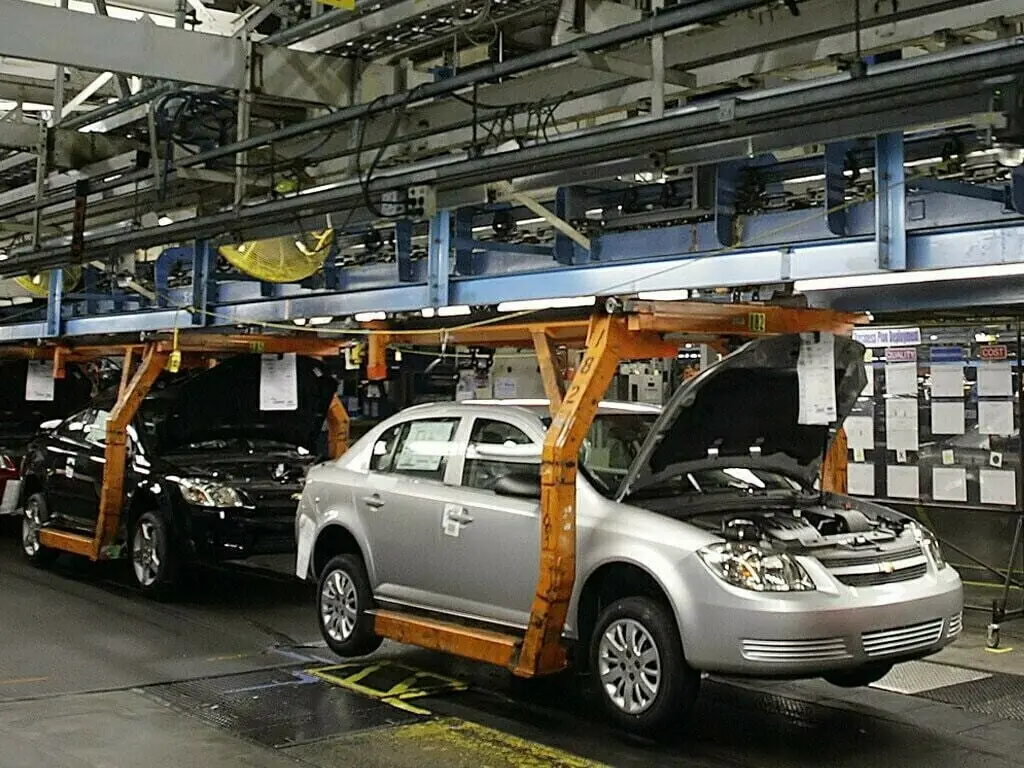
The automobile industry is a textbook case of this policy issue, where decades of protection devoid of performance benchmarks have created a stagnant, high-cost domestic enclave with negligible export capacity.
The necessary alternative is not a sudden shock but a phased and orderly tariff reform designed to prepare industries for international competition, not permanently shield them from it.
The essential debate, therefore, is no longer whether to reform but how to urgently implement this transition toward a resilient economy built on global integration and competitive productivity.
The question of whether Pakistan should reduce tariffs is no longer a theoretical debate limited to policy circles. It is central to the broader conversation about the country’s economic trajectory and the type of development strategy we intend to pursue. For decades, Pakistan has relied on a model in which protection, fiscal concessions, and episodic external support substitute for productivity, competitiveness, and structural transformation. That model is long past its prime and no longer viable.
The alternative; an economy that grows on the basis of efficiency, openness, and integration into global markets; requires difficult choices to be made but will put us on a far more sustainable path.
Tariffs sit at the heart of this trade-off, frequently portrayed as a tool for boosting domestic industry, protecting jobs, and managing the balance of payments. In reality, they often become permanent barriers that protect firms from competition and weaken incentives to upgrade technology, boost output, or diversify markets.
The automobile industry is a classic case of this dynamic. Decades of high tariffs, deletion programmes, and procedural restrictions created an environment in which assemblers faced little competitive pressure.
The outcome has been predictable: high prices relative to income, limited model variety, shallow localization in critical components, and almost no capacity to export. Protection did not translate into global competitiveness; it produced a domestic market highly dependent on policy privileges.
At a time when the total number of firms has more than tripled with many more models of vehicles available, production volumes have not shown a corresponding increase.
Instead, the country continues to produce the same number of vehicles as 15 years ago, but with ten more companies in play. While some will point to increase in options as a win, in reality it is a worrisome development for consumers and firms alike. For consumers, the limited availability of vehicles points to the missing increase in production capacity is a sign of weak affordability for consumers.
On the other hand, the market share of individual firms has reduced, making the automobile market in Pakistan even more challenging. Inward-looking policies without developing the necessary regulatory structure, business ecosystem and most importantly, the supply chain from the ground up, has resulted in firms continuing to operate at below 50% capacity, producing the same volumes for a decade and a half now and stunting growth of the automobile industry.
This example matters because it reflects a broader structural phenomenon. When tariffs remain elevated for long periods, they change firm behaviour.
The incentive to invest in productivity declines, lobbying becomes more attractive than innovation, and entire value chains grow around the pursuit of domestic rents rather than international competitiveness.
The downstream effects are equally important: higher input costs for producers, reduced consumer access to affordable goods, and weaker integration into global value chains.
Tariffs, in other words, do not merely create a price wedge; they change the development path of industries.
This does not imply that all tariffs should be eliminated or that sequencing is irrelevant. A sudden, across-the-board liberalization will impose adjustment costs that the economy will be hard pushed to absorb.
Firms that have operated behind tariff walls will experience pressure on their margins, while workers will face job loss. It is the state’s responsibility to manage this transition in a predictable and orderly manner. A phased reduction in tariffs, implemented over several years, gives firms time to adjust their supply chains, adopt more efficient technologies, and update their product ranges. It also gives workers time to acquire the skills needed to reposition themselves in more competitive segments of the economy.
The question, then, is not simply whether tariffs should fall, but how to define an end-point for reform. A structure that remains excessively high will continue to protect incumbents at the expense of downstream industries and consumers.
A structure that is reduced indiscriminately will expose nascent capabilities to competitive pressures they are unprepared for. The challenge for policymakers
is to find the balance: tariffs should be low enough to encourage efficiency and integration, but not so low as to eliminate the scope for learning and capability development where it is justified. This requires a clear distinction between temporary developmental protection, and permanent distortionary protection. The former is structured, time-bound, and linked to performance benchmarks; the latter is open-ended and aimed at preserving existing privileges.
The automobile industry again offers a useful guide for thinking about this distinction.
Protection was offered with the stated objective of developing local capability, yet it has become permanent without any performance obligations. Unlike successful industrializers, Pakistan did not pursue export targets, localization milestones in higher-value components, or explicit sunset clauses. The result
was not a globally competitive industry but a protected enclave. This outcome raises a broader question: if such protection has failed to produce competitiveness in one of the country’s supported sectors, is it reasonable to expect different outcomes in others?
While industry often emphasizes the risks of tariff reform, it must also recognize the risks of the status quo. Competing in international markets requires productivity, scale, and technological depth, all of which cannot be developed behind tariff walls.
Improved access to global inputs, exposure to competitive pressures, and integration into cross-border production networks are essential for capabilities development. Therefore, tariff reform should not be viewed solely as a threat; but as an opportunity to diversify product lines, adopt modern production technologies, and expand into export markets.
For academia, the task is to assess the distributional and structural impacts of tariff reform with clarity.
How do changes in tariff schedules affect downstream industries? What kind of support programmes are required to facilitate firm-level adjustment? How can workers be assisted in transitioning across sectors? Evidence-based policy design requires that these questions be addressed systematically rather than through ad hoc advice and interventions.
The state has its own responsibilities. Tariff reform will be ineffective if firms continue to face regulatory sludge, unpredictable policy shifts, and barriers to entry and exit.
An open trade regime must be complemented by improvements in the business environment, labour training programmes tailored to industry needs, streamlined regulation, and targeted, time-bound support mechanisms. Without these complementary measures, tariff reductions will not deliver the desired structural transformation.
Pakistan’s future development path requires a shift from protecting firms from competition to preparing them for it.
The longer the delay, the higher the eventual cost—for producers, for consumers, and for the broader economy. Tariff reform is not a silver bullet, but it is a necessary step toward building a more competitive, resilient, and export-oriented economy. It does, however, require extensive work and debate between stakeholders to address two key questions: the extent of tariff reduction, and the method of implementation before actually carrying it out.
Copyright Business Recorder, 2026
The writer is Senior Research Economist at the Pakistan Institute of Development Economics (PIDE)
The writer is Research Economist at the Pakistan Institute of Development Economics (PIDE)
















Comments