


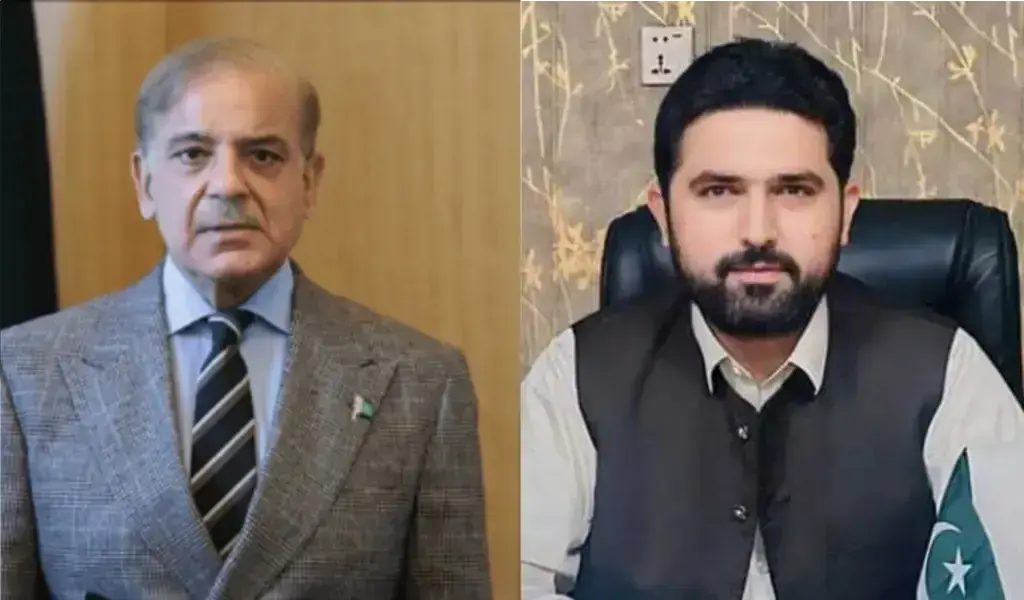
EDITORIAL: The meeting between Prime Minister Shehbaz Sharif and Khyber Pakhtunkhwa Chief Minister Sohail Afridi may not have produced dramatic announcements, but its political significance lies in what it signals rather than what it promised. In an environment where national politics has been dominated by confrontation, mistrust and deliberate escalation, even a measured, cordial engagement between the centre and an opposition-led province stands out. It suggests that, despite years of bitterness, space still exists for reasoned dialogue when circumstances demand it.
Those circumstances are difficult to ignore. KP is confronting a convergence of pressures that leave little room for performative politics. The security situation has worsened in several districts, militancy remains a persistent threat, and counterterrorism capacity is under strain. At the same time, the province is fiscally constrained, dependent on federal transfers and struggling to meet basic development and governance needs. These realities impose hard limits on the usefulness of political defiance. Coordination with Islamabad is not optional; it is built into the structure of the state.
Against this backdrop, the tone and substance of the meeting matter. Reports indicate that the discussion centred on finances, law and order, counterterrorism and development priorities. The prime minister’s assurance of cooperation on infrastructure, education, health and employment may sound routine, but in the current climate even routine commitments acquire weight. Equally important was the acknowledgement that the KP government has a central role in restoring peace, alongside an expectation that the province improve its security response. This balance between recognition and responsibility is healthier than the accusatory exchanges that have characterised centre–province relations in recent years.
For Chief Minister Afridi, the engagement also reflects a broader recalibration. He entered office with a reputation shaped by confrontation, reinforced by a party culture that has often equated compromise with weakness. Governing KP, however, requires a different posture. The province’s challenges demand engagement rather than isolation, and pragmatism rather than permanent mobilisation. Representing KP means representing all its residents, including those with no stake in partisan battles playing out in Islamabad.
None of this implies an end to political competition. Democratic systems depend on contestation, and provinces are right to assert their interests. But there is a clear distinction between principled advocacy and reflexive hostility. When political rivalry begins to undermine governance itself, it ceases to serve democratic purpose. KP’s experience illustrates this sharply. Prolonged instability, administrative paralysis and fiscal stress do not weaken political opponents; they weaken institutions and deepen public hardship.
There is also a wider national context. Pakistan is navigating a fragile economic recovery, persistent security challenges and strained federal–provincial relations across multiple fronts. Years of political deadlock have already damaged policy continuity and public confidence. Any easing of tensions, however limited, helps restore institutional functionality. Cooperative federalism is not a rhetorical ideal; it is a practical necessity in a system where authority and resources are shared.
Scepticism remains warranted, though. One meeting does not erase years of mistrust, nor does it guarantee sustained cooperation. Internal party pressures often reward confrontation over compromise, and the broader political environment remains volatile. So, it would be naïve to assume that this encounter marks a durable realignment. But it would be equally misguided to dismiss it as meaningless. Political atmospheres matter. Shifts in tone can create space for problem-solving if they are reinforced rather than undermined.
The real test lies in follow-through, of course. Will commitments on development translate into coordinated action? Will fiscal grievances be addressed through structured dialogue instead of public sparring? Will communication channels remain open when the next crisis emerges? These questions will determine whether this moment becomes a footnote or a turning point.
For a province grappling with violence, limited resources and governance deficits, and for a country struggling to stabilise itself, perpetual internal political warfare is a luxury Pakistan cannot afford. The primary responsibility of elected leaders is to the state and its citizens. If that duty can be discharged in a less hostile, more constructive environment, it deserves encouragement. The meeting was modest, but the signal it sent was timely. What matters now is whether leaders on both sides choose to build on it.
Copyright Business Recorder, 2026


















Comments
Comments are closed for this article.