



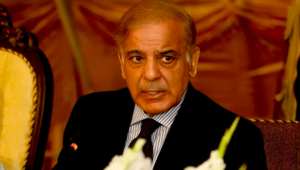
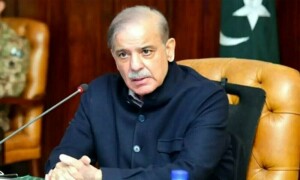
EDITORIAL: Addressing the top exporters award ceremony 2024-25, Prime Minister Shehbaz Sharif announced blue passports for leading exporters, measures to cut export refinance rate, electricity tariffs and wheeling charges to ease financial pressure on industries.
Blue passports are held by government officials, senators and members of parliament for official overseas assignments allowing easy access to visas.
One would have hoped that the government had instead focused more on facilitating visas for the country’s citizens, who are facing extremely challenging visa conditions in most countries of the world, including Muslim countries with which those countries enjoy special relationships — rollovers, trade and on occasion security agreements.
Minister for Power Awais Leghari announced that tariffs for industries have been reduced by Rs 4.04 per unit, under a special PM relief package which would reduce wheeling charges that, in turn, would reduce the per unit cost to industry — 11 to 11.5 cents per unit — a rate that would still be higher than applicable to regional competitors.
In India, the rate varies from state to state and is between 3 and 9 cents per unit while in China high voltage industrial rates are around 8.4 to 8.8 cents per unit but, however, like in India, the rate varies significantly by region and usage level.
Pakistan, in contrast, continues to insist on a uniform tariff that requires massive subsidies each year (more than a trillion rupees have been budgeted for the current year), a prime contributor to the narrow fiscal space, as well as flawed contracts signed with Independent Power Producers (IPPs) that envisage capacity payments irrespective of actual units purchased and repatriation of profits in dollars.
It is relevant to note that even K-Electric, privatised in 2005, receives an annual subsidy for this purpose and, in the current year, is budgeted to receive 125 billion rupees of the taxpayers’ money because of the policy of uniform tariff throughout the country — a factor that renders the proposed privatisation of three distribution companies questionable. To add to this disturbing syndrome the government began to encourage power production through renewables with the objective of dealing with climate change but which has simply raised the capacity payment dues.
Additionally, the government has borrowed 1.25 trillion rupees from commercial banks to retire the circular debt, a loan that envisages passing sector inefficiencies onto the hapless consumers, and pledged to the International Monetary Fund (IMF), under the ongoing programme, to ensure full-cost recovery.
In the event that the discount rate does not decline from the current 10.5 percent, as projected, then the government would be forced to adjust the Debt Service Surcharge as per its agreement with the IMF, which would almost certainly compel the government to reverse the relief package. The need for structural changes in the power sector, therefore, is acute and one can only hope that a holistic reform agenda is followed to ensure that the ongoing lacunas are smoothed out for all times to come.
There is no doubt that export revenue as opposed to borrowing from abroad, including the over USD 12 billion rollovers from friendly countries, is a desired form of revenue; however, it must be acknowledged that exports have been declining over the years as a source of foreign exchange earnings.
This was because Pakistan’s exports are largely of primary goods with little value-addition and textiles, the highest foreign exchange earners for the country, spiraled upward post-2014 due to the grant of GSP Plus status by the EU; however, these exports are projected to suffer greatly after the recent India-European Union free trade deal.
Remittance inflows have now surpassed exports revenue: in September 2025 exports were USD 2,609 million, rising to USD 2,532 million in October, USD 2,277 million in November and USD 2,751 million in December with imports (including raw materials and semi-finished products) rising by a higher amount leading to a rising trade deficit.
Remittance inflows for these months as follows: USD 3,184 million in September 2025, USD 3,420 million in October, USD 3,188 million in November and USD 3,589 million in December. There is a need for the government to focus not only on exports but on value-addition as well as on encouraging greater remittance inflows.
To conclude, it is unclear whether the government has shared the relief package with the IMF but if it has then its continuation will depend not only on the international price of fuel, a major input for the power sector, but also on the power sector performance.
There is also a need to look at the current industrial base and try to compete with more advanced countries in the manufacture of technology, including Artificial Intelligence.
Copyright Business Recorder, 2026













Comments
Comments are closed for this article.