


Vaccines: ministry says import bill may soar to USD1.2bn by 2031
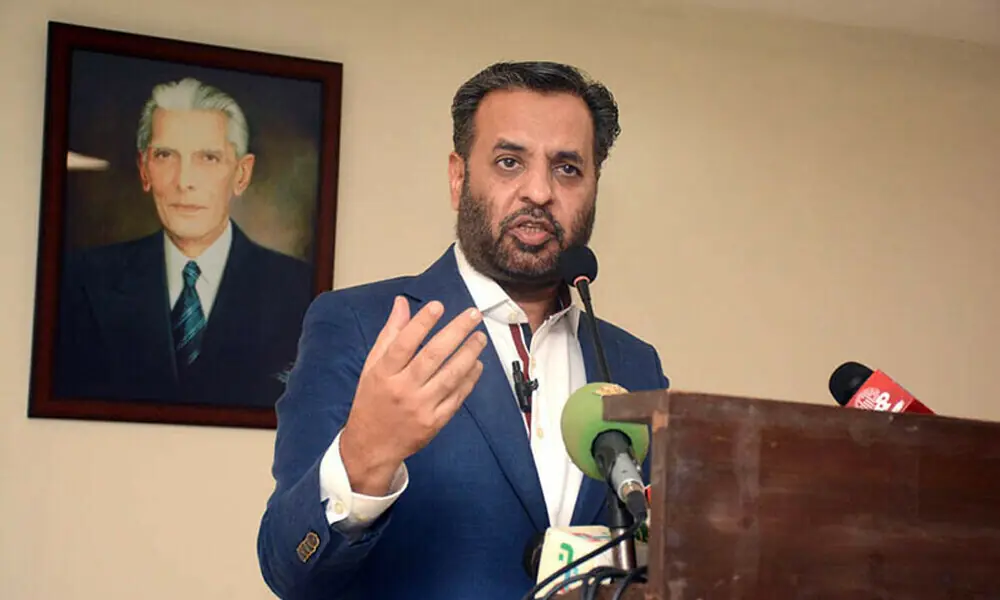

ISLAMABAD: The Ministry for National Health Services and Regulations has warned that the country’s import cost of various vaccines could rise from $400 million to $1.2 billion by 2031, if Pakistan fails to start local vaccine manufacturing, which would strengthen health security and help conserve foreign exchange.
This was stated by Federal Minister for Health, Mustafa Kamal, here on Tuesday during a high-level meeting with a delegation of the Kingdom of Saudi Arabia to discuss cooperation between the two countries toward vaccine manufacturing in Pakistan.
The Saudi delegation has arrived in Pakistan, marking an important milestone in bilateral cooperation on indigenous vaccine manufacturing and the health sector. The visit reflects strong progress toward strengthening Pakistan’s capacity for local vaccine production through strategic collaboration.
According to the Ministry of National Health Services, the eleven-member Saudi delegation is led by Nizar Al-Hariri, senior adviser to Saudi Arabia’s minister of industry, and is visiting Pakistan as part of efforts to deepen bilateral cooperation in health, pharmaceutical manufacturing, and industrial collaboration. “Practical progress is being made toward the local production of vaccines for 13 diseases in Pakistan,” the Ministry of National Health Services said.
During the meeting, comprehensive presentations were delivered on Pakistan’s current status, future demand for vaccines, available infrastructure, and existing technical and institutional capacities for indigenous vaccine manufacturing. Heads of relevant departments and attached organizations of the Ministry of Health, including the Chief Executive Officer of DRAP and the Chief Executive Officer of the National Institute of Health (NIH), also briefed the delegation in detail on regulatory frameworks, manufacturing potential, and readiness for collaboration.
Speaking on the occasion, Kamal stated that Pakistan, with a population of over 240 million, was the fifth most populous country in the world. He highlighted that nearly 6.2 million children are born every year in Pakistan, and the government currently provides 13 different vaccines free of cost to its citizens under the national immunization programme. However, the Minister emphasized that none of these vaccines are currently manufactured locally. Instead, Pakistan imports vaccines with the support of international partners, at an annual cost of approximately $400 million. Of this cost, 49 percent is borne by international partners, while 51 percent is financed by Pakistan, which helps reduce the immediate fiscal burden.
He cautioned that after 2031, international financial support will come to an end, requiring Pakistan to fully finance vaccine procurement from its own economy. If local vaccine manufacturing is not established, annual vaccine-related expenditure could rise to $1.2 billion by 2031, placing a significant burden on the national economy.
From the Ministry of Industry and Mineral Resources, Kingdom of Saudi Arabia, members included Eng. Nizar Alhariri, Advisor to the Minister; Mr. Ahmad Althobaiti, General Manager; Dr Mohammed Alfaleh, Vaccine & Biotechnology Expert; Adnan Abualsaud, Director Bilateral Relations; Eng. Bader Althobaiti, Senior Portfolio Manager; Mohammed Alharbi, Chief of Staff; Abdulelah Alosaimi, Project Manager; and Khalid Al Zahrani, Specialist Bilateral Relations.
From the Saudi Food and Drug Authority (SFDA), Dr Mohammed Aldosary, Director of Biological Products, was part of the delegation. The delegation also included Abdullah Albaqami, Branch Director in Pakistan from the King Salman Humanitarian Aid and Relief Centre, and Turki Aljlajel, Director of Government Affairs from Lifera.
Concluding his remarks, Federal Minister Mustafa Kamal stated that enhanced cooperation between Pakistan and Saudi Arabia in the health sector, particularly in vaccine manufacturing, will not only strengthen Pakistan’s healthcare system but also serve as a model of regional collaboration and partnership.
Subsequently, owners and representatives of leading pharmaceutical companies and private vaccine manufacturers from across Pakistan also participated in the engagements. Under the facilitation and oversight of the Ministry of National Health Services, a series of meetings were held between these companies and the high-level Saudi delegation.
The Saudi delegation highly appreciated Pakistan’s vaccine manufacturing potential, the performance of its pharmaceutical industry, the Government of Pakistan’s transformative initiatives in the health sector, and the prevailing business-friendly environment. The delegation reaffirmed its strong commitment that, in the coming years, Pakistan and Saudi Arabia will work jointly to achieve self-reliance in the vaccine sector and meet their respective national requirements through mutual cooperation.
Copyright Business Recorder, 2026


























Comments
Comments are closed for this article.