


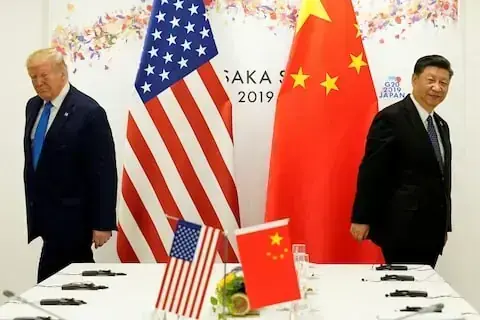

This is apropos four letters to the Editor titled ‘How Trump pushed the world towards Beijing’ carried by the newspaper on Saturday, Sunday, Monday and yesterday.
Across the Global South, the pattern is even more pronounced. Countries in Africa, Central Asia, Latin America, and Southeast Asia—many already deeply embedded in Belt and Road projects—see in this Western fracture a confirmation of their long-held belief that reliance on a single power center is dangerous. For them, China’s appeal lies not in moral claims or ideological alignment, but in scale, speed, and predictability of economic engagement. This is where the geopolitical landscape takes on its starkest contrast. As China’s economic centrality expands, the United States finds itself increasingly isolated in political terms. In this emerging narrative, only one relationship remains absolute: the United States and Israel, bound together in mutual political and strategic defense as much by global criticism as by shared policy.
Israel, facing growing diplomatic, legal, and public pressure across Europe, the Global South, and even within Western societies, leans heavily on American veto power and political backing in international forums. The United States, in turn, finds itself defending Israel in a world where sympathy and alignment are steadily shifting elsewhere. The result is a form of strategic isolation that contrasts sharply with China’s expanding web of economic partnerships.
Copyright Business Recorder, 2026
The writer is a former Press Secretary to the President, An ex-Press Minister at Embassy of Pakistan to France, a former MD, SRBC Macomb, Detroit, Michigan




















Comments
Comments are closed for this article.