


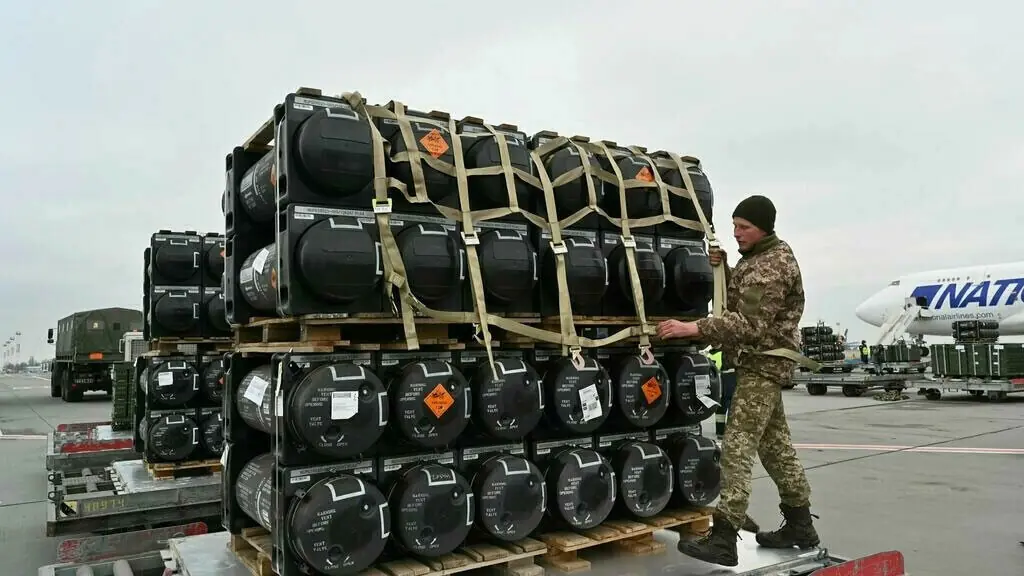
EDITORIAL: The push to raise America’s defence budget to an unprecedented USD1.5 trillion is not an isolated budgetary flourish. It lands at a moment when the global security environment is already badly frayed, and when the restraints that once governed the use of power appear to be loosening across multiple theatres. After a year in which wars expanded, defence spending surged and coercive diplomacy returned to centre stage, Washington’s latest move signals that the drift towards militarisation is accelerating rather than stabilising.
The world entered 2025 with conflicts already entrenched in Ukraine and the Middle East. It exits the year having normalised the idea that force is once again a routine policy instrument. European defence budgets have risen sharply, driven by the war in Ukraine and pressure within Nato to shoulder a greater share of collective security. Germany, Poland and several Nordic states have locked in multi-year increases that would have been politically unthinkable a decade ago. Asia, too, has seen sustained military expansion, from China’s steady outlays to heightened spending by Japan and India. What was once described as a temporary response to exceptional crises now looks like a structural shift.
Against this backdrop, the United States is no longer merely underwriting deterrence. It is actively demonstrating its willingness to project power with fewer diplomatic qualifiers. Strikes in Yemen, action against Iranian-linked facilities and, most starkly, the operation against Venezuela have underscored a posture that privileges speed and dominance over consensus. The message is unmistakable: Washington is prepared to act first and justify later, confident that neither international institutions nor global opinion will meaningfully constrain it.
That confidence carries consequences. When the world’s largest military spender raises its budget by half while arguing that these are “dangerous times”, it reinforces a security logic that others will feel compelled to mirror. Defence planning is inherently comparative. If the United States signals that overwhelming force is the currency of safety, rival powers and regional actors will draw the obvious conclusion. Arms races rarely announce themselves as such; they emerge through successive, rationalised decisions that leave everyone less secure.
The danger is not only in the scale of spending, but in the erosion of norms that once moderated behaviour. The post-Cold War order rested, however imperfectly, on the assumption that sovereignty, proportionality and multilateral process mattered. Those assumptions are now being tested openly. If regime change, punitive strikes or coercive pressure are seen as legitimate tools for resolving disputes, the threshold for conflict drops everywhere. States with fewer scruples and narrower interests will not miss the lesson.
This matters acutely for regions already sitting on fault lines. South Asia, the Middle East and parts of Latin America are not insulated from global signalling. When major powers normalise the use of force, local disputes become more volatile. Miscalculation becomes more likely, especially where nuclear-armed states or fragile governments are involved. Deterrence relies on predictability. The current trajectory is reducing it.
There is also a profound economic dimension. Defence spending on this scale diverts resources from growth, climate adaptation and social stability, even in wealthy countries. For developing states, the spillover effects are harsher. Higher global risk premiums, disrupted trade routes and volatile energy markets are the hidden taxes of militarisation. A world preparing for conflict is a world that invests less in shared prosperity.
None of this is to deny that genuine security threats exist. The problem is proportionality and purpose. Military strength can deter aggression, but it can also invite confrontation if untethered from diplomacy and law. The line between preparedness and provocation is thin, and it is being crossed with increasing ease.
The uncomfortable truth is that the international system is moving away from restraint at precisely the moment it needs more of it. The accumulation of arms, the casual talk of force and the sidelining of institutions are not signs of confidence; they are symptoms of a system losing its balance. History offers little comfort about where such trajectories lead.
If the coming years are indeed “troubled and dangerous”, as Washington now claims, the answer cannot lie solely in ever larger arsenals. Security built only on firepower is brittle. Without renewed investment in diplomacy, rules and credible conflict management, the world risks sleepwalking into confrontations that no defence budget, however vast, can truly contain.
Copyright Business Recorder, 2026













Comments