



ISLAMABAD: An assessment of Pakistan’s power sector during FY 2024-25 prompted National Electric Power Regulatory Authority (Nepra) to observe that despite several structural and policy-level interventions, overall progress remains limited and insufficient to inspire confidence in the sector’s ability to support sustained industrial growth or provide meaningful relief to electricity consumers across industrial, commercial, agricultural, and residential segments.
In its State of the Industry Report 2024-25, NEPRA stated that the power sector continues to face deep-rooted operational and governance challenges that constrain efficiency and undermine its contribution to economic development.
The regulator emphasized that power sector entities must operate under commercially binding agreements that clearly define roles, performance standards, and accountability mechanisms.
READ MORE: NEPRA could come under Power Division’s control, as per govt’s latest amendments
Each entity should bear the financial consequences of its inefficiencies rather than passing these costs on to consumers, who are currently burdened with approximately Rs233 billion in Debt Servicing Surcharge (DSS)—a cost arising not from normal business operations but from inefficiencies within certain sector entities.
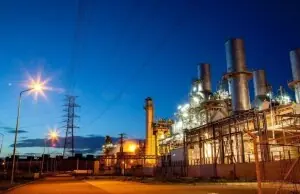
According to the report, generation capacity under “Take or Pay” contracts remains significantly underutilized, resulting in a persistent financial burden in the form of capacity payments for idle plants. Simultaneously, the transmission network is both constrained and underutilized, contributing to higher transmission tariffs and preventing the dispatch of cheaper and more efficient electricity in accordance with the Economic Merit Order (EMO).
On the distribution side, several government-owned DISCOs continue to suffer from poor governance, with transmission and distribution (T&D) losses exceeding allowable limits, low bill recovery, and load-shedding based on Aggregate Technical and Commercial (AT&C) losses. These inefficiencies further exacerbate asset underutilisation across generation, transmission, and distribution, while fueling the circular debt problem.
Nepra noted that challenges faced by power sector entities—largely government-owned—span planning, execution, and operational domains.
Persistent inefficiencies in strategic planning, project implementation, and routine operations have hindered financial sustainability and limited the sector’s contribution to economic growth. Weak governance, limited accountability, and the absence of performance-driven management further constrain the sector’s ability to provide reliable and affordable electricity.
During FY 2024-25, efforts were made to reduce “Take or Pay” generation capacity through the retirement or decommissioning of inefficient power plants with consistently low utilisation. As a result, 2,829 MW of capacity was retired, decommissioned, or had its Power Purchase Agreements (PPAs) terminated.
Consequently, effective operational generation capacity declined to 41,121 MW as of June 30, 2025, from 45,888 MW a year earlier. However, 884 MW of new hydropower capacity—Suki Kinari Hydropower Project—was added during the year.
The utilisation factor of thermal power plants, including nuclear, in the CPPA-G system remained 38.82%. NEPRA highlighted that generation costs account for nearly 82% of the electricity tariff. During FY 2024-25, the actual per-unit Capacity Purchase Price (CPP) stood at Rs14.21/kWh, the highest component of the electricity tariff, primarily due to underutilisation of “Take or Pay” plants.
During the year, several power plants approached NEPRA through CPPA-G seeking reductions in generation tariffs. Approval of these adjustments is expected to yield long-term benefits by lowering generation costs, improving tariff efficiency, and stabilizing consumer prices, while also supporting investor confidence through a predictable regulatory environment.
However, NEPRA noted that persistent inefficiencies in public sector power plants — such as the 747 MW Guddu Power Plant, 969 MW Neelum Jhelum Hydropower Project, and several WAPDA-operated hydro plants—are undermining tariff reduction efforts. These inefficiencies result in lower utilisation, higher costs, and reduced system efficiency, offsetting gains from IPP tariff reductions and plant retirements.
The Part Load Adjustment Charges (PLAC) added Rs46.388 billion to generation costs in FY 2024-25, compared to Rs55.671 billion in 2023-24, and, while unavoidable, these costs can be significantly reduced through effective demand-side management.
Similarly, Non-Project Missed Volume (NPMV) costs declined to Rs13.285 billion, from Rs39.521 billion, though NEPRA said further reductions are possible through better grid management.
Lower utilisation of Thar coal-based power plants, which operated at 67.23% utilisation, also raised generation costs by inflating both CPP and Energy Purchase Price (EPP). Delays in ensuring regular coal supply to Lucky Electric Power Company further exacerbated inefficiencies.
Nepra observed widespread underutilisation of transmission assets, including the 4,000 MW Matiari–Lahore HVDC line, which operated at just 35% utilisation despite payments based on full availability. Manual system logs further hinder accurate assessment of transmission performance.
The poor performance of the National Grid Company of Pakistan (NGC) has led to violations of the economic merit order, increased generation costs, project delays, and cost overruns. Delays in key projects—including KE-NGC interconnection, Lahore North Grid, and SCADA-III—have adversely affected system reliability and finances.
Governance remains the most critical issue confronting DISCOs. KE, PESCO, HESCO, SEPCO, and QESCO were identified as the poorest performers, with excessive losses, low recovery, prolonged load-shedding, mounting receivables, and high consumer dissatisfaction. Except for TESCO, no DISCO met Nepra-approved T&D loss targets.
Weak DISCO performance contributed approximately Rs397 billion to circular debt during the year. Nepra termed load-shedding based on AT&C losses unlawful and inequitable, as it penalizes compliant consumers and deepens sector inefficiencies.
Rising electricity costs and poor service have pushed consumers—particularly affluent ones—towards rooftop solar PV systems and battery storage, reducing grid demand during non-solar hours.
Nepra also expressed concern over the underperformance of the Independent System and Market Operator (ISMO), citing limited adoption of modern technologies and the absence of a fully functional SCADA system.
The regulator concluded that Pakistan’s power sector transformation remains incomplete without full implementation of the 1992 WAPDA Restructuring Plan, emphasizing corporatization, decentralization, privatization, and separation of policy, regulation, and operations. Continued centralized control, overlapping mandates, and weak accountability, it warned, will perpetuate inefficiencies and impose unnecessary financial burdens on the economy.
Copyright Business Recorder, 2026














Comments
Comments are closed for this article.