




In the Governance and Corruption Diagnostic Report, made public by the International Monetary Fund (IMF) late last year, there were eye-opening remarks—not because they revealed anything new, but because they laid bare the depth of Pakistan’s problems. The fixes are well known. The solutions have been presented time and again.
Yet this is why they never work: the solutions require sacrifice—and that sacrifice is meant to come from the country’s elite. Not the lower-, middle-, or upper-middle-income groups, but the very top 1 percent that sits closest to policymakers and regulators. Change cannot pass through them.
Pakistan’s lower-, middle-, and upper-middle-income groups have been sacrificing for decades. Earlier, the burden was at least somewhat contained. In recent years, however, sacrifice has turned into struggle, and struggle into something you would not wish even on distant relatives.
Take income tax on salaried workers. In just six months, this group paid Rs266 billion in taxes, according to the latest figures. In the entire FY21, the amount was Rs152 billion—a staggering 3.5-times increase in just five years. Look inward and ask whether incomes have risen 3.5 times over the same period.
The IMF report explains this perfectly: “Economic governance is characterized by systemic and structural weaknesses in the management and use of public resources and a lack of clarity in when and how the state intervenes in the economy.” Focus on the when and the how.
The how is simple: go after the easiest targets—the softest ones. The ones that do not push back. The ones that do not make noise. The ones that quietly keep their heads down and stay in line.
The when is even simpler: whenever a bailout is needed.
During the 2008 global financial crisis, major banks—despite knowing they had caused the mess—demanded government bailouts, arguing that the global financial system was at risk. Governments complied.
In Pakistan, the logic is less refined, but the outcome is the same:
“We will keep bleeding state-owned enterprises, tighten regulation around private firms so we can extract favours, raise taxes when we need more money, and then squeeze the voiceless so we can maintain our lifestyles.”
This is the beautiful life of the elite.
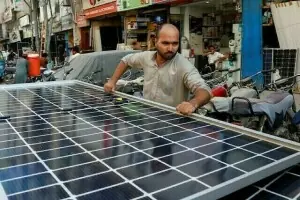
Look around and see whether the top 1 percent are better or worse off today. From net-metered solar connections—subsidized by middle-income consumers—to hybrid vehicles taxed lightly, the energy sector is one of the worst offenders in creating this inequality. Food is also problematic, but at least it still responds to supply and demand. The energy sector does not even follow basic economics. There is excess supply, weak demand, yet prices remain high.
Such is its inefficiency.Such is Pakistan’s misfortune.Such is the life of the 1 percent.













Comments