



ISLAMABAD: The Pakistan Association of Large Steel Producers (PALSP) has approached the Federal Minister for Power, Sardar Awais Ahmad Khan Leghari, to apprise him of the issues being faced by the steel industry.
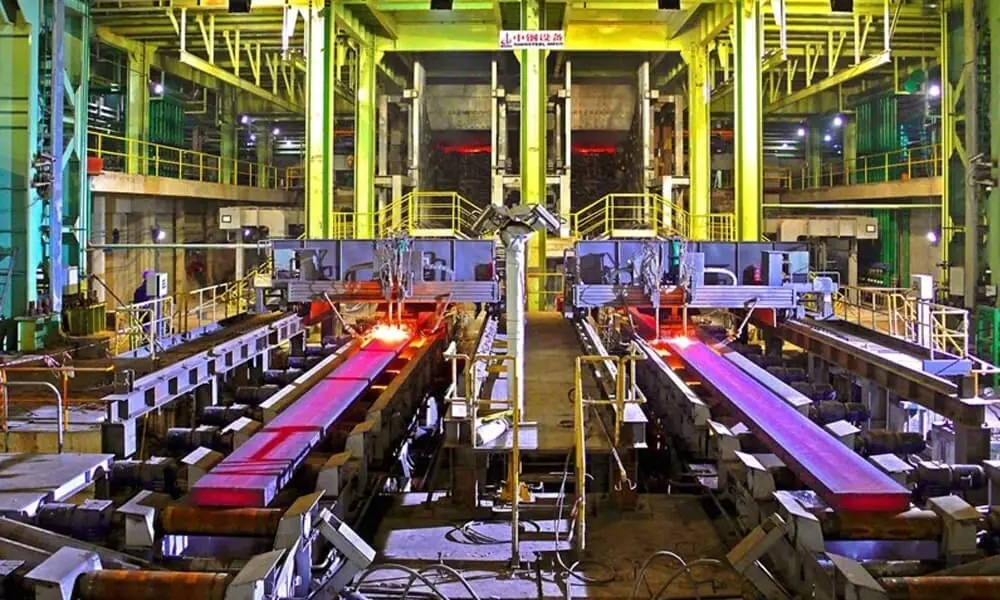
In a letter addressed to the minister, PALSP stated that with a current production capacity of 9 million tonnes, the long steel industry has the potential to consume around 7 billion units of electricity annually.
However, due to low capacity utilisation stemming from weak demand, the sector is presently consuming only 3 to 4 billion units per year.
READ MORE: PALSP says high energy tariffs brought steel sector to its knees
“At a time when the country has surplus power generation capacity and is paying hundreds of billions of rupees in capacity payments, this challenge can be converted into a major opportunity.
Steel is an energy-intensive industry, and electricity is the second most important raw material in steelmaking,” the PALSP said.
The Association believed Pakistan can emulate China, which until recently exported surplus power indirectly by exporting steel after providing electricity to its steel industry at reduced rates.
PALSP suggested that a similar approach could be adopted locally by supplying power to the steel industry at lower costs—possibly at rates equivalent to those currently being paid in capacity payments.
Commenting on the government’s tariff rationalisation plan, the PALSP said that after enduring extreme hardships in recent years, the industry is now facing another major blow.
Instead of exploring ways to increase electricity consumption to reduce capacity payments, the Association feared that the government’s tariff rationalisation agenda may lead to the closure of steel plants in the coming years.
“This would not only result in a massive increase in capacity payments but would also lead to a sharp rise in electricity tariffs,” the Association warned.
Copyright Business Recorder, 2026




















Comments
Comments are closed for this article.