


Transport emissions account 43% of Pakistan’s total emissions: experts
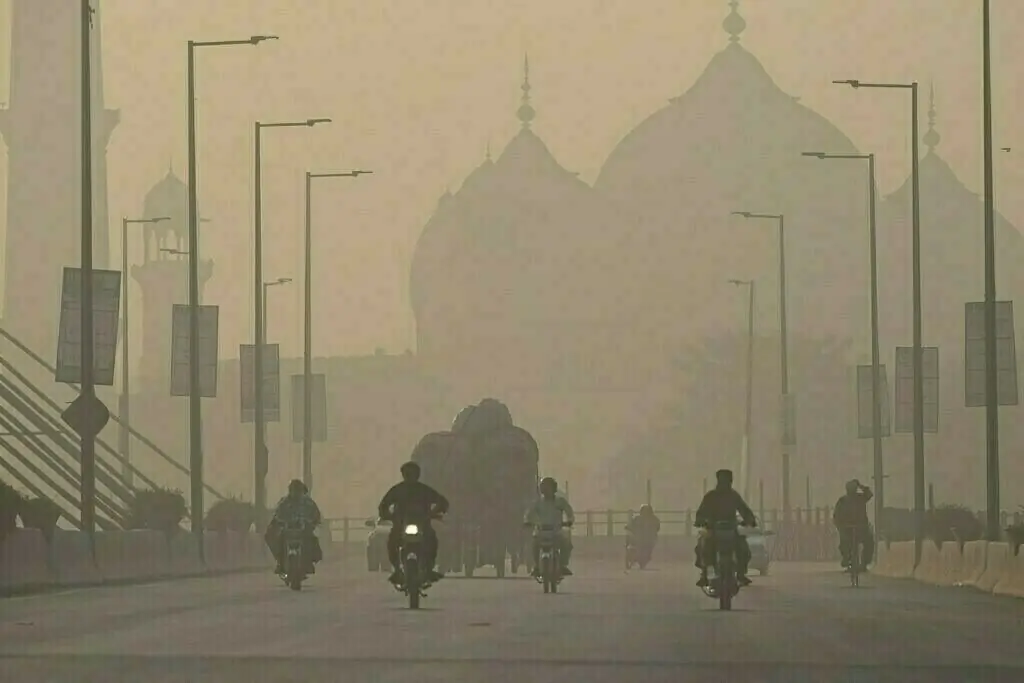

LAHORE: Pakistan could reduce urban transport emissions by nearly one-fifth by shifting just 30 per cent of its vehicle fleet to New Energy Vehicles (NEVs), experts warned, as worsening smog continues to paralyze major cities and pose serious public health risks.
Transport emissions currently account for around 43pc of Pakistan’s total emissions, according to sectoral estimates shared at a Climate Action Dialogue organised by BYD Mega Motor Company in Lahore, the country’s most polluted city during winter, transport contributes close to 80pc of urban air pollution.
Lahore’s Air Quality Index (AQI) frequently rises above 145 micrograms per cubic metre in the winter months, far exceeding safe limits. The elevated levels of fine particulate matter (PM2.5) penetrate deep into the lungs and bloodstream, increasing the risk of respiratory and cardiovascular diseases.
Speaking at the dialogue, Danish Khaliq, VP sales and strategy at Mega Motor Company (BYD Pakistan), said transforming the transport sector offered Pakistan one of its most direct climate solutions. Even a 30 per cent adoption of electric vehicles could result in a 20 per cent reduction in urban air pollution. “Cleaner mobility delivers immediate emissions reductions along with public health and economic benefits, unlike many climate measures that take years to show results,” he said.
Climate and health experts at the dialogue described air pollution as a growing public health emergency, particularly for children. They said prolonged exposure to smog has been linked to reduced life expectancy and mounting economic losses, estimated at double-digit percentages of GDP due to healthcare costs and lost productivity.
Experts said New Energy Vehicles offer a rapid and scalable solution. NEVs can reduce tailpipe emissions dramatically, cutting carbon dioxide output by up to 78pc compared to conventional internal combustion engine vehicles. Studies indicate that even partial adoption can lead to disproportionate improvements in air quality.
Global examples were cited to underline the potential impact of transport reform. Beijing, once facing pollution levels comparable to Lahore’s, managed to significantly improve air quality through strict emission controls, electrification of transport and low-emission zones, reducing emissions by more than half over a decade.
Copyright Business Recorder, 2026

























Comments
Comments are closed for this article.