


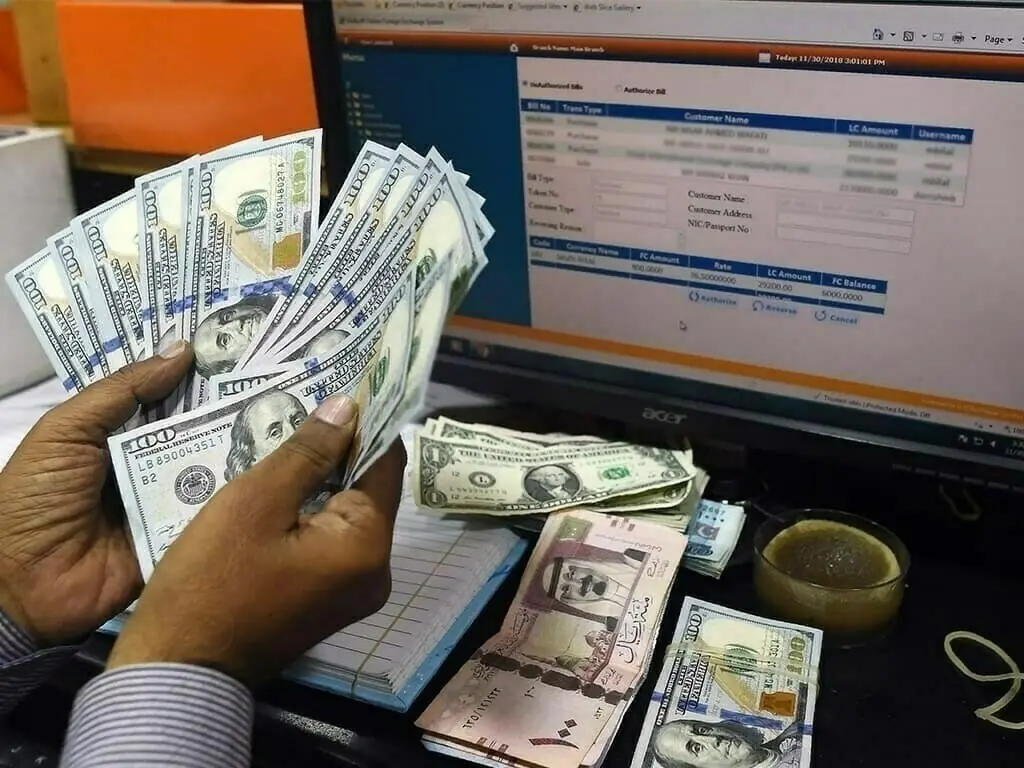

Few economic indicators in Pakistan enjoy as much universal praise as remittances. They are celebrated as the country’s most reliable external lifeline — resilient, counter-cyclical, and politically costless. In recent years, they have propped up foreign exchange reserves, softened balance-of-payments crises, and reduced dependence on volatile capital flows. At the macro level, remittances look like a blessing. But the latest household data tells a more unsettling story. At the micro level, remittances increasingly resemble distress insurance rather than opportunity.
According to the HIES 2024–25, the share of foreign remittances in household income rose from 4.96 percent to 7.77 percent between 2018–19 and 2024–25. Gifts and assistance, including cash transfers, increased from 2.12 percent to 4.57 percent, while domestic remittances reached 3.77 percent. These increases are occurring alongside two worrying trends: a decline in the number of earners per household and a fall in per capita food consumption of staples such as wheat, pulses, milk, and cooking oil.
This combination matters. When remittances grow in an economy where earners are increasing and productivity is rising, they can fuel investment, education, and entrepreneurship. But when remittances grow while households are eating less and fewer people are working, they signal something else entirely: families are relying on external support to survive a domestic economic squeeze.
At the macro level, remittances have become Pakistan’s single most stable external inflow. In recent years, annual remittance inflows have hovered around USD 38 billion in fiscal year 2025, often exceeding exports of several major sectors and comfortably outpacing foreign direct investment. During periods of external stress—whether triggered by global commodity price shocks, exchange-rate volatility, or tightening financial conditions—remittances have repeatedly prevented sharper balance-of-payments crises.
This macro resilience is real. Remittances smooth foreign exchange availability, support the rupee, and help finance essential imports. Unlike portfolio flows or short-term borrowing, they do not flee overnight. In that sense, they are the backbone of Pakistan’s external account. But macro stability can mask micro fragility.
The household data suggests that remittances are increasingly compensating for domestic labour market failure. As the number of earners per household declines and job creation remains weak, families turn to relatives abroad or within Pakistan to plug income gaps. Rising remittances thus coexist with shrinking food baskets and rising dependency burdens on fewer earners.
Economically, this is a red flag. It indicates that remittances are being used primarily for consumption smoothing, not for productive transformation. Food, utilities, rent, healthcare — these are necessary uses, but they do not generate future income. Over time, this can create a quiet dependency equilibrium: households survive, but the domestic economy does not expand.
There is also a distributional angle. Remittances are unevenly distributed, benefiting households with migration networks while leaving others exposed. As remittance shares rise, inequality can widen — not because remittances are harmful, but because domestic opportunities are insufficiently broad-based.
This creates a paradox. At the national level, remittances stabilise the economy. At the household level, they increasingly signal economic stress. Both statements can be true at the same time. The deeper issue is not remittances themselves, but what the domestic economy is failing to do. In a healthy system, remittances complement local income; they do not replace it. In Pakistan today, they are increasingly substituting for missing jobs, stagnant wages, and limited enterprise growth.
The risk is long-term. If remittances continue to grow while domestic productivity stagnates, Pakistan risks locking itself into a low-growth equilibrium where external labour exports finance domestic consumption, but domestic industries fail to scale. This model is fragile. It depends on external labour markets, geopolitical stability, and host-country demand—factors entirely outside Pakistan’s control.
So, what should be done? First, remittances must be integrated into a growth strategy, not treated as a passive inflow. This means moving beyond celebrating headline numbers to actively shaping how remittances are used. Second, Pakistan needs remittance-linked financial instruments that encourage savings, investment, and enterprise formation. Dedicated diaspora savings products, housing bonds, SME investment windows, and co-financing schemes can channel a portion of remittances into productive uses without forcing households to sacrifice consumption security.
Third, remittances should be connected to formalisation and entrepreneurship. Simplifying business registration, reducing compliance costs, and enabling digital payments can allow remittance-receiving households to convert part of these inflows into micro and small enterprises. In case starting a business remains slow, discretionary, and costly, remittances will stay trapped in consumption.
Fourth, social protection and labour market policy must work together. When remittances rise because domestic jobs are missing, the policy response should not be to rely even more on external inflows, but to revive labour demand at home—especially in tradables, agro-processing, and services linked to exports.
Finally, migration policy itself must be treated as an economic policy. Skills certification, safer migration channels, and reintegration support can raise the productivity of overseas employment and improve the quality of remittance flows — turning them from survival income into development capital.
Remittances are not Pakistan’s problem. They are Pakistan’s signal. They tell us that families are remarkably resilient, that social networks extend across borders, and that the diaspora remains deeply connected. But they also tell us something more uncomfortable: too many households are surviving because the domestic economy is not delivering enough work, income, and opportunity.
At the macro level, remittances keep the economy afloat. At the micro level, they are increasingly a lifeline. The challenge for policymakers is to ensure that this lifeline becomes a bridge—from survival to productivity, from dependency to opportunity. Until that happens, Pakistan will continue to celebrate remittances as a blessing, while ignoring the distress they quietly reveal at home.
Copyright Business Recorder, 2026
The writer is a Research Economist at Pakistan Institute of Development Economics (PIDE). She can be reached at: [email protected]

















Comments
Comments are closed for this article.