


APTMA urges Ogra to review RLNG actual sales price for 2015-22
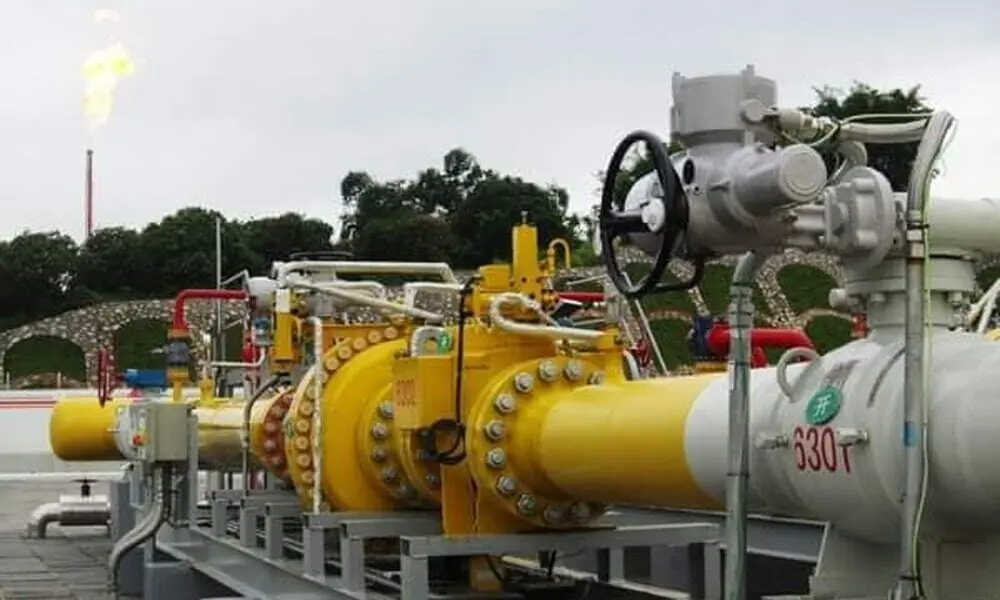
LAHORE: APTMA has approached OGRA seeking rehearing for determination of RLNG actual sales price for the period 2015 to 2022 primarily on Grounds of UFG Misallocation and Non-Disclosure of the Computation Trail.
APTMA has pointed out that over the 84-months actualization period; around 47 million tonnes of LNG was consumed. Using 1 tonne LNG = 52 MMBtu, even a conservative assumption that 10 million tonnes were consumed by industry, where OGRA has provided no class-wise data, implies industrial consumption of about 520 million MMBtu.
If industrial RLNG is given only a USD 0.50/MMBtu downward correction to reflect that RLNG UFG was applied at significantly higher levels (nearly double) than system-gas benchmark in the same commingled network, the implied refund is USD 260 million.
READ MORE: Imported RLNG price reduced up to 5.9%
Under APTMA’s assumption of 17 million tonnes consumed by industry, the same USD 0.50/MMBtu correction yields roughly a USD 442 million refund, before considering any other allocator reversals through class-symmetric netting of recoveries and gains.
The overcharge risk is amplified because system gas is around three times cheaper than RLNG, yet system gas has an explicit UFG benchmark while RLNG has no UFG benchmark, enabling inflated UFG incidence on a much higher-priced molecule.
In SSGC’s system, where RLNG UFG has reportedly been applied in the 15–17% range, the value impact can approach USD 2/MMBtu on RLNG, which is economically devastating for industrial consumers.
APTMA’s opines that further refunds may be due where commercial risks from defaulted LNG cargoes were shifted onto consumers rather than being absorbed where liability properly sits, and where Channel Development Cess (CDC) recoveries were not transparently reconciled against actual spend and refunded through a published, cargo-wise and class-wise netting schedule.
OGRA has, allowed a dual-loss construct on a single commingled stream, even though RLNG and system gas move as one fungible flow through the same pipelines and metering chain. This is presented as a physical impossibility, comparable to saying one pot of water has two boiling points, or one river has two evaporation rates under the same atmospheric conditions.
UFG is not a minor percentage adjustment in RLNG. It is a structural allocator that determines class incidence and drives retrospective billing exposure on a high-priced molecule. With no RLNG benchmark and no disclosed, SMS-wise reconciliation boundary, a single assumption can translate into hundreds of millions of dollars of over-recovery or misallocation.
If RLNG is to serve as the neutral, marginal import-parity benchmark in a liberalizing gas market, it must remain ring-fenced, transparent, and incidence-consistent.
Introducing opaque allocator layers converts a legitimate cost pass-through into an incidence-shifting mechanism that distorts class allocation, undermines transparency and TPA neutrality, and erodes market credibility and investor confidence.
APTMA holds the view that Section 9(2) of OGRA Ordinance, 2002 applies only to price revisions arising from wellhead or imported gas cost changes and does not cover multi-year, allocator-sensitive actualizations or retrospective recoveries on an undisclosed record.
The illegality arises from OGRA approving a multi-year RLNG recovery mechanism without disclosing the computation trail, allocator method, reconciliation boundaries, or SMS-wise data needed for verification.
APTMA strongly demands rehearing of the case of RLNG price determination for the period 2015 to 2022. In the meanwhile recovery of any amount on account of erroneously determined price should be stopped forthwith.
Copyright Business Recorder, 2026












Comments
Comments are closed for this article.