


BR RESEARCH: National Accounts: the art of self-congratulation
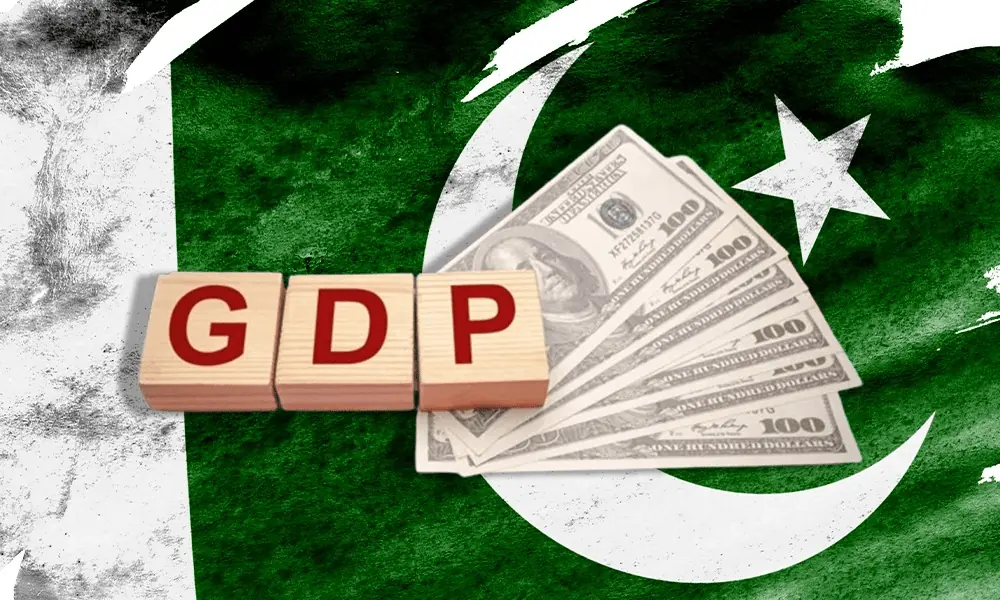

The latest national accounts appear to have been given a cosmetic polish so that they fit neatly into the broader “job well done” narrative that the Ministry of Finance now seems increasingly comfortable repeating.
Quarterly GDP is reported to have grown 3.7 percent in the first quarter of FY26, inflation is said to be moderating, and the fiscal position is supposed to have improved, which together imply that stabilization has worked, recovery is underway, and the mission is close to being accomplished. The difficulty is that the real economy looks nothing like that story, and the gap between the spreadsheet and lived reality keeps widening.
Agriculture is the clearest example of this disconnect. The national accounts record growth of 2.9 percent in the first quarter, even though this is the same period in which climate and flood-related losses were formally acknowledged across major kharif crops.
DAP application has fallen sharply, livestock prices have been rising materially faster than the broader food basket for two consecutive years, and all the major crops that matter, including cotton, rice, maize, and sugarcane, have so far fallen short of last year’s production levels. Yet livestock GDP is shown expanding by more than six percent while overall agriculture is declared to be growing. When household purchasing power is under strain and protein prices surge, the rational conclusion points toward supply tightness rather than an output miracle.
Farmers do not scale back DAP usage when conditions are favourable; they do so when margins are squeezed and risk is elevated, which makes it difficult to accept the idea that this configuration represents broad-based growth. It looks much more like inflation being mislabelled as value added.
Industry is narrated in a similarly upbeat tone, even though the underlying story is far less inspiring. The national accounts report industrial growth of 9.4 percent, and while large-scale manufacturing has indeed risen, it has done so from an extremely low base that was created by import suppression and demand destruction.
Once those choke points are removed, a rebound follows automatically, which is not industrial renewal but simply gravity doing the work. At the same time, the accounts report strong growth in electricity, gas, and water during a period in which tariff-driven demand compression and chronic circular debt continue to define the energy economy, which makes it difficult to reconcile claims of industrial strength with what is clearly a stressed energy-demand profile.
The services sector does not really complete the growth story either. Finance and insurance GDP is recorded as expanding strongly, yet private-sector risk appetite remains selective, and banks continue to prefer government securities instead of deepening real-economy intermediation.
Advances-to-deposits ratios remain historically subdued, and a genuine expansion in financial services would normally show up as broader and longer-tenor lending to the private economy, which has not yet materialized. That naturally raises questions about what exactly is being counted as “growth.”
Even the headline GDP number stretches credibility when set against weakened household balance sheets, cautious capital spending, and underutilized productive capacity. When the story told by the national accounts begins to drift too far from what the economy is actually experiencing on the ground, confidence in the narrative should weaken, and it already has.
Inflation is being narrated with a similar degree of selectivity. Headline CPI has indeed eased relative to last year’s peak, yet core inflation remains above the central bank’s preferred medium-term range. Much of the apparent moderation reflects base effects and earlier corrections in volatile categories, while the items that define everyday life, including milk, meat, healthcare, education, and services, remain steep, which means households are not experiencing relief so much as they are simply being squeezed at a slightly slower pace. A durable growth story is very difficult to anchor on top of that reality.
Exports continue to behave as if they never received the recovery memo either. Performance remains uneven, with key categories under pressure at a time when domestic activity is supposedly improving. If the economy were truly transitioning toward sustainable growth, export competitiveness would be strengthening. Instead, imports are normalizing more quickly than exports, which reopens the same external vulnerabilities that repeatedly drag Pakistan back into stabilization mode.
On the fiscal front, the first-quarter surplus is being folded neatly into the success narrative, although the balance remains flattered by extraordinary inflows and one-off supports while the structural weaknesses of the fiscal architecture persist.
The tax base continues to remain narrow, expenditure reform continues to remain largely rhetorical, and debt servicing continues to dominate the budget, which together suggest that while the numbers may look better, the system producing them does not.
It is within this context that the language of a “growth agenda for 2026” is beginning to enter official conversation, and while ambition is long overdue, ambition without structural honesty is usually a recipe for disappointment.
The Ministry of Finance increasingly appears more interested in storytelling than in setting out the uncomfortable but necessary reforms that would make growth something more than a slogan.
There is still no credible roadmap for broadening the tax net in a way that is fair and durable, and there is still no serious restructuring of state-owned enterprises. The energy sector remains a competitiveness penalty, the financial system still intermediates far more to the state than to the private economy, and export strategy continues to be reactive rather than deliberate. Through all of this, the official narrative insists that stabilization has already morphed into recovery.
That is the real risk, because when policymakers start believing the story they are telling themselves, reform urgency usually becomes the first casualty. So while the national accounts may look better than they did last year, better numbers do not automatically mean a better economy, at least not yet, and the distance between cosmetic improvement and structural repair remains significant.
If Pakistan genuinely intends to build a meaningful growth path in 2026 and beyond, the narrative will eventually have to give way to substance. Until that happens, the growth story will remain largely where it currently resides, which is in the account books, rather than in the economy.













Comments
Comments are closed for this article.